
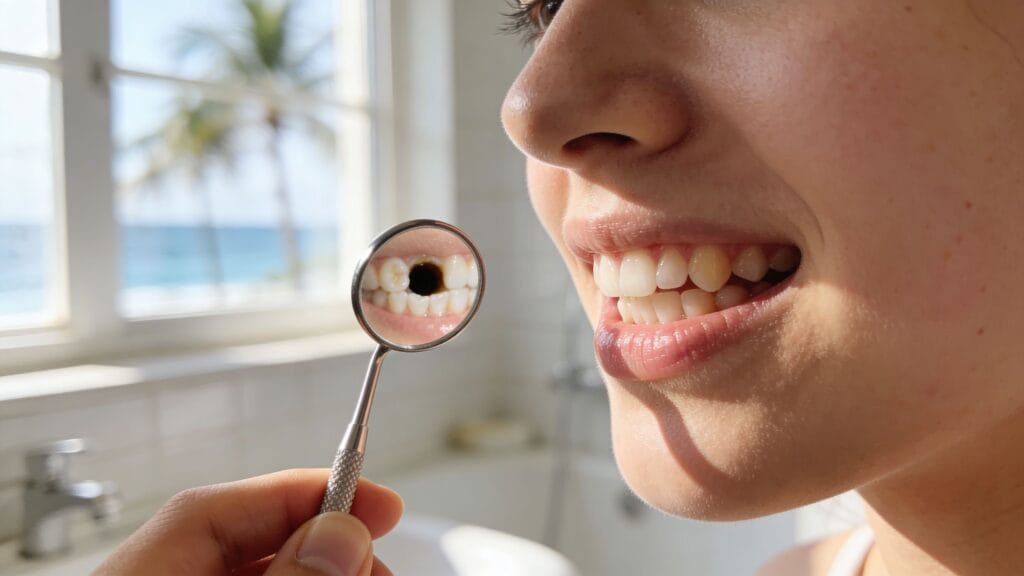
A cold sip of water. A bite of something sweet. A quick flash of pain that makes you stop and wonder, “Is this a cavity?”
That moment is common, and it can feel unsettling. It's often unclear whether a twinge means tooth decay, a cracked tooth, irritated gums, or something less serious. The uncertainty is often the hardest part.
If you’re trying to figure out how to know if you have a cavity, you’re not overreacting. Tooth decay is extremely common. Nearly 90% of adults ages 20 to 64 have experienced tooth decay, and about 21% have at least one untreated cavity, according to the National Institute of Dental and Craniofacial Research. That means a suspicious symptom is worth paying attention to, but it also means you’re far from alone.
That Sudden Twinge and Why You Are Not Alone
You’re eating lunch in San Diego, everything feels normal, and then one bite on one side sends a quick jolt through a tooth. A few hours later, the feeling is gone. That kind of on-and-off discomfort is exactly why people feel unsure. It is hard to tell whether you are dealing with a cavity, a sore gum, a cracked tooth, or even pressure that seems like tooth pain but is coming from your sinuses.

I hear this concern often from patients at Serena San Diego Dentist. They usually are not asking, “Why does my tooth hurt?” They are asking, “How can I tell what kind of problem this is?”
That is a reasonable question. Cavities often begin subtly. The early signs can be small, a brief cold sting, a tender spot when chewing, food catching in one area, or a tooth that suddenly feels different from the others. Other problems can copy those same signals, which is why a single symptom can feel confusing.
A helpful way to look at it is this: one random twinge can happen for several reasons, but a repeated pattern deserves attention.
Practical rule: A symptom that repeats is more important than a symptom that happens once.
For example, a sharp zing after ice water on a windy beach day may be simple sensitivity. A tooth that reacts the same way in the same spot over several days tells us more. If sensitivity is your main concern, you may want to read more about why you shouldn’t ignore a sensitive tooth.
What makes cavities confusing
Tooth pain works a little like a car dashboard light. It tells you something needs attention, but it does not always tell you the exact cause. A cavity is one possibility. Gum irritation is another. Sinus pressure can make upper back teeth feel sore, especially during allergy season or after a head cold. Clenching and grinding can also leave teeth feeling tender even when there is no decay.
That is why the details matter. Where you feel it, what sets it off, and whether it keeps coming back often give better clues than the word “pain” alone.
Decoding Your Symptoms Is It a Cavity or Something Else
You wake up with a sore upper molar after a windy week in San Diego, your allergies are acting up, and now you are wondering if decay showed up overnight. That kind of symptom can feel alarming. It also does not always point to a cavity.
A better approach is to sort the symptom by pattern. Dentists look at four clues first: what triggers it, whether it stays in one tooth or spreads across several teeth, how long it lasts, and whether anything on the tooth looks different.

Sensitivity to cold hot or sweets
Sensitivity is one of the easiest symptoms to misread. A cavity can cause a quick, sharp response when cold water, hot coffee, or sugar reaches a weak spot in the enamel. But enamel wear, gum recession, and acid exposure can create a very similar feeling.
One helpful clue is location. A cavity often acts like a problem in one room of the house. You can keep tracing the discomfort back to the same tooth. General sensitivity across several teeth points more often to worn enamel, aggressive brushing, or exposed roots. Upper back teeth that ache during congestion can also be coming from your sinuses, not the teeth themselves.
The Carlston Dental Group review of cavity signs also notes that symptoms people blame on cavities may come from other causes such as acid reflux, and that bleeding gums often fit gum inflammation better than decay.
| Symptom pattern | More consistent with a cavity | More consistent with another cause |
|---|---|---|
| Brief sharp pain from cold or sweets in one specific spot | Often | Sometimes |
| Sensitivity across several teeth | Less common | More common |
| Upper molar soreness with allergy pressure or a recent cold | Less common | More common |
| Sensitivity near the gumline | Sometimes | Often linked to gum recession |
Visible spots holes or rough areas
A dark mark can catch your eye fast, but color by itself is a weak clue. Stains from coffee, tea, red wine, or highly colored foods can sit on the enamel without active decay.
What matters more is texture. A cavity is more suspicious when the area looks rough, chalky, pitted, or slightly sunken. If food keeps packing into the same tiny spot, that also raises concern. Enamel usually has a smooth, hard finish. When decay starts to break that surface down, the tooth can lose that polished look.
A smooth stain may be only a stain. A stain with a little crater deserves attention.
Pain when chewing
Chewing pain often creates the most confusion because several problems can cause it. A cavity can hurt when pressure pushes food into a damaged area. A cracked tooth can do the same thing, and the feeling may be even sharper when you release the bite.
That is why the timing matters. Pain that hits on bite-down can happen with decay. Pain that zings when you let go often makes us think harder about a crack or a failing filling. If that sounds familiar, this guide to tooth cracks and what you need to know about them can help you sort out the pattern before your visit.
Bad breath bad taste and gum symptoms
Bad breath or a bad taste can happen with a cavity, especially if food and bacteria are collecting in a broken area of the tooth. Those signs are not very specific, though. Dry mouth, gum disease, and trapped food between teeth can all create the same complaint.
Bleeding gums confuse people for the same reason. If your gums bleed when you brush or floss, the problem may be in the gums rather than inside the tooth. Puffy or tender gum tissue points more toward inflammation. A cavity closer to the gumline is still possible, but gum disease is a common mimic.
A more useful way to read the signs
If you are trying to sort this out at home, ask better questions than “Does my tooth hurt?”
- Is it one tooth or a whole area? One repeat offender is more suspicious than general tenderness.
- Does the symptom have a clear trigger? Cold, sweets, or chewing pressure give better clues than vague soreness.
- Is the tooth changing shape or texture? A pit, rough edge, or food trap matters more than color alone.
- Do allergies, sinus pressure, or gum bleeding show up at the same time? In San Diego, dry air, seasonal allergies, and mouth breathing can muddy the picture.
That kind of symptom reading will not confirm a cavity, but it will help you tell the difference between decay and one of its common look-alikes.
Simple At-Home Checks Before You Call the Dentist
A home check won’t diagnose a cavity, but it can help you notice patterns. That’s useful when you’re deciding whether to schedule an exam and when you’re trying to explain the problem clearly.

Use light a mirror and a clean finger
Stand near a bright light or window. Use a mirror and gently pull the cheek aside so you can see the side teeth better.
Look for:
- Small pits or holes that weren’t there before
- Brown yellow or dark marks that don’t brush off
- Food traps in the same spot after meals
- A chalky or dull patch that looks different from the surrounding enamel
Don’t poke the area with anything sharp. A toothpick, pin, or metal object can irritate the tooth and gums and won’t tell you anything reliable.
Try a gentle temperature check
If you suspect one tooth, sip cool water and notice what happens. A short, repeatable zing in the same place can be useful information. Don’t keep testing it over and over. Once or twice is enough.
If chewing is the problem, pay attention during a meal instead of deliberately biting hard on the sore side. You’re looking for a pattern, not trying to provoke pain.
For temporary comfort while you wait for an appointment, these tooth pain home remedies may help you manage symptoms without making the area worse.
A short visual guide can also make self-checking easier:
What not to rely on
People often trust the tongue test. They slide their tongue over the tooth and assume that if they don’t feel a hole, they’re fine. That’s not dependable. Small cavities can hide between teeth or begin in places you can’t feel well.
A home check is for gathering clues, not ruling a cavity in or out.
If symptoms keep coming back, a normal-looking tooth still needs professional evaluation.
Understanding Your Personal Cavity Risk Factors
Symptoms matter, but they make more sense when you look at the conditions that let decay start in the first place. Cavities usually form when teeth spend too much time exposed to acids and plaque, especially if those acids aren’t cleaned away regularly.
Everyday habits that raise the odds
In San Diego, people often sip drinks slowly throughout the day. Iced coffee, sports drinks, sparkling water with citrus, smoothies, and frequent snacking can keep the mouth in a cycle where teeth are repeatedly exposed to acid or sugar. It isn’t just what you eat. It’s how often your teeth encounter it.
A few patterns matter more than people think:
- Frequent sipping keeps teeth under repeated acid attack
- Late-night snacking gives food and bacteria more time on the teeth
- Rushing your brushing leaves plaque behind along grooves and between teeth
- Skipping floss means the spaces between teeth don’t get cleaned well
Mouth conditions that make decay easier
Dry mouth is a big one. Saliva helps wash away food particles and buffer acids. When your mouth feels dry often, teeth lose some of that natural protection. Some people notice this from daily medications, mouth breathing, stress, or sleeping with their mouth open.
There’s also the shape of your teeth, old dental work, and the way you bite. Deep grooves can collect debris. A rough edge on a filling can trap plaque. Some people are more cavity-prone because of the environment in their mouth.
One useful question: Have your routines changed recently? New snacks, dry mouth, stress clenching, or less consistent brushing can explain why a symptom appeared now.
Risk doesn’t equal diagnosis
Having risk factors doesn’t mean you definitely have a cavity. It means your symptoms deserve more attention if they line up with what you’re noticing. A person with careful habits can still get decay. A person with several risk factors may have no current cavity at all.
Why a Professional Exam Is the Only Way to Be Sure
The frustrating truth is that early cavities are easy to miss at home. Detecting cavities independently is difficult because tooth enamel contains no nerves, so early decay is painless. Small cavities often can’t be felt with the tongue or seen with the naked eye, which is why dentists recommend exams every six months and use specialized tools and X-rays for detection, according to My Penn Dentist’s explanation of cavity detection.

What a dentist checks that you can’t
At an exam, a dentist looks beyond the obvious. That includes the grooves on the chewing surfaces, the edges of existing fillings, and the tight spaces between teeth where decay often hides.
Professional evaluation may involve:
- A visual exam to spot changes in color, shape, or surface texture
- Dental instruments that help identify suspicious soft or damaged areas
- X-rays that can reveal decay between teeth or under existing restorations
- A bite assessment if chewing pain suggests a crack instead of a cavity
At Serena San Diego Dentist, dental check-ups include clinical evaluation, and full mouth X-rays may be used when needed to detect hidden decay. If you want to know what that visit involves, this page on a dental check-up in San Diego gives a clear overview.
Why waiting can make things murkier
When people delay, the symptoms don’t always become clearer. Sometimes they fade for a while. That can create false reassurance. A cavity may remain active even if the tooth doesn’t hurt every day.
If you’re focused on prevention as much as diagnosis, I also like sharing DentalHealth.com's natural oral care advice because it gives practical ways to support healthy daily habits between visits.
Professional exams don’t just confirm a cavity. They also rule out the problems that mimic one.
That’s often the biggest relief for patients. You stop guessing and start dealing with the actual cause.
Your Next Steps for a Healthy Smile in San Diego
If you’re trying to figure out how to know if you have a cavity, focus on patterns. Repeated sensitivity, pain with chewing, visible pits, stubborn discoloration, trapped food, or a bad taste can all be clues. But symptoms can overlap with sinus pressure, gum inflammation, enamel wear, and cracks.
The next practical step is simple. If the issue keeps returning, schedule an exam instead of continuing to test the tooth at home. If it is a cavity, treatment may be as straightforward as a filling. If the tooth needs more support, your dentist may recommend other restorative options.
If you’re comparing practices, it’s also worth noticing how modern dental offices use technology outside the operatory too. This overview of implementing AI in dental support shows how tools can improve communication and help patients get answers faster.
If your concern turns out to be decay, this page on expert tooth filling services explains one of the most common ways dentists restore a cavity and protect the tooth from further damage.
If you’re in San Diego and you’re tired of wondering whether that sensitive spot is a cavity, Serena San Diego Dentist can help you get a clear answer with a professional exam and the right next step for your smile.