
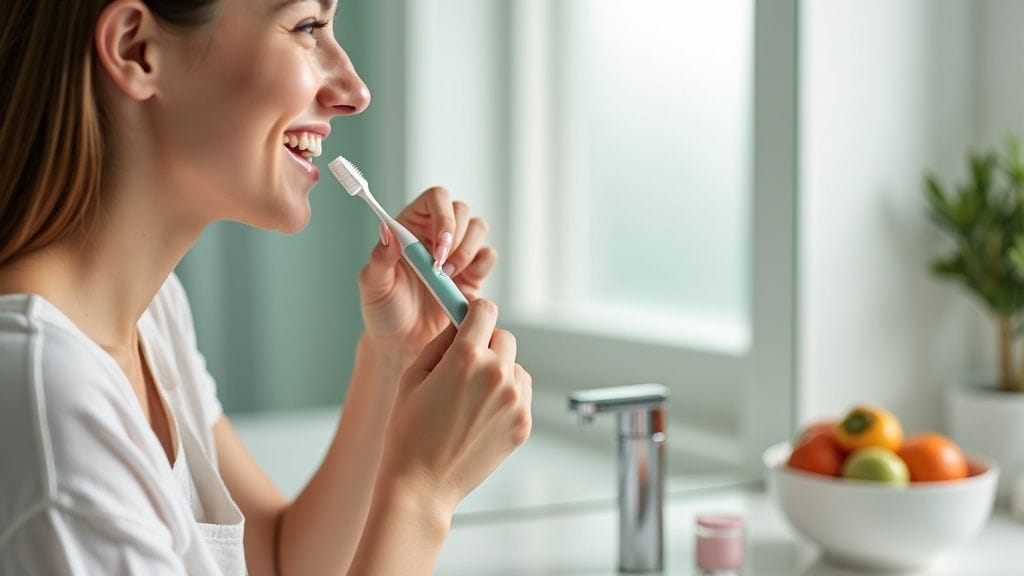
When you break it down, keeping your teeth healthy for life really comes down to three things: what you do every day, what you eat, and getting a little help from the pros. If you get these fundamentals right, you’re already way ahead of the game in preventing common headaches like cavities and gum disease.
Your Foundation for a Lifelong Healthy Smile
Look, there are no big secrets or expensive tricks to a healthy smile. It's all about consistency. At Serena San Diego Dentist, we like to think of it as a three-legged stool—your daily habits, your diet, and your professional check-ups. If one of those legs is wobbly, the whole thing is at risk of tipping over.
The most important work starts right in your own bathroom. Brushing and flossing are your first line of defense against the bacteria and plaque that are constantly trying to set up shop in your mouth. But it's not just about going through the motions; how you do it makes all the difference.
The Pillars of Excellent Oral Health
To really build that solid foundation, let’s focus on these key areas:
- Consistent Daily Care: This is the non-negotiable part. It’s more than a quick scrub in the morning—it’s a mindful routine that gets plaque off your teeth before it has a chance to harden into tartar.
- A Tooth-Conscious Diet: Everything you eat and drink directly affects your teeth. Sugary snacks and acidic drinks are basically a feast for decay-causing bacteria, while the right foods can actually help strengthen your enamel.
- Professional Preventive Visits: Your toothbrush and floss are amazing, but they can't do it all. Regular cleanings get rid of stubborn tartar, let us spot small issues before they become big problems, and offer you personalized advice. In sunny San Diego, where smiles are always on display, this professional partnership is key.
Thinking this way turns dental care from a chore into a smart part of your overall health plan. You're getting ahead of problems before they start, which saves you a lot of time, discomfort, and money in the long run.
"A healthy smile is a powerful asset. It boosts confidence, improves social interactions, and is a direct reflection of your overall well-being. Investing in your oral health is one of the best investments you can make in yourself."
The reality is, poor oral hygiene is a massive global issue. Oral diseases affect an estimated 3.5 to 3.7 billion people worldwide, which is just staggering. Tooth decay is actually the most common chronic disease on the planet, and gum disease hits nearly half of all adults over 30. If you're curious, you can explore more dental care statistics to see the full picture.
By focusing on these core pillars, you’re doing more than just aiming for a nice smile. You’re protecting your entire body. The bacteria from your mouth can get into your bloodstream and have been linked to other serious health issues. Taking control of your dental future starts with these simple, powerful steps.
Mastering Your Daily Brushing and Flossing
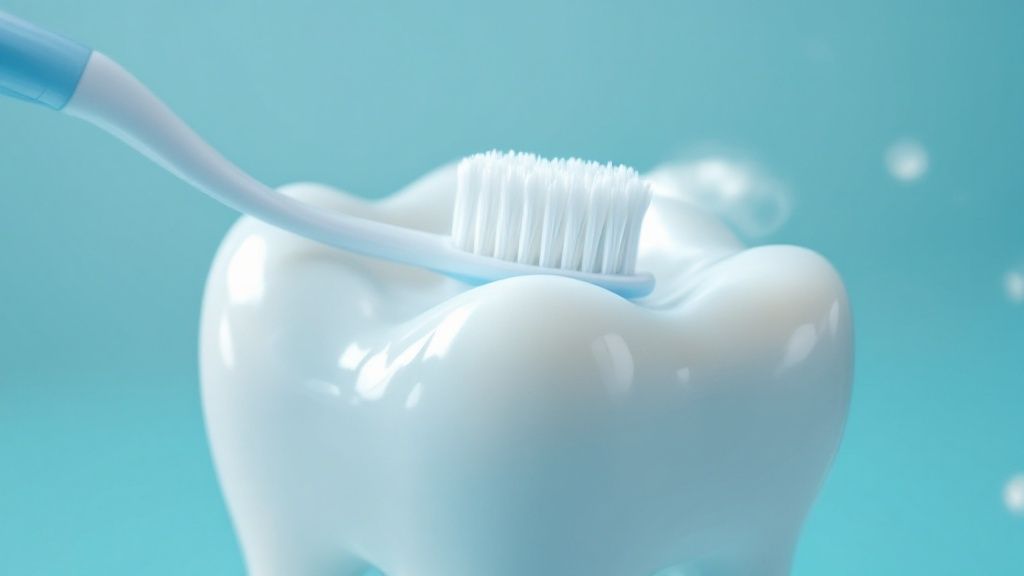
We all know the "brush twice a day" rule. It’s a great start, but the real magic for long-term oral health lies in how you do it. It's so easy to go on autopilot, scrubbing away without much thought. But a more mindful approach transforms this simple task into your best defense against cavities and gum disease.
Let’s talk tools for a second, starting with your toothbrush. The most important feature, hands down, is having soft bristles. I've seen so much damage from hard or even medium bristles—they can be incredibly abrasive, wearing down precious enamel and causing gums to recede over time. Think of it like polishing a delicate surface; you wouldn't use sandpaper.
Whether you go for a manual or electric brush is totally up to you. Both get the job done beautifully when used correctly. That said, many of my patients at our San Diego clinic find success with electric toothbrushes because the built-in two-minute timers and pressure sensors take the guesswork out of being thorough and gentle.
The Modified Bass Brushing Technique
This is the method I recommend to nearly all my patients. It’s the gold standard for removing plaque where it matters most: right along the gumline. It sounds technical, but it’s actually very simple and incredibly effective once you get the hang of it.
- Get the Angle Right: Position your brush at a 45-degree angle to your gums, so the bristles are aimed right where the teeth and gums meet.
- Vibrate, Don't Scrub: Instead of aggressive back-and-forth scrubbing, use short, gentle, vibrating motions. You're trying to jiggle the plaque loose, not scour the surface.
- Be Methodical: Work your way around your entire mouth in a set pattern so you don't miss any spots. Cover the outer, inner, and chewing surfaces of every single tooth.
- Don't Forget Your Tongue: Give your tongue a gentle brush-over to clear away bacteria that cause bad breath.
This targeted technique is all about disrupting that sticky plaque biofilm, which is the root cause of most dental problems. It's a small change in habit that pays off in a huge way for your health.
By focusing on the gumline with gentle, angled strokes, you're not just cleaning your teeth—you're preventing the foundation of gum disease before it can even begin.
Making Flossing an Unskippable Habit
Alright, let's talk about the step too many people skip. If you're only brushing, you're leaving behind plaque on about 35% of your tooth surfaces. That’s a lot! Flossing isn't just for getting a piece of spinach out; it’s for cleaning those tight spaces your toothbrush can never reach.
To make it count, you have to use the "C-shape" method. Don’t just snap the floss between your teeth and call it a day.
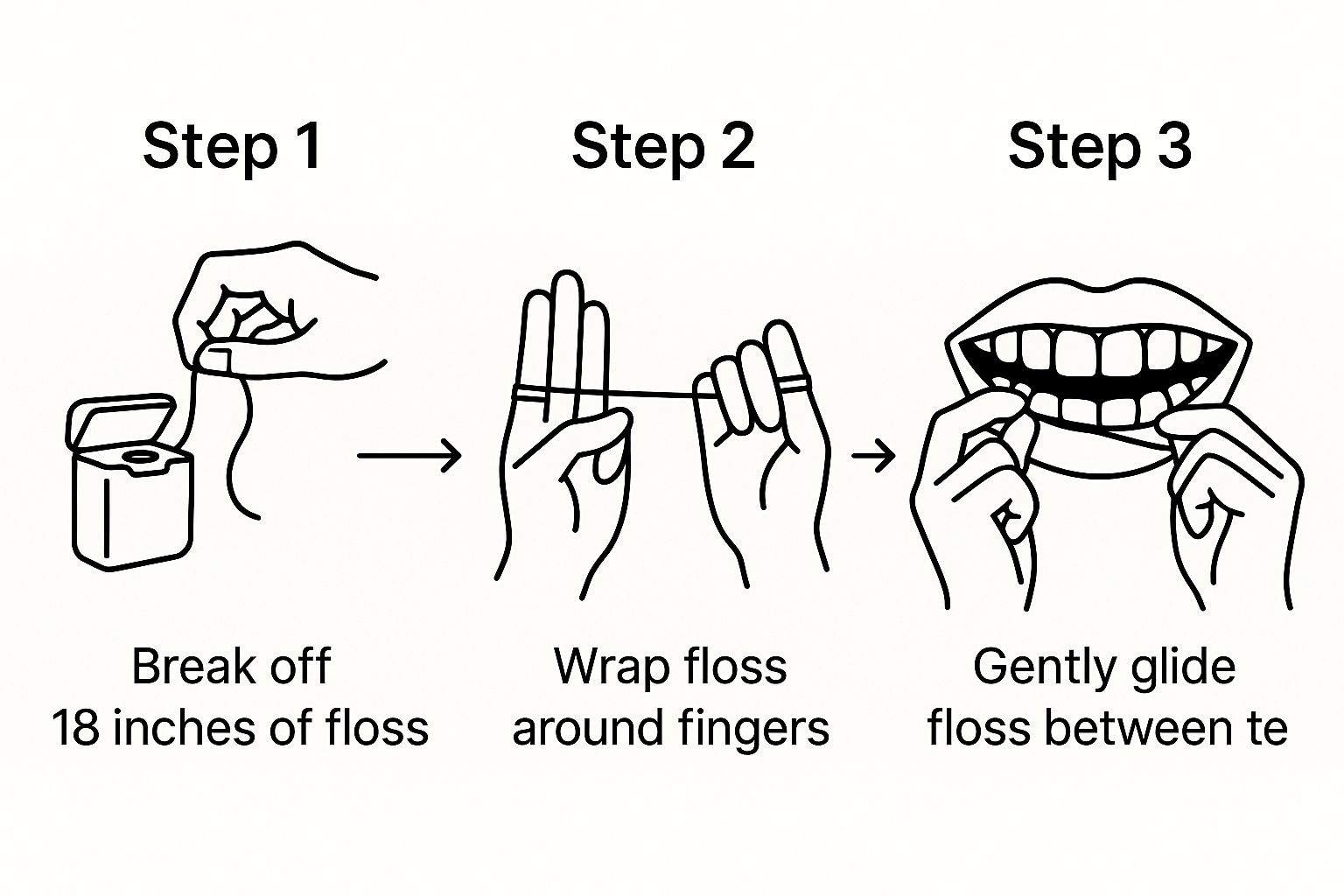
- Start with a good amount of floss—about 18 inches should do it. Wrap most of it around one middle finger, leaving a couple of inches to work with.
- Gently guide the floss between two teeth. Never force it or snap it down, as that can injure your gums.
- Once it's in place, curve the floss into a C-shape, "hugging" the side of one tooth. Slide it up and down, making sure to go slightly below the gumline until you feel gentle resistance.
- Lift the floss over the little triangle of gum tissue and repeat the C-shape hug on the neighboring tooth. Then, move on to the next pair.
This ensures you’re actually scraping the plaque off the sides of your teeth. If you want a more detailed breakdown, our guide on how to properly use dental floss is a great resource.
By making these detailed brushing and flossing techniques a non-negotiable part of your day, you take full control of your oral health. It’s the most powerful preventive care you can do for yourself.
How Your Diet Impacts Your Oral Health
Every time you eat or drink, you're making a choice that either helps your teeth or feeds the very bacteria that want to destroy them. It’s that direct. When you start thinking about food this way, you've already taken a huge step toward keeping your teeth healthy for life.
We all know candy is a problem, but from my experience as a San Diego dentist, the real damage often comes from the less obvious, everyday habits. That daily soda, the sports drink after a workout, or even just snacking on crackers all day can create a seriously hostile environment for your tooth enamel.
The Acid Attack: What Really Hurts Your Teeth
When you eat sugary or starchy foods, the harmful bacteria living in your mouth throw a party. As they feast on these sugars, they produce acid—and this acid is what eats away at your tooth enamel, the hard, protective outer layer of your teeth.
Over time, these repeated acid attacks weaken the enamel, which eventually leads to cavities. It's a slow-motion assault. Some foods and drinks are acidic all by themselves, launching a direct attack without even needing the bacteria as a middleman.
Here are the main offenders you need to watch out for:
- Sugary Drinks: Soda, fruit juices, and sweetened teas are the worst culprits. Sipping on them throughout the day means you're basically bathing your teeth in a continuous acid bath.
- Sticky Foods: Think dried fruit, gummy candies, and caramel. These things cling to your teeth, giving sugar a much longer time to do its damage.
- Starchy Foods: Chips, crackers, and soft breads might seem harmless, but they break down into simple sugars almost immediately in your mouth, providing a ready-made meal for bacteria.
- Acidic Foods and Beverages: Citrus fruits, tomatoes, and even vinegar-based salad dressings can directly erode enamel. For a more detailed breakdown, check out our guide on acidic foods and beverages to limit.
This image is a great reminder that physically cleaning between your teeth is non-negotiable. You have to remove the food debris that fuels this whole acid production cycle in the first place.
Building Your Defensive Diet
The good news? Your diet can also be your greatest ally in the fight against tooth decay. Certain foods actively protect and strengthen your teeth, helping them stand up to these daily challenges.
I tell my patients to think of it this way: Your mouth is in a constant battle between demineralization (losing minerals from acid) and remineralization (gaining them back). Your goal is to tip the scales in favor of remineralization every single day.
To help you make smarter choices, here's a quick guide to what helps and what hurts.
Your Tooth-Friendly Food Guide
A clear comparison of foods that support dental health versus those that can cause harm, helping you make better dietary choices.
| Food Category | Promotes Healthy Teeth (Examples) | Limit for Better Oral Health (Examples) |
|---|---|---|
| Fruits & Vegetables | Apples, carrots, celery, leafy greens (spinach, kale) | Dried fruit (raisins), citrus fruits, fruit juices |
| Dairy | Milk, cheese, plain yogurt, kefir | Sweetened yogurts, ice cream |
| Proteins | Lean meats, fish, eggs, nuts, tofu | Processed meats with added sugars |
| Grains | Whole grains, oatmeal (unsweetened) | White bread, crackers, chips, sugary cereals |
| Beverages | Water (especially fluoridated), milk, unsweetened tea | Soda, sports drinks, energy drinks, sweetened coffee |
Making conscious swaps—like reaching for a handful of nuts instead of crackers—can make a surprisingly big impact over time.
Think of these foods as your smile's defense team:
- Crunchy Fruits and Vegetables: Apples, carrots, and celery are fantastic. Their high water content helps dilute sugars, while their fibrous texture acts like a natural toothbrush, scrubbing your teeth and stimulating saliva flow—your body's own mouthwash.
- Calcium-Rich Foods: Dairy products like milk, cheese, and plain yogurt are loaded with calcium and phosphates, which are the building blocks your teeth use to repair and strengthen enamel.
- Foods with Phosphorus: This mineral is just as critical for strong teeth. You can find it in protein-rich foods like eggs, fish, lean meat, and nuts.
- Water, Especially Fluoridated: Water is the undisputed champion of healthy drinks. It rinses away food particles and acid, and if it has fluoride, it actively helps your teeth resist decay.
By focusing on these tooth-friendly options, you create an oral environment where it's much harder for decay to get started. It's a proactive strategy that works hand-in-hand with your brushing and flossing routine.
Why You Can't Skip Your Dental Visits

Even if you’re a pro with your toothbrush and floss, some things just can't be handled at home. Think of it this way: your daily routine is the essential maintenance, but your professional dental visit is the deep clean and expert inspection your car gets from a master mechanic. You absolutely need both.
It's a common trap to think, "Nothing hurts, so everything must be fine." The reality is that many serious dental problems, like early-stage gum disease or small cavities, don't cause any pain. By the time you feel a toothache, the issue has likely become far more complex and expensive to fix.
What Really Happens at a Check-Up
A routine dental visit is so much more than a quick polish. It’s a comprehensive, proactive appointment designed to keep your mouth in peak condition and catch problems when they're small and easy to manage.
Here’s a breakdown of what you can expect at Serena San Diego Dentist:
- The Professional Cleaning: A dental hygienist uses specialized tools to gently remove tartar—that’s the hardened plaque your toothbrush simply can't budge. This is one of the most effective ways to prevent gum disease.
- A Thorough Exam: Your dentist carefully inspects every surface of your teeth, your gums, and your entire mouth. We're looking for the earliest signs of decay, inflammation, and even performing oral cancer screenings.
- Diagnostic X-rays: These give us the full picture. X-rays let us see what’s happening below the surface—between your teeth and under the gumline—to spot hidden issues like cavities, bone loss, or impacted teeth.
This combination of a deep cleaning and an expert eye gives us a complete understanding of your oral health. From there, we can work together on a personalized plan to keep you smiling. How frequently you should come in can vary, and figuring out how often you should see a dentist is a key part of that strategy.
It's All About Prevention, Not Reaction
Let’s be honest—many people get a little anxious about dental visits. A lot of that fear comes from the idea of needing complex procedures. But the whole point of regular check-ups is to help you avoid those very procedures in the first place.
When you see your dentist regularly, you shift the relationship. We're not just here to fix problems; we become your partners in maintaining good health. Preventive care is always simpler, more comfortable, and more affordable than waiting for something to break.
For example, if we spot a tiny area of weakened enamel, a simple fluoride treatment might be all it takes to reverse the damage. But if that same spot is ignored for a year, it can easily turn into a cavity that needs a filling. It’s the same with your gums—catching a little inflammation early often just requires a tweak to your home care routine. Letting it go can lead to periodontitis, a serious infection that can ultimately cause tooth loss.
Think of these visits as an investment in your future health and peace of mind. You'll leave with the confidence of knowing your smile is truly healthy, both on the surface and deep down. Making professional care a non-negotiable part of your wellness routine is the single most powerful step you can take for a vibrant, lasting smile.
Beyond the Basics: Advanced Oral Care Tips
So, you've nailed your brushing and flossing routine. That's fantastic. But if you're looking to truly bulletproof your smile, there are a few more things you can add to your arsenal. This is about playing offense against bacteria and strengthening your teeth for the long haul.
Add These Tools to Your Bathroom Counter
Brushing and flossing are your non-negotiables, but a couple of extra tools can really elevate your game and make a noticeable difference.
- Antiseptic Mouthwash: I'm not talking about the minty rinses that just cover up coffee breath. A real antiseptic mouthwash actually kills the germs that cause plaque buildup and gingivitis. Think of it as a final cleanup crew after you brush and floss, washing away any lingering debris and knocking down the bacteria count in your whole mouth.
- Tongue Scraper: You'd be surprised how much gunk builds up on your tongue. It's a major source of bad breath. While you can brush your tongue, a dedicated scraper is way more effective at removing that film of bacteria. A few gentle passes from back to front each morning can make a huge impact on how fresh your mouth feels.
Should You Get a Water Flosser?
You’ve probably seen them around. Water flossers (or oral irrigators) are fantastic supplemental tools. They shoot a pulsating stream of water to flush out food bits and plaque from between your teeth and under the gumline.
They aren't for everyone, but for some people, they are an absolute game-changer.
| Who Benefits Most from a Water Flosser? |
|---|
| Anyone with Braces |
| People with Implants or Bridges |
| Those with Arthritis or Dexterity Issues |
Just one thing to remember: most dentists, including myself, see a water flosser as an addition to string floss, not a replacement. String floss physically scrapes away sticky plaque biofilm. The water flosser is more like a power washer. Use both, and you've got a powerful one-two punch.
How Your Lifestyle Can Sabotage Your Smile
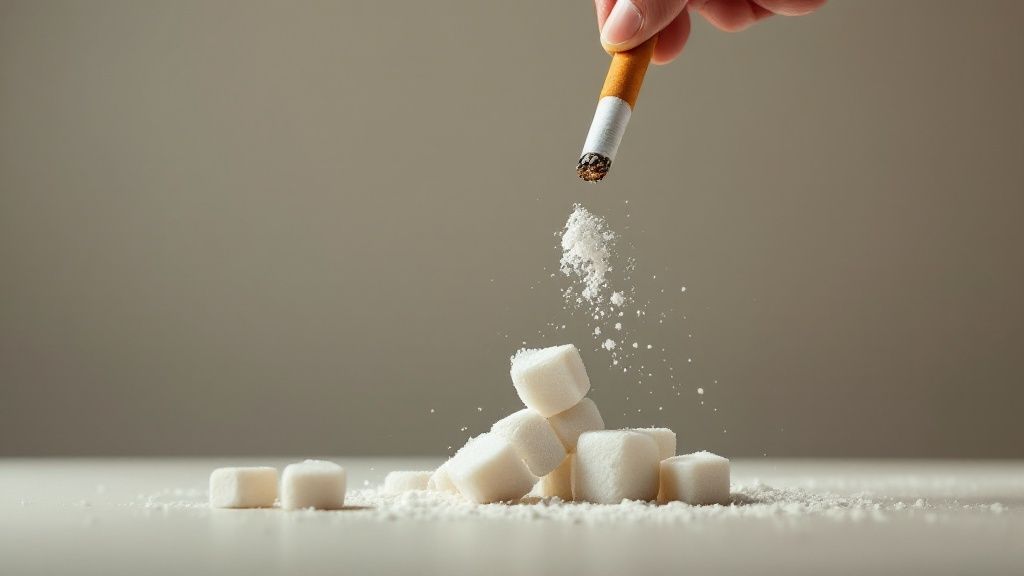
You can have the most meticulous oral hygiene routine on the planet, but some habits will simply undo all your hard work. The two biggest offenders? Smoking and heavy drinking.
Smoking is just brutal on your mouth. It stains your teeth, sure, but it also chokes off blood flow to your gums, which dramatically increases your risk for gum disease. It's also a primary cause of oral cancer and makes it harder for you to heal after any dental procedure.
Excessive alcohol isn't much better. Many alcoholic drinks are acidic and loaded with sugar—a direct invitation for enamel erosion and cavities. It also dries out your mouth, and that's a big problem. Saliva is your body's natural defense system, constantly rinsing away acid and bacteria.
Don't Ignore These Early Warning Signs
A huge part of staying healthy is knowing when to call for backup. Your mouth often gives you little clues that something is brewing long before you feel any pain.
Pay attention to what your mouth is telling you. Catching a small problem early is always easier, quicker, and less expensive to fix than waiting for a full-blown dental emergency.
Keep an eye out for these red flags:
- Bleeding Gums: If you see pink in the sink every time you brush, that’s not normal. It's the classic calling card of early-stage gum disease (gingivitis).
- Bad Breath That Won't Quit: We all have bad breath sometimes. But if it sticks around despite good hygiene, it could point to gum disease, a hidden cavity, or another underlying issue.
- New or Worsening Sensitivity: Suddenly wincing when you drink something cold? That could be a new cavity, a tiny crack in a tooth, or receding gums exposing the sensitive root.
- Weird Spots or Patches: Any new dark spots, chalky white patches, or rough-feeling areas on your teeth need to be checked out by a professional.
Sometimes, a simple in-office fluoride application can work wonders for sensitivity and help remineralize weak spots in your enamel. To get a better sense of how this works, you can read about what effects fluoride treatments can have on your teeth. If you notice any of these signs, don't put it off—schedule a visit.
Payment and Insurance at Serena San Diego Dentist
We believe everyone in San Diego deserves access to excellent dental care without financial stress. That's why we work hard to make your visits as affordable and straightforward as possible. Serena San Diego Dentist accepts most major insurance plans for covered services and offers flexible out-of-pocket payment options, including financing plans. Our team is always here to help you understand your benefits and find a payment solution that works for you. Don’t let cost be a barrier to a healthy smile—contact us to learn how your insurance can cover your dental needs.
Common Questions About Healthy Teeth
Even with the best intentions and a solid routine, questions always come up. Getting clear, practical answers is the best way to feel confident about your oral care. Here are some of the most frequent questions I get from patients in our San Diego office, answered in a way that I hope clears things up for good.
How Often Should I Really Change My Toothbrush?
The rule of thumb is to grab a new toothbrush every three to four months. After a few months of daily use, the bristles inevitably get frayed, bent, and worn down. When that happens, they just can't effectively clean along your gumline or get into those tight spaces between teeth.
Your eyes are your best guide, though. If you look at your brush and the bristles are splayed out like a tired, old broom, it’s time for a replacement. I also tell all my patients to get a new brush after they’ve been sick with a cold or the flu—it’s just a simple way to avoid reintroducing those germs.
Are Electric Toothbrushes Truly Better Than Manual Ones?
Honestly, a manual toothbrush can do a fantastic job if you're using it with the right technique. That said, a ton of research points to electric toothbrushes having a real edge, especially when it comes to zapping plaque and reducing gingivitis.
Think about the built-in advantages:
- Built-in Timers: Most electric models have a two-minute timer, which takes the guesswork out of brushing for the full recommended time.
- Superior Plaque Removal: The oscillating and vibrating heads produce thousands of brush strokes per minute, far more than you could ever do by hand.
- A Big Help with Dexterity: They're a game-changer for anyone with arthritis or limited mobility since the brush does most of the heavy lifting.
At the end of the day, the best toothbrush is the one you’ll actually use correctly every single day. But if you’re looking to step up your routine, an electric brush is an excellent investment in your long-term oral health.
Is It Possible to Reverse a Cavity?
Yes, but there's a huge catch: it's only possible in the absolute earliest stage. We call this stage demineralization, and it usually looks like a little chalky white spot on the tooth. The decay hasn't actually created a hole in the enamel yet; it's just weakened it.
This is where your daily habits can be a true hero. You can often stop that white spot in its tracks and even remineralize the enamel by:
- Using a fluoride toothpaste to help replenish those lost minerals.
- Making sure you drink fluoridated tap water.
- Cutting back on sugary and acidic snacks that feed decay-causing bacteria.
However, once the decay breaks through the enamel and creates a physical pit or hole, it’s a point of no return. That damage can't be reversed, and the tooth will need a filling. This is exactly why we stress regular check-ups—catching those little white spots early can save you from a filling down the road.
What Is the Main Cause of Bad Breath and How Do I Stop It?
In the vast majority of cases, that persistent bad breath—what we call halitosis—comes from bacteria building up in your mouth. These little critters feast on leftover food particles, plaque, and dead cells, then release foul-smelling sulfur compounds.
The main hiding spots for these bacteria are the back of the tongue, between the teeth, and just under the gumline. So, getting rid of bad breath requires a full-on attack.
A fresh mouth isn't just about masking odors; it's about eliminating the source. The key is to disrupt the bacteria that cause the problem in the first place.
Here’s your action plan for a fresher mouth:
- Brush Thoroughly: Twice a day is the minimum, and make sure you hit every single tooth surface.
- Floss Daily: This is non-negotiable. It clears out the gunk from between your teeth where your brush just can't reach.
- Clean Your Tongue: A tongue scraper is fantastic for this, but even just brushing your tongue works wonders.
- Stay Hydrated: Water is your friend! It helps rinse away food particles and keeps saliva flowing, which is your mouth's natural cleaning agent.
If you’re doing all of this and the bad breath just won't go away, it's time to see your dentist. It could be a sign of something more serious, like gum disease or another underlying issue that needs to be addressed.
Ready to partner with a team dedicated to helping you achieve and maintain your healthiest smile? The experts at Serena San Diego Dentist are here to provide personalized care, from routine check-ups to advanced cosmetic procedures. Schedule your appointment online today!