
Keeping your smile healthy isn't complicated, but it does require commitment. It boils down to consistent daily habits and regular professional care. Think of it as a foundation built on simple, powerful actions: proper brushing, daily flossing, and smart food choices. By mastering these basics and partnering with a dental professional, you can maintain your oral health for a lifetime.
Building Your Daily Oral Health Foundation
The secret to a vibrant, healthy smile isn't a secret at all—it's about consistency. A truly effective daily routine goes beyond just a quick scrub. It’s about using the right techniques, having the best tools, and understanding why each step is so important. When you do that, your daily care transforms from a chore into your best line of defense against common dental problems like cavities and gum disease.
Oral diseases are a staggering global health issue, impacting an estimated 3.5 billion people. In fact, untreated cavities in permanent teeth are the most common health condition worldwide. This statistic highlights just how critical proactive, preventive care is for your overall well-being.
Mastering Brushing and Flossing
There's a right way and a wrong way to brush your teeth. Most dentists recommend the Modified Bass technique. This involves angling your brush at a 45-degree angle to your gum line and using gentle, short, circular strokes. This specific angle is fantastic for cleaning just under the gum line where plaque loves to accumulate.
Remember the two-minute rule. Brushing for a full 120 seconds gives you enough time to thoroughly clean every tooth surface—inside, outside, and the chewing surfaces. If you have trouble keeping track, many electric toothbrushes come with a built-in timer to do the work for you. For a deeper dive, check out these essential oral hygiene tips.
This visual guide shows that 45-degree angle in action, which is the cornerstone of the Modified Bass technique.
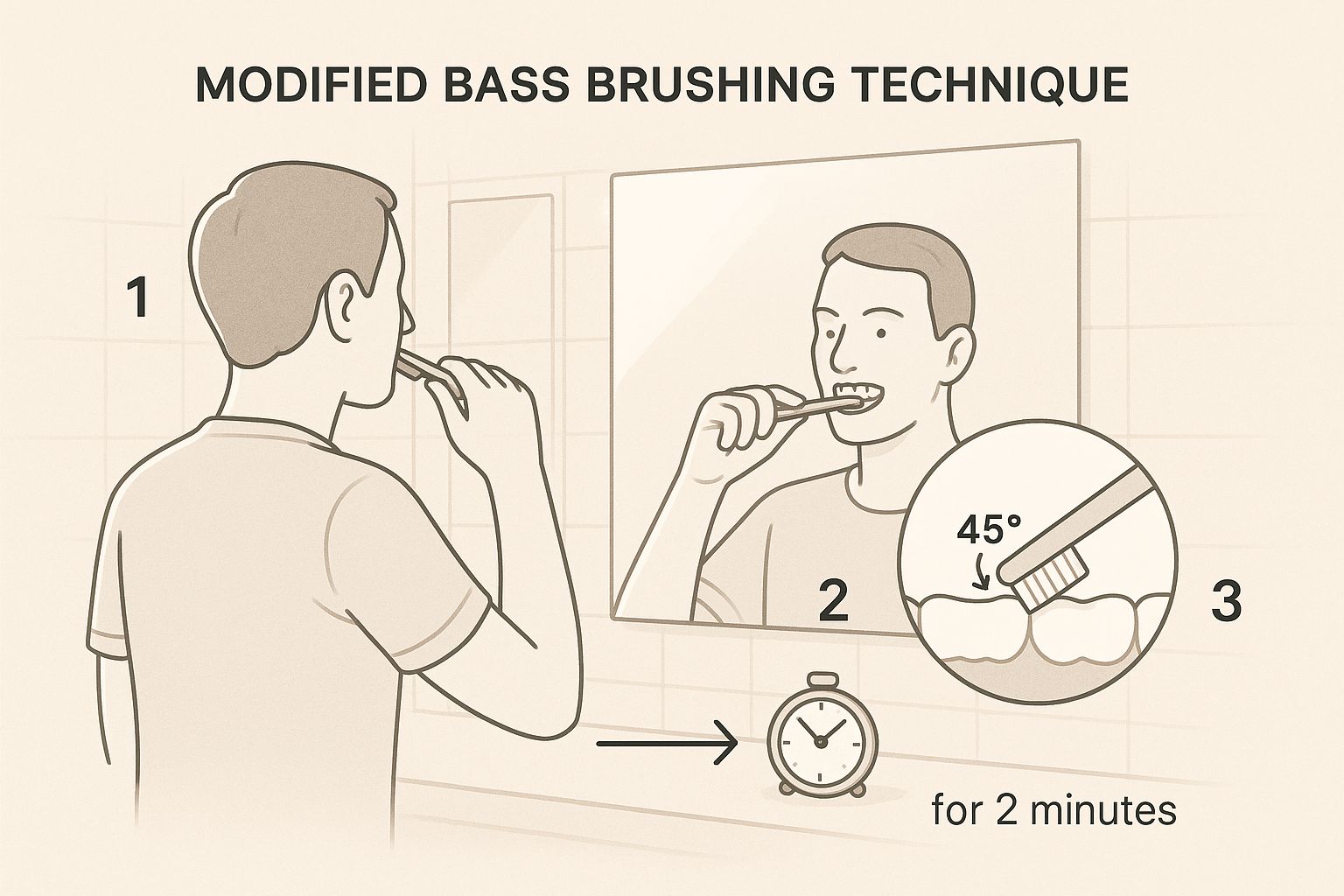
The image drives home how this specific angle helps clean the small pocket between the tooth and gum, which is where problems like gingivitis often start.
To help you stay on track, here's a quick checklist of the daily essentials for anyone looking to maintain their oral health.
Your Daily Oral Health Checklist
| Action | Frequency | Key Tip |
|---|---|---|
| Brushing | 2x Daily | Use a soft-bristled brush and fluoride toothpaste. Angle the brush 45 degrees toward your gums. |
| Flossing | 1x Daily | Clean between all teeth, curving the floss around each tooth to get just below the gum line. |
| Mouthwash | Optional | An antiseptic rinse can help reduce plaque and kill bacteria, but it doesn't replace brushing or flossing. |
| Tongue Cleaning | 1x Daily | Use a tongue scraper or your toothbrush to gently remove bacteria that cause bad breath. |
Following these simple steps every day is your best bet for keeping your mouth healthy and your smile bright.
Choosing Your Oral Hygiene Tools
Having the right gear makes all the difference. When selecting a toothbrush, always go for soft bristles to protect your gums and enamel from damage. The brush head should also be small enough to easily reach every nook and cranny, especially those tricky back molars. As for toothpaste, the key ingredient to look for is fluoride, which is proven to strengthen enamel and prevent cavities.
Flossing is an absolute must. Your toothbrush misses about 35% of your tooth surfaces—the tight spaces in between. Whether you use traditional string floss, dental tape, or a water flosser doesn't matter as much as doing it consistently every single day. If you're looking for more ways to improve your home care, you can step up your oral hygiene with these 10 tips.
How Your Diet Shapes Your Dental Health
We've all heard the saying, "You are what you eat," and it's especially true when it comes to your teeth. The food and drinks you choose can either be a powerful tool for building a strong, healthy smile or the fuel that feeds decay-causing bacteria.

Think of it this way: every time you have a sugary treat or a sip of soda, you’re basically ringing the dinner bell for the bad bacteria in your mouth. They feast on these sugars and produce acids as a byproduct, which then go on to attack your tooth enamel. Over time, this constant acid assault strips away minerals and weakens your teeth, making them prime targets for cavities.
Building an Enamel-Friendly Plate
The good news is you can fight back from your fridge and pantry. Loading up on foods rich in specific nutrients gives your teeth the raw materials they need to stay strong and resilient.
- Calcium: This is the superstar mineral for strong bones and teeth. You'll find it in dairy products, of course, but also in leafy greens like spinach and fortified cereals.
- Phosphorus: Calcium's best friend, phosphorus works right alongside it to build tough enamel. Good sources include protein-packed foods like fish, eggs, and lean meats.
- Vitamin C: Don't forget your gums! Vitamin C is vital for keeping them healthy and fending off issues like gingivitis. Load up on citrus fruits, bell peppers, and broccoli.
A great pro tip for maintaining oral health: After eating or drinking anything sugary or acidic, simply swish your mouth with plain water. It’s an incredibly easy way to help neutralize those damaging acids and wash away leftover sugars, giving your enamel a much-needed break.
Making Smart Swaps and Limiting Damage
Protecting your teeth doesn't require a radical, all-or-nothing diet overhaul. It's the small, consistent choices that really add up.
Instead of grabbing a sugary granola bar, try a handful of almonds or a slice of cheese. Swap that can of soda at lunch for a glass of water or milk. These simple exchanges can dramatically reduce the amount of sugar and acid your teeth are exposed to throughout the day.
Knowing which foods and drinks are the worst offenders is half the battle. For a deeper dive, check out this guide on the most acidic foods and beverages to limit or avoid.
On the flip side, some foods can actively help your body manage inflammation, a major player in many oral health problems. For instance, learning about olive oil's anti-inflammatory benefits can offer another way to support your overall and dental wellness from the inside out.
Why Professional Dental Check-ups Are Essential
Think of your daily oral hygiene routine as the foundation of your dental health. But even the strongest foundation needs an expert inspection now and then. That’s where your dentist comes in—they are your essential partner in making that foundation last a lifetime.
Regular check-ups aren't just for when something hurts. They are your single best tool for preventing problems from ever starting in the first place.
Even if you're a brushing and flossing champion, plaque can still sneak into tight spots and harden into tartar. Once it's there, no amount of home care can get it off. Only a dental professional has the tools and expertise to safely remove that stubborn buildup.
Decoding the Dental Cleaning Process
A professional cleaning, often called prophylaxis, is like hitting the reset button for your mouth. It’s a multi-step process that gets your teeth and gums back to a pristine state.
First, your hygienist will use special instruments to gently scale away all the plaque and tartar from your teeth and just below the gumline.
Next comes the polishing. Using a gritty, pro-grade paste, they’ll buff away surface stains, leaving your teeth feeling incredibly smooth and looking noticeably brighter. Many cleanings wrap up with a fluoride treatment, which is fantastic for strengthening your enamel and giving you an extra shield against cavities.
Overcoming Barriers to Regular Visits
We understand that making it to the dentist isn't always simple. Statistics show that while 64% of adults in the U.S. had a dental visit in the past year, major issues are still widespread. About 25% have untreated cavities, and a staggering 46% show signs of gum disease.
The reasons for this are real and valid. An estimated 76.5 million adults don't have dental insurance, and for over 20% of people, dental anxiety is a significant hurdle.
If anxiety is what's holding you back, please speak up. Open communication is everything. Your dental team can walk you through different options to make your experience as comfortable and stress-free as possible. If it's a budget issue, know that many dental offices accept various insurance plans and offer flexible payment options to ensure cost isn't a roadblock to good health.
A professional check-up is an investment in prevention. Catching a small cavity early with a simple filling is far easier and more affordable than dealing with a root canal or tooth loss down the line.
Ultimately, figuring out how often you should see a dentist to keep your smile healthy is a personal conversation between you and your dental professional. Most people do great with two visits a year, but your unique needs might call for a different schedule. This proactive approach is simply the smartest way to protect your smile for the long haul.
Your Dental Needs Evolve Over Time
Think of your oral health routine like your wardrobe—what fit you perfectly as a kid won't work for you as a teenager, and it certainly needs updating as you get older. A one-size-fits-all approach just doesn't cut it. To maintain oral health for the long haul, you have to adapt your habits to whatever stage of life you're in.
From Childhood Giggles to Teenage Braces
For little ones, the name of the game is making brushing fun. Grab some bubblegum-flavored fluoride toothpaste and a toothbrush with their favorite cartoon character. The goal is to build good habits early, because those baby teeth are doing the important job of saving space for their adult teeth.
Then come the teenage years, and things get a bit more complicated. Braces, for example, create a maze of wires and brackets where plaque loves to hide. Cleaning requires extra time and tools. This is also the prime time for wisdom teeth to make their grand, and often problematic, entrance. Keeping up with dental visits is non-negotiable to make sure they're not causing trouble.
The Adult Balancing Act
Life as an adult is often a juggling act. Stress can lead to bruxism (a fancy word for teeth grinding), which can wear your enamel down and even cause jaw pain. Hectic schedules can also knock a consistent brushing and flossing routine right off the priority list.
The single best thing you can do for your long-term oral health is accept that your needs are always changing. The routine that kept your teeth pristine in your twenties might not be enough to tackle the challenges of your forties or sixties. Being proactive is your best defense.
Maintaining Your Smile in Your Golden Years
As we get older, our mouths face a new set of hurdles. The data is clear: tooth loss and gum disease ramp up significantly with age, with folks between 65 and 74 often experiencing the biggest impact. This makes it crucial to get serious about preventative care. You can dive deeper into the importance of targeted strategies for aging populations to understand the specifics.
A few common culprits pop up in later life:
- Dry mouth: Often a side effect of necessary medications, it can drastically increase your risk for cavities.
- Gum recession: This can expose the roots of your teeth, making them more sensitive and vulnerable.
- Dental work: Dentures and implants need their own special cleaning routines to prevent irritation, bad breath, and infections.
Adjusting your daily care to meet these challenges head-on is the key to smiling confidently at every age.
Spotting Early Warning Signs of Dental Problems
A great daily routine is the foundation of good oral health, but it’s just as important to be your own health advocate between dental visits. Learning to spot trouble early is truly the secret to keeping treatments simple, less invasive, and far more affordable.
Think of it this way: your body is great at sending signals when something isn't right. When you learn to recognize these little red flags, you can get professional help before a tiny issue snowballs into a serious problem.
Common Issues to Watch For
Here are a few of the most common signs that something’s off and it's time to give your dentist a call.
- Bleeding or Puffy Gums: Seeing pink in the sink when you brush or floss? That's often the very first sign of gingivitis, the initial (and reversible) stage of gum disease.
- Tooth Sensitivity: If a sip of hot coffee or a bite of ice cream suddenly sends a jolt through your tooth, it could mean your enamel is wearing thin or a cavity is developing. We have a detailed guide on what a cavity looks like and other symptoms if you want to learn more.
- Jaw Soreness or Headaches: Waking up with a stiff, sore jaw or a persistent, dull headache is a classic symptom of teeth grinding (bruxism) at night. Over time, this can do some serious damage to your teeth.
Self-awareness is not about self-diagnosis. It’s about recognizing when something has changed so you can get professional guidance quickly. Never ignore persistent changes in your oral health.
Answering Your Top Oral Health Questions
When it comes to dental care, a little bit of knowledge goes a long way. Let's clear up some of the most common questions people have so you can feel more confident about your routine to maintain oral health.
How Often Should I Really Be Seeing My Dentist?
You’ve probably heard the "every six months" rule your whole life, and for most people, that's a perfect baseline. It’s the sweet spot for catching potential issues early and getting a thorough cleaning.
However, this isn't a one-size-fits-all rule. If you're managing gum disease or are more prone to cavities, we might need to see you more often—say, every 3-4 months—to stay on top of things. On the flip side, if your teeth and gums are in stellar shape, a yearly visit might be all you need. The most important thing is to follow the personalized schedule your dentist sets for you.
Are Electric Toothbrushes Worth the Hype?
This is a big one. The truth is, both manual and electric toothbrushes do a great job if your technique is solid. The real advantage of an electric toothbrush is that it does a lot of the hard work for you.
Many people find the built-in timers a game-changer for hitting that full two-minute mark. The consistent power and oscillating heads can also make it much easier to clean thoroughly, especially for those with arthritis or other dexterity challenges.
The verdict: The best toothbrush is the one you'll actually use correctly, every single day. If an electric brush makes your routine easier and more effective, it's a fantastic investment in maintaining your oral health.
What if I Have Bad Breath That Just Won't Quit?
We've all been there. But if you're dealing with persistent bad breath (halitosis) that mouthwash can't mask, it's time to look a little deeper. Often, the culprit is simply trapped food particles, so stepping up your hygiene is the first move. Make sure you're brushing twice a day, flossing daily (this is non-negotiable!), and gently scraping or brushing your tongue.
If the problem sticks around after a week or two of diligent care, it's time to see your dentist. Chronic bad breath can be a red flag for something more serious, like gum disease or an underlying medical issue. A professional cleaning and check-up will help get to the root of the problem and solve it for good.
Ready to take control of your dental health? The team at Serena San Diego Dentist is here to help you achieve and maintain your healthiest smile. Schedule your consultation today by visiting us at https://serenasandiegodentist.com.