
Let's be real—nobody enjoys hearing the words, "You have a cavity." But tooth decay isn't just bad luck. It's a specific process, and once you understand how it works, you can absolutely stop it in its tracks.
The Battle Happening in Your Mouth
At its core, preventing tooth decay is about managing the environment inside your mouth. Think of it as a constant tug-of-war between your teeth and the bacteria that live there.
Every single day, a sticky, clear film of bacteria called plaque builds up on your teeth. When you eat sugary snacks or starchy foods, you're not just feeding yourself—you're feeding that plaque. The bacteria go into a frenzy, breaking down those sugars and producing acids as a waste product.
Those acids are the real enemy. They go to work on your tooth enamel, the super-hard outer shell of your teeth, and start pulling out vital minerals. This is called demineralization.
Your body has a natural defense system. Saliva helps neutralize the acid and puts minerals back into the enamel in a process called remineralization. But if you’re constantly snacking or sipping on sugary drinks, your saliva just can't keep up. The acid attacks win, the enamel gets weaker, and eventually, a hole forms. That’s a cavity.
A Problem We All Face
It's easy to think of a cavity as a small, personal problem, but it's a massive global health issue. Tooth decay, or dental caries, is the single most common chronic disease in the world.
By 2021, it affected an incredible 3.74 billion people. In fact, untreated decay in permanent teeth is the most widespread health condition on the planet. This isn't just about a toothache; it's a serious burden, costing economies billions in lost productivity every year. You can dig into more of these dental care statistics to see just how common this preventable condition truly is.
You're in the Driver's Seat
Here's the most important takeaway: this entire process is preventable. You have far more control than you might think. Winning the war against cavities isn't about complicated procedures; it's about building small, consistent habits that keep your mouth healthy.
We're going to focus on three key battlefronts:
- Your Daily Routine: It's not just that you brush and floss, but how. We'll get into the techniques that actually remove plaque effectively.
- A Tooth-Friendly Diet: Making smart choices about what you eat and drink to starve the bad bacteria and strengthen your enamel.
- Professional Backup: Using fluoride and working with your dental team to keep your defenses strong.
By understanding the "why" behind decay, you can see the power in these simple actions. Every time you brush the right way or grab water instead of soda, you’re actively protecting your smile. This guide will walk you through the practical steps to make tooth decay a thing of the past.
Mastering Your Daily Oral Hygiene Routine
Your daily oral hygiene routine is your absolute best defense against tooth decay. We all know the basics—brush and floss—but the real magic is in the technique. It's not about brushing harder; it's about being smarter and more strategic to stop plaque in its tracks before it can cause any real damage.
So many people go through the motions without realizing they're consistently missing the key spots where bacteria love to hide. Let's break down the pro-level methods that make every minute of your routine count.
The Foundation: Brushing with Precision
Proper brushing has less to do with aggressive scrubbing and more to do with gentle, targeted movements. In our practice, we always recommend the Modified Bass Technique. It's specifically designed to clean that critical area right beneath the gumline where plaque does its worst work.
Here’s how to get it right:
- Angle is Everything: Tilt your toothbrush to a 45-degree angle against your gums. The goal is to let the bristles gently sweep just under the gumline.
- Keep it Gentle: Use very short, vibrating strokes—either back-and-forth or in tiny circles. This motion is fantastic for dislodging plaque without being harsh on your enamel or gums.
- Be Systematic: Work your way around your mouth in a set pattern every single time. Cover all three surfaces of each tooth: outer, inner, and chewing. This ensures no tooth gets left behind.
Don't forget to use a soft-bristled brush and a good fluoride toothpaste. And yes, brushing for a full two minutes, twice a day, really is non-negotiable if you're serious about preventing cavities.
The Unskippable Step: Flossing Correctly
Your toothbrush is great, but it can't reach everywhere. Flossing cleans the 35% of your tooth surfaces that are tucked away between your teeth. When you skip it, you're essentially leaving a welcome mat out for acid-producing bacteria.
The most effective approach I teach my patients is the "C-shape" method. It ensures you're cleaning the tooth surface, not just popping the floss in and out.
Start with about 18 inches of floss, wrapping most of it around one middle finger and just a little on the other to take up the slack. Gently work the floss between your teeth—never snap it down on your gums.
Once you hit the gumline, here's the key: curve the floss into a C-shape around one tooth. Slide it carefully into the space between your gum and the tooth until you feel a bit of resistance, then scrape upwards, away from the gum. Do the same for the neighboring tooth before you move on.
This simple infographic below does a great job of showing how bacteria, sugar, and acid team up to cause decay.
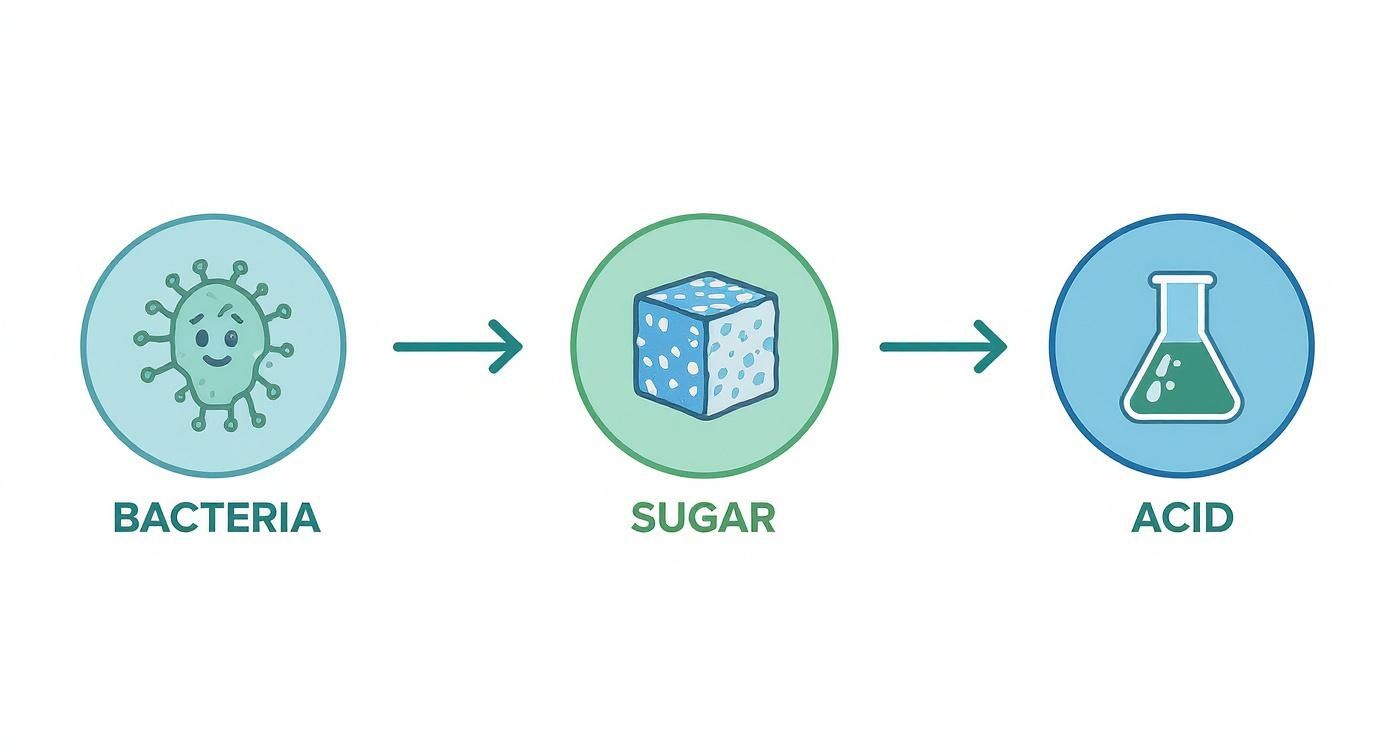
When you brush and floss correctly, you're directly interrupting this destructive process by removing both the bacteria (plaque) and its food source (sugar).
A Crucial Timing Tip: If you've just had something acidic like orange juice, soda, or coffee, wait at least 30 minutes before you brush. The acid temporarily softens your enamel, and brushing right away can literally scrub it away. A quick rinse with plain water is the best thing you can do in the meantime.
Completing Your Routine with the Final Touches
Want to take your oral health to the next level? A couple of extra steps can make a huge difference by targeting bacteria that brushing and flossing might miss.
Scrape Your Tongue: Your tongue is a magnet for food debris and bacteria, which can cause bad breath and contribute to the overall bacterial load in your mouth. A quick scrape each morning with a tongue scraper (or even the back of your toothbrush) physically removes all that gunk.
Rinse with an Antibacterial Mouthwash: A good mouthwash is the perfect finishing touch. I always recommend an alcohol-free formula with antibacterial properties to kill germs that cause plaque and gingivitis. It's great for washing away any last bits of debris you loosened up while brushing and flossing.
By making these specific techniques a part of your daily life, you shift from just "cleaning your teeth" to actively preventing disease. For even more great ideas, check out our guide on how to step up your oral hygiene for a healthier smile. It's the consistency that turns these simple actions into powerful, cavity-fighting habits.
Building a Tooth-Friendly Diet That Works

While your daily cleaning routine is your first line of defense, what you eat and drink plays a massive role in the battle against tooth decay. It's not just about avoiding candy. It's about understanding how certain foods fuel the bacteria that cause cavities, while others actively help strengthen and protect your enamel.
The good news is that a tooth-friendly diet is less about strict rules and more about making smart, sustainable swaps. By focusing on adding protective foods and being mindful of the harmful ones, you can turn your meals into a powerful tool for preventing cavities.
The Real Story on Sugar
Let's be clear: not all sugars are created equal, at least not in your mouth. The real culprits are what experts call free sugars. These are the sugars added to foods and drinks during processing—think high-fructose corn syrup in soda or the granulated sugar in pastries. They’re simple, easy-to-digest fuel for plaque bacteria.
When you eat a whole apple, the natural sugars are bound up in fiber. This makes you chew more, stimulating saliva that rinses your teeth, and slows down sugar absorption. A can of soda, on the other hand, delivers a concentrated blast of free sugars with no nutritional value, overwhelming your mouth’s natural defenses.
The World Health Organization has long pointed to free sugar as a primary driver of tooth decay globally. Decades of research back this up, which is why you see public health efforts aimed at curbing consumption. You can learn more directly from the WHO's findings on sugars and dental caries to see how they advocate for healthier communities.
Loading Up on Enamel Boosters
Just as some foods attack your teeth, others are fantastic for building them up. Think of these as your smile’s support team, providing the essential nutrients needed for strong, resilient enamel.
Try to work more of these into your diet:
- Calcium-Rich Foods: Cheese, milk, plain yogurt, and leafy greens like spinach and kale are packed with calcium, a primary building block of tooth enamel.
- Phosphorus Powerhouses: Almonds, fish, and eggs are high in phosphorus, a critical mineral that works with calcium to remineralize your teeth.
- Crunchy Fruits and Vegetables: Carrots, celery, and apples act like nature's toothbrushes. Their fibrous texture physically scrubs away plaque as you chew.
- Saliva-Promoting Foods: Chewing stimulates saliva flow—your body's best defense against cavities. Firm, crunchy foods are great, as is sugar-free gum with xylitol after meals.
A Dentist’s Pro Tip: Cheese is a dental superstar. It's not only high in calcium and phosphates but also helps raise the pH level in your mouth. This creates a less acidic environment that’s hostile to cavity-causing bacteria.
Navigating the Dangers of Acidic Foods and Drinks
Sugar isn't the only dietary villain; acid is just as destructive. Highly acidic foods and drinks can directly dissolve your tooth enamel, weakening your teeth and making them far more susceptible to decay.
Many popular beverages are surprisingly high in acid, including:
- Coffee and wine
- Sports and energy drinks
- Fruit juices (especially citrus)
- Sodas (both regular and diet)
This doesn't mean you have to give up your morning coffee forever. It’s about being strategic to minimize the damage.
Smart Sips and Swaps
- Don't Nurse It: The longer your teeth are exposed to acid, the worse the damage. Try to drink that acidic beverage with a meal instead of sipping it over several hours.
- Use a Straw: When drinking sodas, juices, or iced coffee, a straw helps the liquid bypass your teeth, reducing direct contact.
- Rinse with Water: After having something acidic, swish your mouth with plain water. This simple step helps neutralize the acid and wash it away almost immediately.
- Pair with Food: Enjoying acidic drinks with a meal can help buffer the acid, as other foods and increased saliva production lessen the impact.
Below is a quick guide to help you distinguish between foods that build up your teeth and those that break them down.
Tooth-Friendly Foods vs. Foods to Limit
| Tooth-Friendly Foods (Enamel Boosters) | Why They Help | Foods to Limit (Decay Promoters) | Why They Harm |
|---|---|---|---|
| Cheese, Milk, Yogurt | Rich in calcium and phosphates, which remineralize enamel and raise mouth pH. | Candy, Cookies, Pastries | Packed with free sugars that feed acid-producing bacteria directly. |
| Leafy Greens (Spinach, Kale) | High in calcium and folic acid, promoting gum and tooth health. | Sodas and Sports Drinks | Extremely high in both sugar and acid, a dual threat to enamel. |
| Crunchy Veggies (Carrots, Celery) | Their fibrous texture physically cleans teeth and stimulates saliva flow. | Dried Fruits (Raisins, Apricots) | Sticky and high in concentrated sugar, they cling to teeth for hours. |
| Nuts (Almonds, Cashews) | Good source of calcium and phosphorus; their texture helps scrub teeth. | Starchy Foods (Chips, Crackers) | Break down into simple sugars in the mouth and get stuck in crevices. |
| Lean Proteins (Fish, Eggs) | Provide phosphorus, a key mineral for protecting and rebuilding enamel. | Citrus Fruits and Juices | Highly acidic, which can directly erode and soften tooth enamel. |
Making mindful choices is the goal. For a deeper look into what to watch out for, check out our guide on the most acidic beverages and foods to limit or avoid. A diet that works for your smile is one of the best long-term investments you can make in your oral health.
Using Fluoride and Sealants for Extra Protection
Even if you’ve perfected your daily brushing routine and stick to a tooth-friendly diet, your smile can always use some extra reinforcement. Think of fluoride and dental sealants as your oral health superheroes—they provide a powerful shield against the daily assault from sugar and acid.
Making your teeth stronger and more resilient is the name of the game, and understanding how these tools work is a cornerstone of any solid strategy to prevent tooth decay.
How Fluoride Works as Your Enamel's Best Friend
Fluoride, a naturally occurring mineral, works wonders for strengthening your teeth. When it comes into contact with your enamel, it actually integrates into the tooth's crystalline structure. This process, called remineralization, creates a new surface that's far more resistant to acid attacks from plaque bacteria. It’s like upgrading your teeth's defense from a wooden shield to an iron one.
But it doesn't just build stronger defenses. Fluoride can also reverse the earliest signs of damage. Before a cavity fully forms, the enamel softens in a process called demineralization. Fluoride can step in to help rebuild that weakened spot, stopping a potential cavity right in its tracks.
You can get your fluoride fix in a few key ways:
- Fluoridated Toothpaste: This is your daily frontline defense, applying fluoride directly to your teeth every time you brush.
- Community Water Fluoridation: Many public water systems add fluoride to a safe, optimal level, providing a consistent, low-dose exposure that protects entire communities.
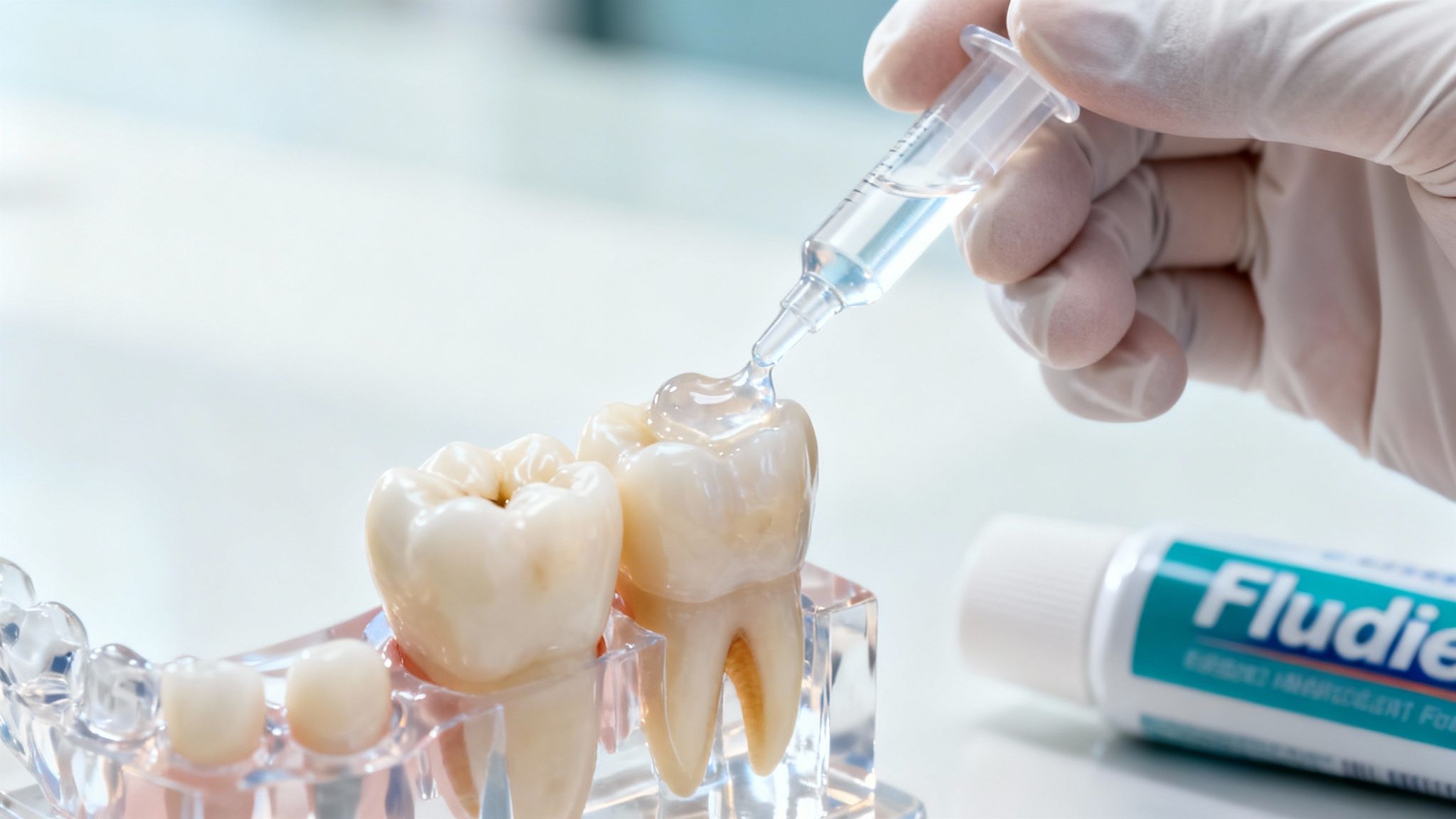
- Professional Fluoride Treatments: During your check-up, your dentist can apply a concentrated fluoride gel, foam, or varnish for a powerful, professional-grade boost of protection.
In fact, fluoride is so effective that the Centers for Disease Control and Prevention (CDC) named community water fluoridation one of the 10 great public health achievements of the 20th century. That’s a serious endorsement of its safety and impact.
If you're curious to learn more, our article dives deep into what effects fluoride treatments can have on your teeth.
Dental Sealants: The Ultimate Groove Guardians
Let's talk about your molars—those big teeth in the back of your mouth. Their deep pits and grooves are fantastic for grinding food, but they're also perfect hiding spots for food particles and plaque. No matter how well you brush, it's nearly impossible to clean every tiny fissure, making these teeth a prime target for decay.
This is exactly where dental sealants come to the rescue.
A sealant is a thin, protective coating that we paint onto the chewing surfaces of the back teeth. It acts as a physical barrier, literally "sealing off" the deep grooves and preventing bacteria and food from getting trapped inside.
The application is quick, simple, and painless. We clean and dry the tooth, apply a special solution to help the sealant bond, and then paint on the liquid sealant. A special light hardens it in seconds, and that's it!
Once in place, sealants can protect teeth from decay for up to 10 years. They are one of the most effective and wallet-friendly preventive measures we have in modern dentistry, giving your teeth a major head start in the fight against decay.
Why Regular Dental Visits Are Non-Negotiable
It’s easy to fall into the trap of thinking, "I brush and floss every day, so I'm fine." But even the most diligent home care can't catch everything. Think of your dentist not as someone you see when you're in pain, but as your partner in preventing that pain from ever happening.
A routine check-up is one of the most powerful tools in your arsenal against tooth decay. Let’s be real—seeing the dentist twice a year is about so much more than just getting your teeth polished. It’s a fundamental part of keeping your smile healthy for life.
Going Beyond What Your Toothbrush Can Do
No matter how well you brush, there are always spots you’re going to miss. When plaque sits on your teeth for more than 24-48 hours, it starts to harden into a substance called tartar, or calculus.
This stuff is like concrete for your teeth. It’s a rock-hard, calcified deposit that bonds to your enamel, creating a rough surface that bacteria just love to cling to. Your toothbrush and floss can’t make a dent in it. The only way to get it off is with the specialized tools a dental hygienist uses during a professional cleaning.
Getting this done is non-negotiable for a few key reasons:
- It stops gum disease in its tracks. Tartar that builds up along the gumline leads to inflammation and gingivitis.
- It evicts stubborn bacteria. Tartar gives acid-producing bacteria a protected place to live, right up against your enamel.
- It gives your smile an instant boost. Removing tartar and surface stains leaves your teeth feeling incredibly smooth and looking much brighter.
Catching Problems Before You Feel Them
Here’s one of the biggest myths in dentistry: you’ll know you have a cavity because it will hurt. The truth is, decay can do a ton of damage long before you feel the slightest twinge of pain. By the time it hurts, the problem is usually much bigger.
The earliest stages of a cavity are often completely invisible and painless to the untrained eye. During an exam, your dentist is looking for subtle clues you'd never notice.
They’re trained to spot things like:
- Tiny changes in enamel color that signal weakening.
- "Sticky spots" that an instrument can detect, which show the enamel is softening.
- The very first signs of gum inflammation.
Finding a problem at this early stage can be the difference between a simple, small filling and a much more involved procedure like a root canal. If you want to dive deeper into this, our guide on how often you should see a dentist breaks down why these check-ins are so crucial for your long-term health.
Early detection is the key to minimally invasive dentistry. We would much rather help you reverse a weak spot in your enamel than have to drill and fill a cavity. Regular visits make that possible.
Seeing the Invisible with X-Rays
What’s happening on the surface of your teeth is only part of the story. Some of the most common places for cavities to form are completely hidden from sight—between your teeth and under your gums. This is where dental X-rays are absolutely essential.
These images let your dentist see what the naked eye can’t. They can spot:
- Decay just starting between teeth.
- Cavities forming underneath old fillings or crowns.
- Bone loss that signals gum disease.
- Infections or abscesses at the root of a tooth.
Without these routine images, a hidden cavity could grow for years without you knowing, leading to serious damage. Regular X-rays are a safe and indispensable tool for preventing major dental work down the road.
Ultimately, investing in two dental visits a year isn't an expense—it's an investment in your health. It pays off by helping you avoid pain, save money, and keep your natural teeth for a lifetime.
Your Top Questions About Preventing Tooth Decay, Answered
Even with the best intentions, questions always pop up. It's completely normal. Let's tackle some of the most common ones I hear from patients so you can feel confident in your daily routine.
Can You Really Reverse a Cavity Once It Forms?
This is a fantastic question, and the answer is all about timing. In its earliest stage, known as demineralization, you absolutely can reverse tooth decay. Think of it as a bruise on your enamel—the structure is weakened by acid, but there isn't an actual hole yet.
With a little help from you—great brushing, consistent fluoride, and a smart diet—your own saliva can go to work, redepositing minerals and healing that weak spot. It's a pretty amazing natural process. But once that decay breaks through the enamel and creates a physical hole (what we call a cavity), the damage is permanent. That’s when you need a dentist to step in, clean out the decay, and place a filling.
This is exactly why we stress regular check-ups. They give us a chance to catch demineralization in the act and reverse it before it ever becomes a real cavity.
Are Electric Toothbrushes Actually Better Than Manual Ones?
While you can definitely do a great job with a manual toothbrush if your technique is perfect, most of the evidence points toward electric models being more effective. Studies have shown time and again that electric toothbrushes, especially the ones with an oscillating-rotating head, are simply better at removing plaque.
It really comes down to a few key advantages:
- Consistency: The brush does the work for you, providing a perfect cleaning motion that’s tough to master by hand.
- Built-in Timers: Most come with a two-minute timer, which takes the guesswork out of brushing for the right amount of time.
- Pressure Sensors: A game-changer for aggressive brushers. Many models alert you if you’re pushing too hard, which saves your enamel and gums from unnecessary wear and tear.
For the vast majority of people, an electric toothbrush is just a more reliable tool for keeping teeth clean and preventing decay.
How Often Do I Truly Need to Floss?
Okay, let's be direct: The advice to floss at least once a day isn't just a friendly suggestion. It's critical. Your toothbrush, no matter how fancy it is, simply can't get into the tight spaces between your teeth or just below the gumline.
Flossing cleans about 35% of your tooth surfaces that your brush can't even touch. Skipping it is like washing only two-thirds of your body and calling it clean.
Those in-between spots are where plaque loves to hide and harden, leading to cavities that you often can't see until they've become a bigger problem. The key is consistency. Find a time that works for you—right before bed is great—and make it a non-negotiable part of your day.
Do Sugar-Free Drinks Still Harm My Teeth?
This one trips a lot of people up. The answer is a resounding yes, they absolutely can. While they don't have the sugar that plaque bacteria feast on, many of these drinks are incredibly acidic.
Think about diet sodas, sugar-free sports drinks, and even some flavored sparkling waters. They often contain things like citric acid or phosphoric acid, which can directly attack your tooth enamel. This acid bath softens and erodes the enamel over time, making your teeth far more susceptible to decay and sensitivity.
It’s a good habit to check labels for acidic ingredients. When you're just thirsty, nothing beats plain water for your smile.
Ready to take the next step in protecting your smile? At Serena San Diego Dentist, we’re here to partner with you on your journey to lifelong oral health.
Schedule a consultation with our expert team today!