
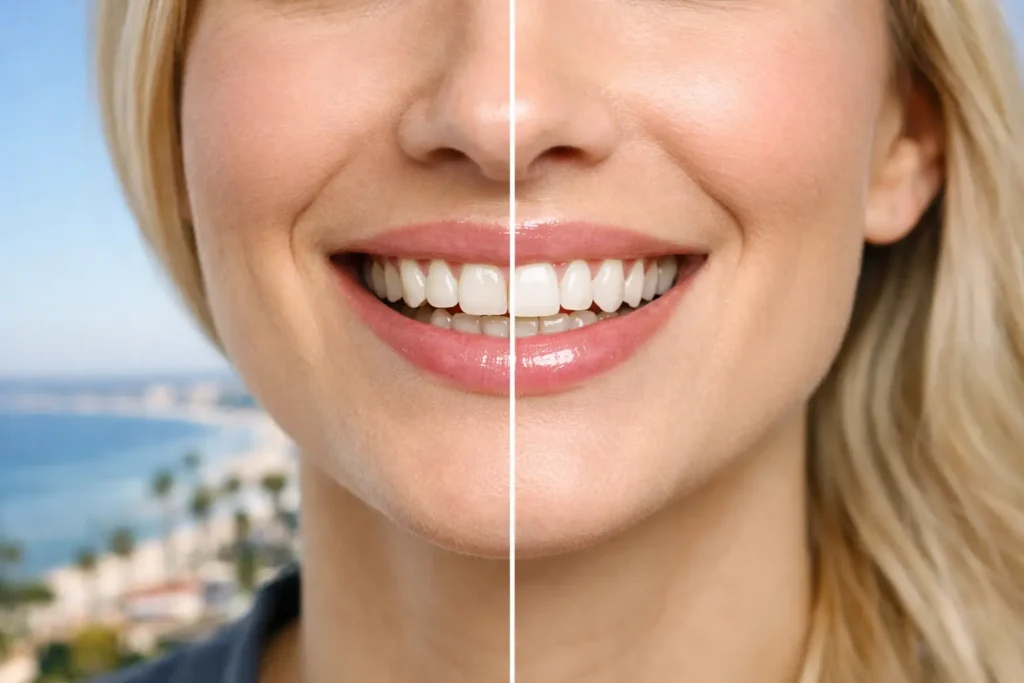
A veneer transformation should never look like someone else’s smile placed over your teeth. The best porcelain veneers before and after in San Diego results preserve what makes a face individual while refining the details that distract from a confident expression: uneven edges, stubborn discoloration, visible gaps, or teeth that appear too small or worn.
For Clairemont Mesa patients, the decision is often about more than a brighter smile. It may be preparation for a professional milestone, a wedding, or simply the desire to stop hiding behind closed lips in photos. At Serena Family and Cosmetic Dentistry, porcelain veneer treatment is planned around facial balance, bite function, and the level of change each patient genuinely wants.
What a Natural Veneer Before-and-After Result Shows
The most compelling cosmetic results are not defined by a dramatic white shade alone. A thoughtful before-and-after transformation usually shows better proportion, symmetry, and light reflection across the front teeth. Teeth can look healthier and more polished without appearing flat, oversized, or artificial.
Before treatment, patients may have enamel discoloration that whitening cannot fully correct, small chips from years of wear, irregular tooth shapes, or spaces that make the smile feel unfinished. Veneers can address several of these concerns at once by covering the visible front surface of selected teeth with custom-crafted porcelain.
After treatment, the goal is a smile that looks appropriate in every setting. It should feel refined in close-up photographs, natural in daylight, and comfortable when speaking or laughing. The right result does not announce that you have veneers. It makes people notice that you look rested, confident, and well.
Subtle refinement or a more complete change
Not every patient needs eight or 10 veneers. A person with one darkened tooth, minor edge wear, or a small gap may benefit from a limited veneer plan. Others want a more comprehensive smile design to create consistent color and shape across the upper teeth that show when they smile.
The number of veneers depends on how much of your smile is visible, the condition of the natural teeth, and the desired level of symmetry. Matching only one or two teeth can require exceptional shade and translucency planning. Treating more visible teeth can make it easier to create a cohesive result, but it also represents a larger investment and commitment.
Porcelain Veneers Before and After for Clairemont Mesa Patients
A beautiful result starts long before porcelain is placed. Patients considering porcelain veneers before and after in San Diego need an evaluation that considers their whole mouth, not only the teeth visible in a selfie. Healthy gums, stable bite alignment, and sound tooth structure are the foundation of cosmetic dentistry that lasts.
The consultation begins with a conversation about what you would like to change and what you would prefer to keep. Some patients bring reference photos. Others know only that they want to feel less self-conscious. Both are useful starting points, because a skilled cosmetic plan translates general preferences into specific clinical decisions about length, shape, color, texture, and proportion.
Digital imaging and 3D intraoral scanning help create a more precise picture of the teeth and bite. This technology supports careful planning without relying on messy conventional impressions, while giving the dental team detailed information needed to design restorations that fit comfortably.
A high-quality before-and-after result also accounts for the gums. Even, healthy gum contours frame the teeth and can make a meaningful difference in the final appearance. If gum inflammation, decay, cracked teeth, or bite concerns are present, they should be treated before elective cosmetic work begins.
How the Transformation Takes Shape
Porcelain veneers are thin, durable ceramic shells bonded to the front of teeth. The process is customized, but it typically unfolds over a few carefully planned appointments rather than being rushed into a single cosmetic decision.
First comes diagnostic planning. Your dentist evaluates the teeth, gums, bite, and smile line, then discusses which teeth may benefit from veneers and whether another treatment would be more conservative. Professional whitening, bonding, orthodontic treatment, crowns, or a combination of care may sometimes be the better answer.
Next, the teeth are prepared when appropriate. Traditional veneers generally require a conservative amount of enamel shaping to create room for porcelain and achieve a natural profile. This is an irreversible step, which is why patients should understand the plan, material, and long-term expectations before proceeding. In select cases, minimal-preparation options may be possible, but they are not right for every smile.
Temporary veneers may be used while the final restorations are custom fabricated. This stage gives patients an opportunity to experience the proposed tooth length and overall look in daily life. Final porcelain veneers are then bonded with precision, checked for bite comfort, and polished to blend naturally with the surrounding teeth.
Color is personal, not one-size-fits-all
Many people ask for the whitest possible shade, but the brightest shade is not always the most flattering choice. Skin tone, lip color, age, adjacent teeth, and the character of the natural smile all influence the right shade selection.
Porcelain can be designed with subtle translucency and surface texture that mimic natural enamel. This is one reason professionally planned veneers tend to photograph differently than overly uniform cosmetic work. The result can be luminous and bright while still carrying the depth that makes teeth look real.
Who May Be a Good Candidate?
Veneers can be an excellent option for adults with healthy teeth and gums who want lasting improvement in the appearance of the front teeth. They are especially useful when discoloration does not respond well to whitening, when tooth edges are chipped or worn, or when minor spacing and shape concerns affect the smile.
They are not automatically the best choice for every concern. Patients with untreated gum disease, active decay, significant enamel loss, or uncontrolled teeth grinding need those issues addressed first. If teeth are severely damaged, heavily filled, or structurally weak, crowns or other restorative solutions may offer better protection.
Grinding and clenching deserve particular attention. Veneers are strong, but they are not indestructible. A custom night guard may be recommended to protect the porcelain and natural teeth, especially for patients who clench during sleep. Good daily hygiene and regular preventive visits are equally essential for protecting the gumline around every restoration.
What Happens After the “After” Photo
The final appointment is not the end of care. Porcelain veneers can maintain their color and beauty for many years, but their longevity depends on oral health, bite forces, habits, and ongoing maintenance. Brush with a nonabrasive toothpaste, floss daily, and avoid using teeth to open packages or bite hard nonfood objects.
Porcelain is highly stain-resistant, yet the natural teeth beside veneers can still change color over time. Patients who whiten their natural teeth should discuss timing with their dentist so the overall smile continues to look balanced. Regular cleanings also allow the dental team to monitor the bonding margins, gums, and bite before small concerns become larger ones.
A strong cosmetic result should support daily life, not create a new source of worry. When a veneer plan is built around your facial features, oral health, and comfort, the change can feel remarkably natural from the first smile in the mirror to the years that follow.