A lot of people start thinking about teeth whitening la jolla right before something important. A wedding in Del Mar. A work event in downtown San Diego. Family photos. Or just a stretch of time when they’re seeing themselves in bright sunlight, on video calls, and in pictures more than usual.
That feeling is common. Your teeth may be healthy, but they don’t look as bright as they used to. Coffee, tea, red wine, age, and everyday life can slowly dull a smile even when you brush well and stay on top of dental visits. The good news is that whitening is one of the most straightforward cosmetic treatments available, and when it’s done thoughtfully, it can make a noticeable difference without changing the shape of your teeth.
If you’re trying to decide whether whitening is worth it, which option makes sense, or whether you’re even a good candidate, it helps to look at the decision the same way a dentist does. Start with the cause of the discoloration. Match the treatment to your goals. Then make a plan for maintenance so your results last.
Your Guide to a Dazzling Smile in La Jolla
In La Jolla, people spend a lot of time face to face. Lunch on the coast, community events, date nights, office meetings, fitness classes, and weekend gatherings all put your smile front and center. That’s usually when people notice that their teeth don’t look as bright as they remember.
A typical patient concern sounds like this: “My teeth aren’t unhealthy. They just look darker in photos.” That’s an important distinction. Whitening isn’t about fixing decay or replacing damaged teeth. It’s about lifting stain and restoring brightness so your smile looks fresher and more polished.
Why so many people ask about whitening
Whitening isn’t a niche service anymore. The demand is broad and consistent. In fact, 88.8% of orthodontists nationwide report patient requests for whitening, and nearly 90% of orthodontic patients specifically seek it, which shows how central whitening has become in cosmetic dentistry, according to this teeth whitening market overview.
That interest makes sense. Whitening is accessible, relatively fast, and usually much simpler than treatments that change tooth shape or alignment.
A brighter smile often starts with a simple question, not a dramatic makeover.
If you’re exploring cosmetic options more broadly, La Jolla cosmetic dentistry services can help put whitening in context with veneers, bonding, and other smile treatments. For many people, though, whitening is the first place to start because it improves appearance while keeping your natural teeth intact.
What this decision really comes down to
Most patients aren’t asking, “Can teeth be whitened?” They’re asking:
- Will it work for my type of staining
- How fast will I see a difference
- Will it look natural
- Is professional whitening worth it compared with store-bought products
Those are the right questions. The answers depend on what caused the discoloration in the first place.
Understanding What Causes Tooth Discoloration
To choose the right whitening method, you need to know what kind of stain you’re dealing with. The simplest way to think about it is this. Some stains sit on the outer surface of the tooth. Others are deeper inside the tooth structure.
Surface stains and deeper stains
Extrinsic stains are surface stains. Think of them like buildup on a window. The glass is still there, but the surface has collected color over time. Coffee, tea, red wine, and smoking are common examples of what leaves these stains behind.
Intrinsic stains sit deeper. They’re more like color within the glass itself. These changes can happen with age, certain medications, or internal changes in the tooth over time. They’re usually harder to shift and often need a stronger, more controlled whitening approach.
If you want a patient-friendly overview of common causes, what causes tooth discoloration breaks this down in more detail.
Why teeth often look darker over time
Even people with good brushing habits notice gradual darkening. That’s because whitening isn’t just about hygiene. Teeth naturally change as the years pass, and repeated exposure to pigmented foods and drinks can slowly alter how light reflects off the enamel.
A few examples make this easier to picture:
- Coffee every morning: Small amounts of stain build up day after day.
- Red wine on weekends: Pigmented liquids can leave visible discoloration.
- Smoking or vaping habits: These can create persistent external staining.
- Natural aging: Teeth often appear less bright even without dramatic lifestyle factors.
Why this matters before you buy anything
A lot of confusion comes from expecting every whitening option to work the same way. It won’t. A person with mild surface stain may do fine with a lighter approach. A person with deeper, older discoloration usually needs something stronger and more carefully supervised.
Practical rule: The more stubborn or long-standing the discoloration looks, the more important a professional evaluation becomes.
This is also why one person says whitening “worked instantly” while another says it “did nothing.” They may have been treating completely different kinds of discoloration with the same product.
Comparing Your La Jolla Teeth Whitening Options
A patient getting ready for wedding photos may care most about speed. Someone else may be more focused on cost, flexibility, or keeping sensitivity to a minimum. That is why choosing a whitening method is less about finding the single “best” option and more about finding the right fit for your real life.
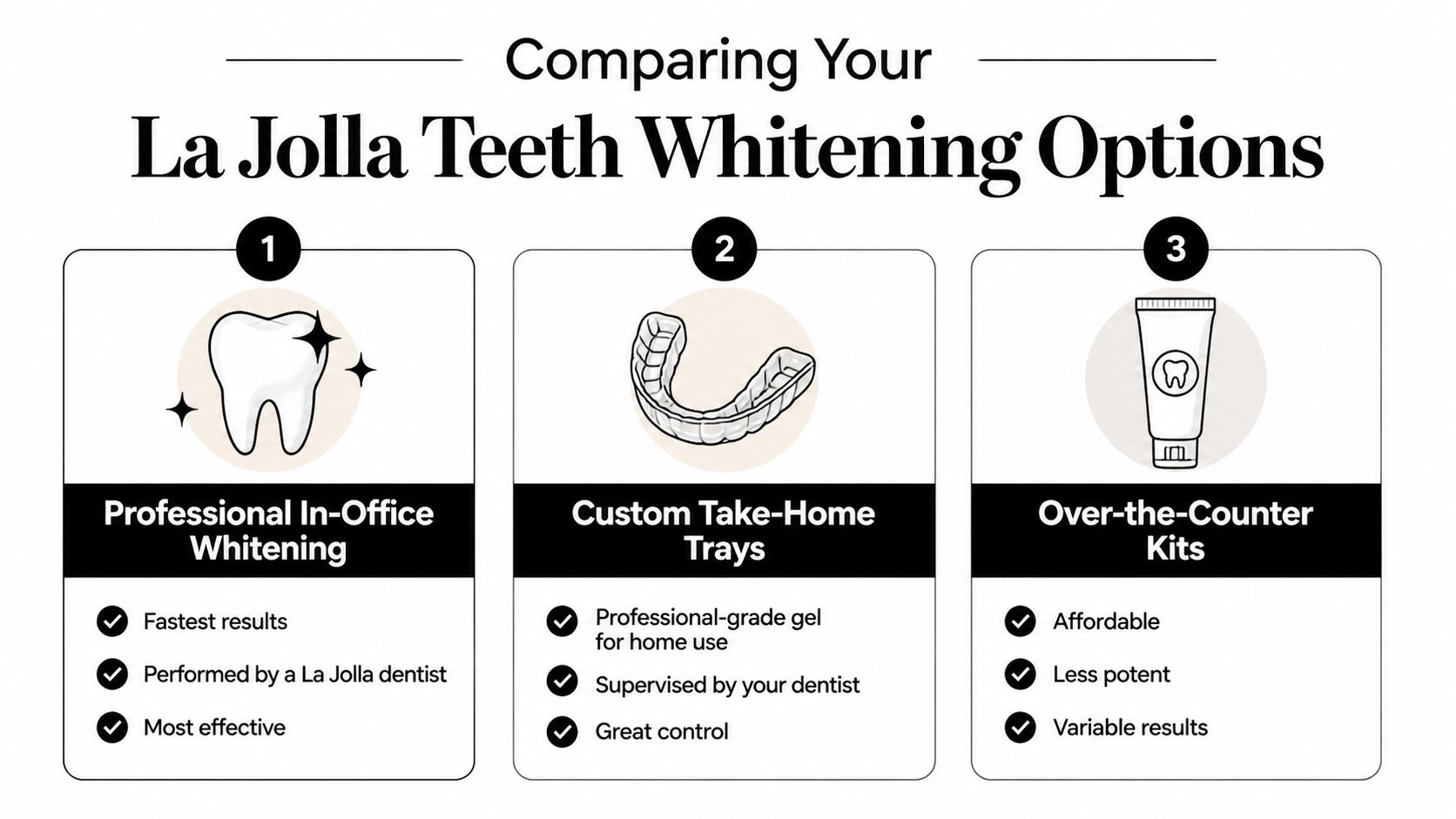
A helpful way to compare your choices is to ask three questions first: How fast do you want to see change? How much supervision do you want? How much variation in results are you comfortable with?
Teeth Whitening Methods at a Glance
| Method | Effectiveness | Time Commitment | Typical La Jolla Cost Range | Best For |
|---|---|---|---|---|
| Professional in-office whitening | Highest and fastest visible change | One appointment, often within a single visit | $300 to $800 | People who want quick results before an event or who have more noticeable staining |
| Custom take-home trays from a dentist | Stronger and more controlled than store-bought options | Gradual use at home over a dentist-guided schedule | Varies by practice | People who want professional oversight with home convenience |
| Over-the-counter kits | Variable and generally less potent | Repeated use at home | Lower upfront cost than professional care | People with mild staining and flexible expectations |
In-office whitening
In-office treatment usually makes sense for patients who want a visible change as quickly as possible. You come in, your dentist checks that whitening is appropriate, your gums are protected, and the whitening material is applied in a controlled setting.
For many La Jolla patients, this option feels a bit like choosing a direct flight instead of a connection. It is faster, more supervised, and easier to predict. If you have an interview, celebration, vacation, or photo session coming up, this path often gives the clearest advantage.
If you want to see what professional care typically includes, our professional teeth whitening options in La Jolla explain the differences in a little more detail.
Custom take-home trays
Custom trays sit in the middle of the decision tree. They offer more precision than a store-bought strip or one-size-fits-all tray, but they let you whiten at home on your own schedule.
This is a good fit for patients who want professional guidance without setting aside time for an in-office cosmetic visit. Because the trays are made for your teeth, the gel tends to stay where it should, which can make treatment more even and more comfortable.
Results usually build over days or weeks, not in a single sitting.
Over-the-counter products
Store products appeal to patients who want the lowest upfront cost and the easiest starting point. For mild surface stain, they can be enough.
The tradeoff is consistency. Generic trays do not fit every smile well. Strips can shift. Gel contact may be uneven. That does not mean these products never work. It means the experience is more variable, especially if your staining is older, darker, or deeper than it looks in the mirror.
How to choose based on your lifestyle
A simple framework can make the decision easier:
- Choose in-office whitening if speed, stronger visible change, and close supervision matter most.
- Choose custom take-home trays if you want a balanced option with professional input and home convenience.
- Choose over-the-counter products if your staining is mild, your budget is tighter, and you are comfortable with slower, less predictable results.
Cost matters, but it helps to compare value, not just price. A lower-cost product may still feel expensive if the result is uneven or too subtle for your goal. A professional option may cost more upfront but make more sense if you want a specific result on a specific timeline.
The In-Office Whitening Experience Step by Step
You have a wedding, interview, or family photos coming up, and you want a noticeable change without spending weeks testing strips at home. That is the situation where in-office whitening often makes the most sense. It is the fast-track option, but it is still a process, not a mystery.
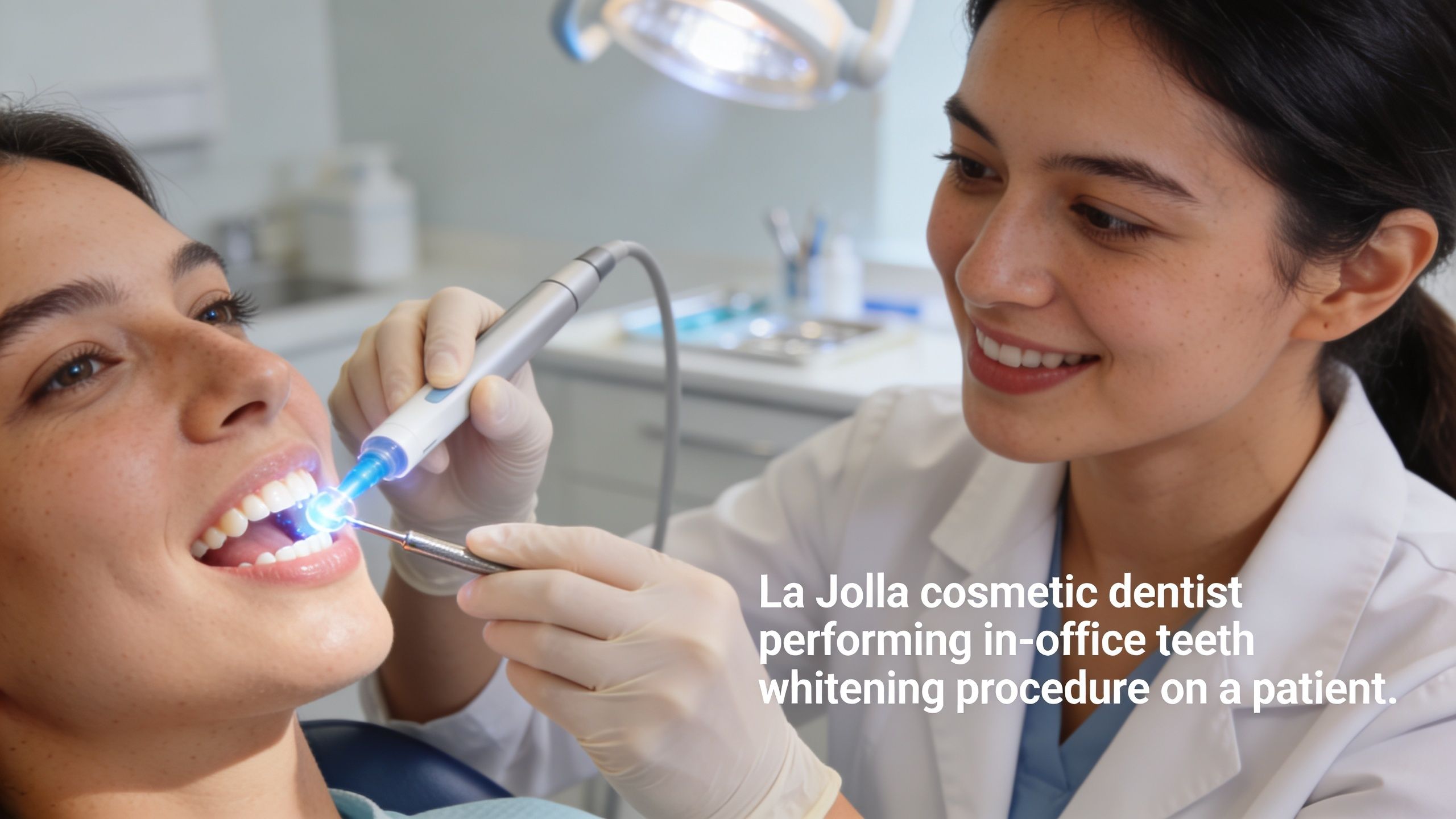
For many La Jolla patients, the biggest surprise is how calm and methodical the visit feels. The appointment is designed to give stronger whitening in a controlled setting, with your dentist checking comfort, coverage, and timing along the way.
What happens at the appointment
The visit usually starts with a quick exam and shade check. Your dentist looks for anything that could make whitening uncomfortable or less predictable, such as cavities, irritated gums, exposed roots, or heavy buildup on the teeth. If one of those issues is present, it often makes sense to treat that first so whitening has a better chance of working well.
Next, the lips and gums are covered and protected. That step matters because whitening gel is meant for enamel, not soft tissue. A good comparison is painter's tape around a window frame. The protection helps keep the active material where it should be and lowers the chance of irritation.
Once the teeth are isolated, the whitening gel is placed on the visible front surfaces. The gel stays on for a set period, then your dentist may refresh it for another cycle depending on the system used and how your teeth are responding. Some offices use light with certain whitening systems, while others rely on the gel itself.
Why the process feels more predictable
Store-bought products leave a lot up to guesswork. Fit can be uneven. Contact time can vary. Sensitive spots may get too much gel while darker areas get too little.
In an office, the variables are controlled.
Your dentist can see how evenly the gel is sitting, adjust timing if you feel sensitivity, and stop at the right point instead of pushing past what your teeth can comfortably handle. That supervision is a big part of the value for patients who care about timing, consistency, or a specific event date.
A visual overview can make the process feel less abstract:
A typical sequence during treatment
Initial exam and shade check: Your starting color is recorded so you and your dentist can judge change more clearly at the end of the visit.
Protection of gums and soft tissue: Barriers are placed to keep the whitening material focused on the teeth.
Gel application: A professional whitening gel is applied to the enamel surfaces that show when you smile.
Timed whitening cycles: The gel stays on for scheduled intervals, and your dentist monitors both comfort and progress.
Final rinse and review: The teeth are cleaned off, the new shade is checked, and aftercare instructions are reviewed.
One practical benefit of in-office care is peace of mind. You do not have to wonder whether the tray shifted, whether the strips covered evenly, or whether you left the product on too long.
If you are comparing providers, professional teeth whitening services can help you see how an office-based treatment is typically presented. Serena San Diego Dentist lists Philips Zoom as one in-office option, which gives patients a concrete example of the kind of system they may be offered in San Diego.
Are You a Good Candidate for Teeth Whitening
Whitening works best when the teeth and gums are healthy and the discoloration is on natural teeth that can respond to bleaching agents. That sounds obvious, but it's a common point of confusion for many patients.
Good signs that whitening may be a fit
You’re often a strong candidate if:
- Your teeth are generally healthy: No untreated cavities, cracked enamel concerns, or active infections.
- Your gums are stable: Whitening is more comfortable when gum tissue isn’t inflamed.
- Your main concern is color: If you like the shape of your teeth and want them brighter, whitening may be a good first step.
- Most of the visible teeth are natural teeth: Bleaching works on natural enamel, not on restorations.
The limitation many people don’t realize
A key fact matters here. Whitening only works on natural teeth and does not affect fillings, veneers, bonding, crowns, or bridges, as explained in this guidance on teeth whitening and restorations.
That means a person with a front crown or visible bonding may whiten the surrounding natural teeth and end up with a color mismatch. In those cases, the treatment plan may need more than bleaching alone.
When a dentist may recommend waiting
A consultation may lead to a “not yet,” and that’s often the right answer. Whitening may need to wait if you have:
- Active cavities
- Gum disease or gum recession
- Noticeable enamel wear
- Existing sensitivity that needs management first
If sensitivity is already a concern, guidance on sensitive teeth and home relief can help you understand why teeth react and what should be addressed before cosmetic treatment.
Whitening should follow a healthy foundation. It shouldn’t be used to cover up a dental problem.
How to Maintain Your Results and What to Expect
Whitening isn’t permanent, and that doesn’t mean it failed. It means your teeth continue to be part of daily life. Coffee still exists. Tea still exists. So do berries, sauces, wine, and daily wear.
Verified local guidance notes that professional whitening can last from 1 to 3 years, but that durability depends heavily on maintenance, including oral hygiene, limiting staining foods, and periodic take-home touch-ups, according to this La Jolla whitening longevity reference.
The first few days matter most
Right after whitening, teeth can be more likely to pick up new stain. Dentists often encourage patients to be especially careful with dark foods and beverages for a short window after treatment.
A good short-term approach includes:
- Choose lighter foods and drinks: Water, plain yogurt, rice, chicken, and similar low-pigment options are easier on freshly whitened teeth.
- Skip common stain sources for a bit: Coffee, tea, red wine, dark sauces, and smoking can work against your result.
- Brush and floss consistently: Clean teeth hold color better than teeth with plaque buildup.
How to make results last longer
Long-term maintenance is less about perfection and more about habits.
- Keep up with routine cleanings: Professional cleanings help remove buildup that can make teeth look dull. If you’re due, dental cleaning in San Diego is part of the bigger maintenance picture.
- Use touch-ups when recommended: Some patients do well with occasional take-home whitening maintenance.
- Be realistic about your diet: You don’t have to avoid every staining food forever. You just need to know that frequent exposure usually shortens the life of the result.
The best whitening result is the one you can realistically maintain, not the one that looks brightest on day one.
What patients should expect emotionally
Many people think maintenance sounds disappointing. Usually it’s the opposite. Once patients understand that whitening is something you preserve, not a one-time permanent event, they make better choices and feel more satisfied with the investment.
Your Whitening Journey with Serena San Diego Dentist
A good whitening experience starts with a simple conversation. What bothers you about the color of your teeth? How quickly do you want to see change? Are you trying to brighten a generally healthy smile, or are you weighing whitening against bonding, crowns, or veneers because other cosmetic issues are involved too?
That decision-making process matters because not every patient needs the same path. Someone preparing for a near-term event may lean toward an in-office treatment. Someone who wants a more gradual approach may prefer professionally guided whitening at home. Someone with visible crowns or bonding may need a broader cosmetic plan instead of bleaching alone.
What patients usually want from a consultation is clarity:
- An honest answer about candidacy
- A realistic sense of what can improve
- A plan that fits daily life
- Guidance on maintenance so the result doesn’t fade too quickly
Insurance coverage for whitening can vary because cosmetic services are often handled differently from restorative care. Many patients also prefer out-of-pocket flexibility for elective treatments. The easiest next step is to contact the office directly, ask how consultations work, and discuss payment options based on your goals.
If you’re considering teeth whitening la jolla and want a treatment recommendation suited for your teeth, call the office or book online through the practice website. A consultation should leave you knowing whether whitening is the right move now, whether another cosmetic option makes more sense, or whether a little preventive care should come first.
Frequently Asked Questions About Teeth Whitening
Does teeth whitening hurt
It usually doesn’t feel painful, but some people notice temporary sensitivity during or after treatment. That sensitivity often feels like brief zings to cold air or cold drinks. If you already have sensitive teeth, tell your dentist before whitening so the treatment can be planned more carefully.
What can I eat or drink after whitening
Stick with foods and drinks that are less likely to stain for a short period after treatment. Water is the safest drink. Dark beverages and strongly colored foods can work against the result if you have them too soon.
Is teeth whitening permanent
No. Whitening fades gradually over time, especially if you regularly consume staining foods or drinks. That’s why maintenance matters.
How much does teeth whitening in La Jolla cost
Cost depends on the method. Verified local guidance notes that professional whitening is often discussed in a $300-$800 range for in-office treatment, while costs vary for other options and maintenance plans. The most accurate quote comes after a dental exam because candidacy and goals affect the recommendation.
Will whitening make crowns or veneers whiter
No. Whitening changes natural teeth only. Existing crowns, veneers, bonding, fillings, and bridges won’t change color with bleaching.
If you’re ready to explore a brighter, more natural-looking smile, Serena San Diego Dentist can help you decide whether whitening is the right next step and what approach fits your teeth, timeline, and goals.