

Taking proper care of your mouth after a tooth extraction is just as crucial as the procedure itself, and it begins the moment you leave the dentist's office. The first 24 hours are absolutely critical. Your primary goals are to manage bleeding, control swelling, and stay ahead of any pain to ensure a protective blood clot forms correctly in the socket.
The First 24 Hours: Your Critical Aftercare Checklist
That first day after your tooth is pulled truly sets the stage for your entire recovery. Think of it as laying the groundwork for a smooth, uneventful healing journey. By managing these initial hours correctly, you can sidestep significant pain and swelling, and most importantly, safeguard the blood clot your body needs to heal the area.
It all comes down to a few simple, gentle actions. This infographic highlights the two most vital things to do in those first few hours: apply steady pressure with gauze to help the clot form and use a cold compress to keep inflammation in check.
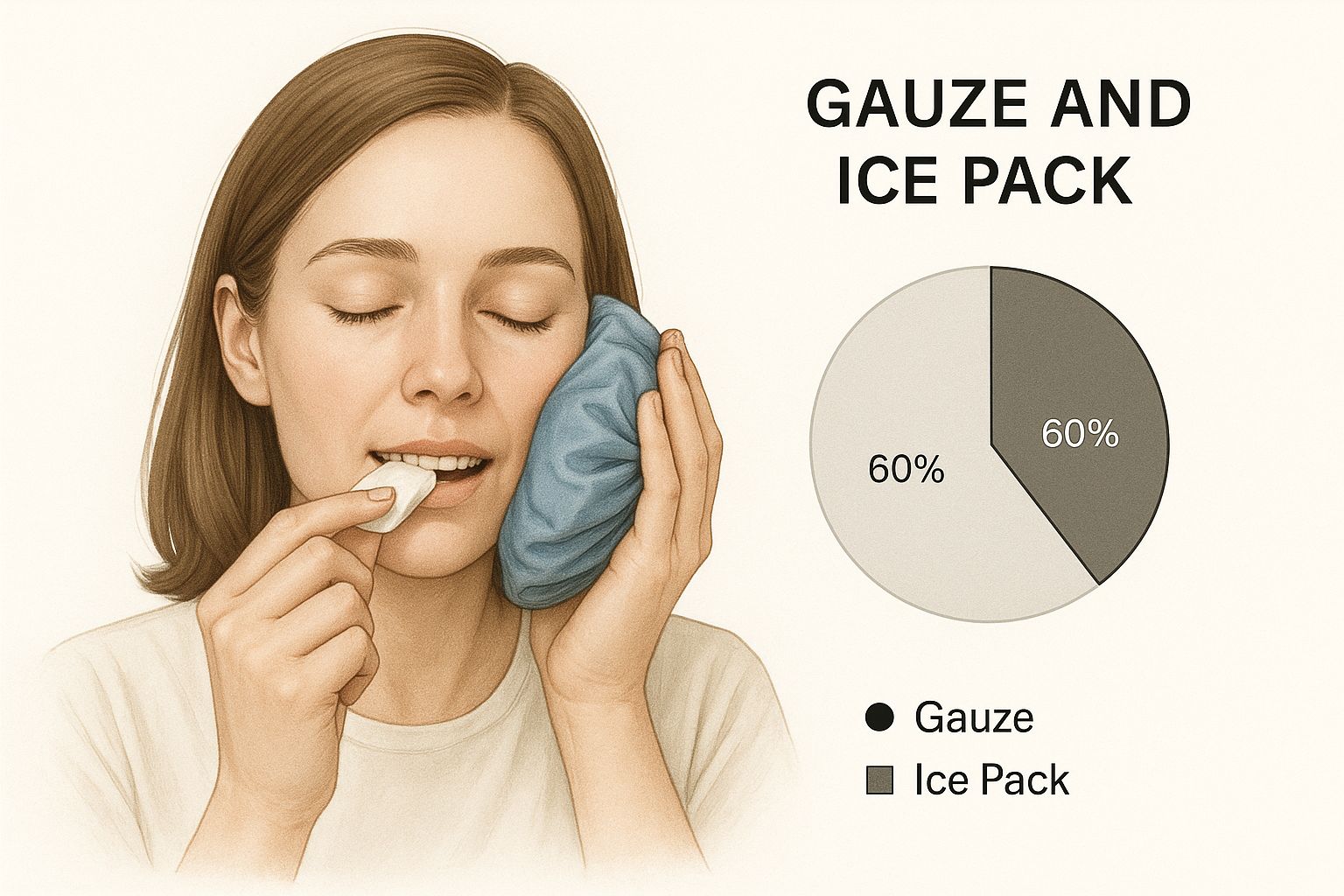
Being proactive with this one-two punch of pressure and cold therapy can make a significant difference in how you feel and how quickly you begin to heal right from the start.
Immediately After Your Appointment
As soon as your dentist is finished, they will place a folded piece of sterile gauze over the extraction site. Your job is simple: bite down. Not aggressively, but with firm, constant pressure. This is the key to stopping the bleeding and kickstarting the formation of that vital blood clot.
Try to avoid talking or moving your mouth around too much, as this can dislodge the gauze and disrupt the clotting process. Plan on keeping that first piece of gauze in place for about 30 to 45 minutes.
Managing Bleeding with Gauze
Don't be alarmed by a little oozing for the first few hours—this is completely normal. If you remove the first gauze pad and the site is still bleeding, it’s time for a fresh one.
- Fold a clean gauze pad into a small, tight square that's thick enough to apply good pressure.
- Place it directly over the empty socket, not just near it.
- Bite down firmly and maintain that pressure for another 30-60 minutes.
You can repeat this process as needed. However, if you're experiencing heavy bleeding that doesn't seem to slow down after a few hours of consistent pressure, that's a signal to call your dentist's office for guidance.
Key Takeaway: The goal isn't to stop every tiny drop of blood immediately. The objective is to apply steady, uninterrupted pressure so a stable clot can form. That clot acts as a natural bandage for the wound.
Controlling Swelling with Ice Packs
Swelling is simply your body's natural reaction to the procedure, and it typically peaks around the 48 to 72-hour mark. The best way to manage it is to get ahead of it with cold therapy.
An ice pack wrapped in a thin towel and applied to your cheek over the extraction area works wonders. The cold helps constrict the blood vessels, which not only reduces inflammation but can also gently numb the area for some extra pain relief.
For the best results, use an on-and-off cycle. Apply the ice pack for 15-20 minutes, then give your skin a break for 15-20 minutes. Adhering to this rhythm throughout the first day is the most effective way to minimize swelling without irritating your skin.
Staying Ahead of Discomfort
Trust this advice: it is far easier to prevent pain than it is to get it under control once it has fully set in. Your dentist will almost certainly recommend an over-the-counter pain reliever like ibuprofen or acetaminophen.
The trick is to take your first dose before the local anesthetic wears off completely. This ensures a smooth transition from numbness to comfort. Simply follow the dosage instructions on the bottle (or your dentist's specific directions) and consider setting a timer on your phone so you don't miss your next dose, especially before you lie down to rest. This proactive strategy is a cornerstone of effective removed tooth aftercare.
What to Eat After Your Tooth Extraction
One of the most common questions patients ask is, "What can I actually eat after my tooth is pulled?" It's an excellent question because your diet plays a massive role in how well you heal. The right foods provide your body with the fuel it needs to recover, while the wrong ones can cause significant pain, dislodge the vital blood clot, and set back your healing.
The game plan is straightforward: start with cool, liquid-based foods and gradually progress to soft solids as you feel comfortable.

This gradual approach is all about protecting the sensitive extraction site. Your main goal is to avoid any real chewing that could disturb the socket, all while ensuring you're still getting adequate nutrition.
The First 24-48 Hours: Your Liquid and Soft Food Diet
For the first day or two, think cool, smooth, and easy. Your diet should consist of liquids and mushy foods that require zero chewing. This is absolutely not the time for hot soup or coffee—heat can increase blood flow to the area and may promote bleeding.
Stick with things that are gentle on your mouth and easy to consume:
- Cool Smoothies: Blend soft fruits like bananas and avocados with yogurt or a scoop of protein powder. This is crucial: do not use a straw. The suction can pull the blood clot right out of the socket. Sip it directly from the glass.
- Chilled Soups: A smooth gazpacho or a blended vegetable soup that has cooled to room temperature is perfect.
- Yogurt and Applesauce: These are your best friends. They're soothing, nutritious, and require no effort to eat.
- Puddings and Gelatin: These are great for getting in some easy calories when your appetite might not be at its best.
Let's be realistic—cooking is probably the last thing you'll want to do. Exploring convenient meal delivery services can be a lifesaver, ensuring you eat well without any hassle.
Days 3-7: Reintroducing Softer Solids
Once the initial tenderness starts to subside, you can slowly begin to add more substantial—but still very soft—foods. You are still trying to avoid any serious chewing. A good habit to form is chewing on the side opposite the extraction site.
Here are some excellent transitional foods for this stage:
- Scrambled Eggs: They're soft, packed with protein, and incredibly easy to eat.
- Mashed Potatoes or Sweet Potatoes: A classic comfort food for a reason. They are ideal for recovery.
- Oatmeal or Cream of Wheat: Just make sure to let it cool down so it's lukewarm, not hot.
- Flaky Fish: A piece of well-cooked cod or tilapia that you can easily break apart with a fork is a great option.
- Soft Pasta: Think macaroni and cheese or overcooked pasta without any firm edges.
Recovery Tip: Pay attention to what your body is telling you. If you try something and it hurts, stop. It just means you’re not quite ready. Revert to softer options for another day and try again later. This patient approach is a key part of good aftercare.
Safe Foods Timeline After Tooth Extraction
To make things easier, here is a day-by-day guide to help you navigate your post-extraction diet. This timeline helps you introduce foods safely, minimizing irritation and giving your mouth the best chance to heal properly.
| Recovery Phase | Recommended Foods | Foods to Strictly Avoid |
|---|---|---|
| Days 1-2 | Cool liquids, smoothies (no straw), applesauce, yogurt, gelatin, pudding, chilled blended soups. | Hot liquids, alcohol, crunchy, hard, sticky, or spicy foods. Anything requiring chewing. |
| Days 3-7 | Scrambled eggs, oatmeal (lukewarm), mashed potatoes, soft-cooked fish, macaroni and cheese, soft fruits (banana). | Nuts, seeds, popcorn, chips, hard bread, steak, raw vegetables, spicy or acidic foods. |
| Week 2+ | Gradually introduce more solid foods like soft chicken, rice, and well-cooked vegetables as comfort allows. | Continue to avoid very hard or crunchy items (like hard candies or nuts) near the site. |
Remember, this is a general guideline. Everyone heals at their own pace, so the most important thing is to listen to your body and not rush the process.
Foods and Drinks to Avoid During Healing
Knowing what to avoid is just as important as knowing what to eat. Some foods can actively sabotage your recovery, leading to pain, infection, or the dreaded "dry socket."
For at least the first week, make sure these are off-limits:
- Crunchy & Hard Foods: Items like popcorn, nuts, seeds, and chips are notorious for getting lodged in the extraction site. This can cause severe irritation and dislodge the blood clot.
- Spicy & Acidic Foods: Hot sauce, citrus fruits, and tomatoes will feel like fire on the raw, healing tissue. It’s a recipe for major discomfort.
- Sticky Foods: Caramel, taffy, and gummy candies require too much chewing and can tug on the extraction site, pulling out the clot or any stitches.
- Alcohol: It can interfere with any pain medication you've been prescribed and can actually slow down the healing process. It's best to avoid it completely for a few days.
It’s also wise to stay away from sugary drinks and anything highly acidic, as they can disrupt the natural balance in your mouth. For a deeper dive, you can read our guide on the most acidic beverages and foods to limit or avoid. Stick to these dietary rules, and you'll be on the fast track to a smooth and speedy recovery.
Keeping Your Mouth Clean Without Harming the Site
https://www.youtube.com/embed/HBJvxuIUSR0
After having a tooth pulled, the idea of cleaning your mouth can feel a bit daunting. You know you need to keep things clean to prevent infection, but the area is tender, and the last thing you want to do is disrupt the healing process. The key is to be incredibly gentle and strategic, focusing on the rest of your mouth while giving the extraction site the space it needs to heal.
This careful approach is a vital part of your removed tooth aftercare. For the first 24 hours, simply leave the area alone. No rinsing, no poking. This allows that all-important blood clot to form properly and become stable. After that first day, you can begin a very gentle cleaning routine.
The Gentle Saltwater Rinse
Once you've passed the 24-hour mark, a simple warm saltwater rinse becomes your best tool. Salt is a fantastic natural disinfectant that can help keep bacteria in check and reduce inflammation, and it does so without the sting of an alcohol-based mouthwash.
Here's the correct way to do it:
- Mix it up: Stir a half-teaspoon of salt into an 8-ounce glass of warm water. You want it comfortably warm, definitely not hot.
- Rinse carefully: Take a small amount into your mouth and gently tilt your head from side to side. Let the water flow over the area; do not swish vigorously.
- Let gravity do the work: This is the most important part—do not spit. Lean over the sink and simply open your mouth, allowing the water to fall out on its own.
This gentle "rinse" cleans the area without creating any dangerous pressure or suction. Try to do this a few times a day, especially after eating, to clear away any small food particles.
How to Brush Your Other Teeth Safely
You absolutely should continue brushing your other teeth. In fact, it's vital. A clean mouth means fewer bacteria that could wander over and cause problems at the extraction site. You just need to modify your technique slightly.
Use a soft-bristled toothbrush and be extra cautious as you approach the teeth next to the empty socket. Move slowly and deliberately. If it’s too sensitive, it's okay to skip brushing the teeth immediately adjacent to the site for the first day or two. Just be sure to clean everywhere else very well.
Crucial Reminder: Avoid spitting out toothpaste. Just like with the saltwater rinse, let the excess foam and saliva dribble out of your mouth into the sink. This simple change in habit is one of the most effective ways to protect the blood clot.
What You Must Absolutely Avoid
A few common habits create suction in your mouth, and that suction is the number one enemy of a healing blood clot. If you dislodge that clot, you can end up with a dry socket, a painful complication that will set your recovery back.
For at least the first 72 hours, make sure you avoid these actions at all costs:
- Using a straw: The suction you create is more than enough to pull the clot right out.
- Spitting forcefully: This creates a sudden, jarring pressure change in your mouth.
- Smoking or vaping: This is a double-whammy. The sucking action is a major risk, and the chemicals in smoke can seriously interfere with healing.
- Drinking carbonated beverages: The fizz and carbonation can irritate and dislodge the clot.
If you notice a bad taste or odor that a gentle rinse isn't resolving, give your dentist a call. They might suggest a special medicated rinse. You can learn more about what magic mouthwash is and see if it's something that could help. By sticking to these simple hygiene rules, you’re giving your body the best possible chance to heal quickly and without any trouble.
How to Recognize and Prevent Dry Socket
Most of the time, healing from a tooth extraction is straightforward. Still, knowing what to watch for is a key part of your removed tooth aftercare. The most common complication we see is a condition called alveolar osteitis, but it's more commonly known as a dry socket. Let's walk through what it is, how to spot it, and most importantly, how to avoid it so you can heal without any extra stress.

So, what exactly is a dry socket? After a tooth is pulled, a blood clot forms in the empty space. Think of it as a natural, protective bandage over the bone and nerve endings below. A dry socket occurs when that clot gets dislodged, dissolves too early, or fails to form properly in the first place.
When that protective layer is gone, the sensitive tissues are left exposed to everything—air, food, and liquids. This exposure is what causes the intense pain and can significantly set back your healing time.
Spotting the Telltale Signs
The normal soreness after an extraction should improve a little each day. A dry socket is a completely different experience, and its signature pain usually makes a grand entrance a few days after your procedure, just when you think you're in the clear.
You’ll know something is wrong if you experience these symptoms:
- Intense, Throbbing Pain: This is the primary indicator. It's a deep, radiating pain that often travels up to your ear, eye, or temple on that side of your face. It's much worse than the initial post-operative discomfort.
- An Empty-Looking Socket: When you look at the extraction site, you might see the whitish glint of bone instead of a dark, healing blood clot.
- A Foul Taste or Bad Breath: You may notice an unpleasant odor or taste in your mouth that gentle rinsing can't seem to eliminate.
It’s worth noting that dry socket is the most frequent complication we deal with after extractions. The risk can be as low as 0.5% for simple cases but can jump to over 30% for more complex wisdom tooth removals. Your best defense is simply following your post-op instructions to the letter.
Key Risk Factors You Can Control
While a dry socket can happen to anyone, some habits and situations definitely increase the odds. The good news? You have a lot of control over these.
- Smoking and Tobacco Use: This is, without a doubt, the biggest offender. The suction from inhaling can physically dislodge the clot. On top of that, the chemicals in tobacco interfere with healing and can contaminate the wound.
- Using Straws: That innocent-looking straw creates the same powerful suction as smoking. It's one of the easiest ways to accidentally dislodge the clot.
- Poor Oral Hygiene: Allowing bacteria to build up in your mouth can lead to infections that break down the vital blood clot.
- A Complicated Extraction: If your tooth was impacted or the removal was more involved, the site experiences more trauma, which can slightly increase the risk.
An Expert Tip: The most critical window for a dry socket to develop is between day three and day five after your extraction. This is when the clot is at its most fragile. If you can be extra vigilant during this period, you’ll drastically reduce your risk.
Actionable Steps for Prevention
Preventing a dry socket really comes down to one simple goal: protect that blood clot. Anything that creates suction or pressure in your mouth is off-limits for a while.
For the first week, consider these as your non-negotiable recovery rules:
- No Smoking or Vaping: Just don't. Avoid it for as long as possible, but at an absolute minimum, for the first 72 hours.
- Ditch the Straws: Sip all your drinks directly from the cup.
- Avoid Forceful Spitting: When you rinse, just let the liquid gently fall out of your mouth into the sink. No swishing, no spitting.
- Stick to Soft Foods: Items like chips, nuts, seeds, and popcorn are the enemy. They can get stuck in the socket and easily disrupt the clot.
Following these steps is the most reliable way to ensure a smooth, comfortable recovery. If you're wondering just how long you need to be on high alert, our guide on what a dry socket is and when you can stop worrying about it has you covered.
And if you do start feeling that distinct, radiating pain, don't try to power through it. Call our office right away. We can get you in, provide the care you need, and get you back on the road to healing without the misery.
What to Really Expect While You're Healing
Knowing what your recovery should look like day-by-day can take a lot of the stress out of the healing process. Let's be honest, it's not just about your mouth healing; it's also about giving yourself a break to rest and recover. I want to provide a clear picture of what's normal so you can navigate this with confidence.
While everyone’s healing journey is a little different, there are some common milestones along the way. Knowing these will help you distinguish between normal recovery and a sign that you should call the dentist.
A Realistic Day-by-Day Healing Timeline
Healing doesn't happen in an instant. It’s a process with distinct stages, and knowing what’s typical for each phase can be incredibly reassuring.
- Days 1-2: This is the "rest and manage" phase. You'll experience some bleeding, swelling, and discomfort. Your only jobs are to take it easy, stay on top of your pain medication, and use ice packs as if they're your new best friend.
- Days 3-5: Swelling usually peaks around day three and then starts to subside. The pain should be noticeably improving. This is also the prime time for a dry socket to develop, so don't become complacent with your aftercare instructions.
- Days 6-10: You should be feeling much more like yourself. You might still have some tenderness, but any sharp, intense pain should be gone. You'll start to see new pink gum tissue forming over the extraction site.
- Weeks 2-4: The socket will be mostly healed over. You can probably return to a normal diet, but I'd still be cautious with anything too hard or crunchy near the site for a little while longer.
Think of this as a general map, not a rigid schedule. If your pain suddenly worsens after a few days of improving, that’s your cue to pick up the phone and call your dentist.
Understanding Pain and How to Manage It
After an extraction, pain can range from a dull, persistent ache to a more serious throb, especially in the first 48 hours. The key isn't just to treat the pain, but to stay ahead of it.
Your dentist likely suggested an over-the-counter anti-inflammatory like ibuprofen, which is excellent because it addresses both pain and swelling. Here's a pro tip: take your first dose before the local anesthetic completely wears off. It makes a world of difference.
Remember, the goal of pain medication is to keep discomfort at a manageable level so your body can focus its energy on healing. Don't try to be a hero; consistent, scheduled doses are more effective than waiting for pain to become severe.
Beyond medication, rest is your most powerful tool. Prop your head up with a couple of pillows when you lie down—this can really help reduce that throbbing sensation. Continue using cold packs for the first two days to numb the area and reduce inflammation. This combined approach is a crucial part of effective removed tooth aftercare.
The Emotional and Practical Side of Recovery
It's completely normal to feel a bit "off" after having a tooth pulled. Your body just went through a small surgical procedure, and the effects aren't just physical. Many of my patients are surprised by how tired they feel or how much it disrupts their routine for a few days.
Research actually supports this. One study showed that nearly half (49%) of male patients felt they couldn't work after their extraction, compared to 25% of female patients. Pain levels also varied, with 38% of women reporting moderate to severe discomfort. About 20% of all patients felt a bit isolated because they didn't feel well, and many had temporary trouble speaking clearly. You can explore the study's findings on quality of life changes to see just how common these feelings are.
Most people find they need one to three days off work to feel ready to return. Don't push yourself to jump back into your normal life too soon. Giving yourself that time allows you to manage pain, eat properly, and rest without adding more stress to the situation. And whatever you do, please don't try to handle dental problems yourself; our guide explains all the reasons why pulling out your own tooth at home is a dangerous idea. Trust that these temporary challenges are a normal part of healing and they will pass.
Got Questions About Your Tooth Extraction Recovery? We've Got Answers
Even with the best instructions, you're bound to have a few questions pop up as you heal. That’s completely normal. Let’s walk through some of the most common concerns we hear from patients, so you can have some peace of mind.
When Can I Stop Worrying About Dry Socket?
The dreaded dry socket. It’s a major concern for most people, and for good reason. The greatest risk is usually between the third and fifth day after your extraction—that’s when the blood clot protecting the healing bone and nerves is at its most vulnerable.
Once you get past that first week, you're mostly in the clear. New gum tissue starts to form over the socket, and the risk plummets. Just be diligent about following your aftercare instructions, especially avoiding straws and smoking for at least the first week, and you’ll dramatically lower your chances of developing one.
Is That White Stuff in the Socket Normal?
Seeing something white or yellowish forming in the socket a few days after the procedure can be alarming, but it’s almost always a good sign. Rest assured, it’s not leftover food or an infection. It’s actually granulation tissue.
Think of it as the biological scaffolding your body is building to create new, healthy gum tissue and bone. It's a critical part of the healing process. Now, if you see white stuff and you're experiencing severe pain, a bad taste, or visible pus, that’s a different story. In that case, it could be an infection, and you should call your dentist right away.
How Long Should I Wait to Exercise?
It’s tempting to get back to your normal routine, but you need to give your body a break. Plan on avoiding any strenuous activity for at least the first 48 to 72 hours.
Anything that gets your heart pumping will increase blood flow to your head, which can cause the extraction site to start bleeding again, swell up, or throb painfully.
A Quick Tip from Experience: When you do start working out again, ease into it. Try a light walk after a few days and see how you feel. Your body will give you signals. If you feel any pulsing or pain in the socket, that’s your cue to stop and give it another day or two of rest.
What if My Stitches Came Out Too Soon?
This is another very common worry, but it’s usually not a big deal. Most dentists, including us, use dissolvable stitches that are designed to fall out on their own as you heal, typically within a week or so.
If a stitch comes loose a few days after your procedure and you don't have any bleeding or a sudden increase in pain, you’re likely fine. The site has probably healed enough that the stitch has done its job.
However, if your stitches fall out within the first 24-48 hours, or if the area starts bleeding again, it's definitely a good idea to call the office. We can tell you if you need to come in or if it's okay to just keep an eye on it.
How Do I Know if My Socket Is Infected?
It's easy to confuse an infection with a dry socket, but they are different. A dry socket is a healing complication involving an exposed bone, while an infection is a bacterial problem.
Here are the key signs of an infection to watch for:
- Swelling that gets worse after the third day, not better.
- A persistent low-grade fever.
- Pus or a yellowish discharge seeping from the socket.
- A foul taste or odor that a gentle salt water rinse doesn't fix.
If you're noticing any of these symptoms, don't wait it out. An infection needs to be treated by a professional, often with antibiotics. Getting in touch with your dentist quickly is the best thing you can do to get your recovery back on track.
At Serena San Diego Dentist, we believe that excellent care continues long after you leave our office. If you have any more questions or concerns during your recovery, we are here to help you every step of the way. Schedule your next appointment or consultation with us today!