If you're wrestling with a persistent, throbbing toothache, a root canal in San Diego, CA, is often the best way to get relief and, more importantly, save your natural tooth. Forget the old myths; modern endodontic treatment is a precise, comfortable procedure designed to eliminate infection and pain, guided by a friendly, professional team.
What a Root Canal in San Diego Really Involves
A severe toothache can completely derail your life, but for many, the idea of a root canal brings up a whole new level of anxiety. It’s a procedure that's been unfairly maligned for decades, conjuring images of a painful ordeal. We understand those fears. The truth is, that reputation is based on outdated techniques.

It’s more helpful to think of a root canal as a rescue mission for your tooth. Imagine a specialist meticulously cleaning out and sealing a compromised foundation to save an entire building. That's essentially what we're doing—clearing out the infection to preserve the tooth structure, preventing the need for an extraction and more involved replacements like implants.
Trading Old Myths for Modern Comfort
Today's root canal experience is worlds away from what it used to be. Thanks to effective local anesthetics and incredibly precise instruments, most patients find the procedure is about as comfortable as getting a standard filling. Worried about pain during the procedure? The intense pain people associate with root canals is actually caused by the infection before treatment—the procedure is what finally stops it.
The reasons for choosing a root canal are straightforward and compelling:
- Immediate Pain Relief: By removing the inflamed or infected nerve tissue at the core of the tooth, we eliminate the source of your agony.
- Keep Your Natural Tooth: Nothing looks, feels, or functions quite like your own tooth. Saving it helps maintain your bite and protects your jawbone.
- A Smarter Financial Choice: Preserving a natural tooth is almost always more affordable than the process of extracting it and replacing it with a bridge or dental implant.
When we clear the infection from the source, we’re not just putting a bandage on the problem. Root canal therapy has a remarkably high success rate, and with good care, your restored tooth can last a lifetime.
Opting for a root canal in San Diego is an investment in a proven, reliable solution for your oral health. Here at Serena San Diego Dentist, we focus on making you comfortable every step of the way, explaining the process clearly and using an empathetic, gentle touch to deliver results that last. This treatment doesn't just solve an issue; it saves your smile.
Warning Signs That Point to a Root Canal
Knowing when a simple toothache has crossed the line into something more serious is the first step in protecting your oral health. The signs of an infected tooth pulp are your body's alarm system, and ignoring them can lead to a bigger infection, an abscess, and even losing the tooth altogether.
The most classic red flag? A severe, persistent toothache. We're not talking about a little sensitivity that comes and goes. This is a deep, throbbing pain that can keep you up at night and make it hard to get through your day here in sunny San Diego. It often gets worse when you bite down or put any pressure on the tooth.
Sensitivity That Lingers
Another major clue is sensitivity to hot or cold that just won't quit. It’s one thing for your teeth to react for a second to ice cream or hot coffee. It’s another thing entirely when that sharp pain hangs around long after you've finished your sip.
That lingering ache is a clear signal that the nerve inside your tooth is inflamed and crying out for help. This is often a tell-tale sign that a root canal is needed to fix the problem from the inside out.
Visible Changes to Your Tooth and Gums
Sometimes, you can actually see the problem. Be on the lookout for any of these visual cues:
- Tooth Discoloration: If a tooth starts to look darker than its neighbors—turning a grayish or blackish color—it could mean the nerve tissue inside has died.
- Swollen Gums: Puffy, tender, or swollen gums right next to the painful tooth are a common sign that an infection is brewing.
- A Pimple on the Gums: That small, persistent bump on your gums that looks like a pimple? That's likely a dental abscess, which is a pocket of pus created by the infection. It’s a serious issue that needs immediate attention. You can learn more about why a tooth abscess is so dangerous right here.
Catching these signs early is everything. Sometimes, if you act fast enough, you can even learn how to reverse early tooth decay and avoid more intensive treatments down the road.
To help you sort things out, here’s a quick symptom checker.
Symptom Checker: Do You Need a Root Canal?
This table can help you quickly identify common symptoms and understand what they might mean for your tooth's health. It's a handy reference for any San Diego resident wondering if their tooth pain is serious.
| Symptom | What It Feels Like | What It Could Mean |
|---|---|---|
| Severe, Constant Pain | A deep, throbbing ache that doesn't go away and may worsen with pressure. | The pulp is likely infected, and the nerve is severely inflamed. |
| Lingering Sensitivity | Sharp pain from hot/cold food or drinks that lasts for more than 30 seconds. | The nerve is damaged and unable to recover on its own. |
| Swollen Gums | A tender, puffy area on the gums near a specific tooth. | An infection has spread from the tooth root into the surrounding gum tissue. |
| Pimple on the Gum | A recurring or persistent bump on the gum line, which may ooze pus. | This is a dental abscess, a clear sign of a significant infection. |
| Discolored Tooth | The tooth turns gray, brown, or black. | The nerve and blood vessels inside the tooth have died. |
| Pain That Suddenly Vanishes | The intense pain you were feeling abruptly stops. | This often means the nerve has died, but the infection is still present and spreading. |
If you're checking off any of these boxes, it's time to see a dentist. Don't fall into the trap of thinking that if the pain stops, the problem is gone.
A common misconception is that if the pain suddenly stops, the problem has resolved itself. Often, this means the nerve inside the tooth has died, but the infection remains and will continue to spread silently.
If you're experiencing any of these symptoms, getting a professional evaluation for a potential root canal in San Diego, CA, is the most important next step. Don't wait for the pain to become unbearable. An early diagnosis at Serena San Diego Dentist can save your tooth and protect your overall health.
Your Root Canal Procedure Step by Step
Knowing what actually happens during a root canal can take a lot of the mystery—and anxiety—out of the equation. Here in our San Diego office, we walk you through everything, making sure the entire experience is comfortable and clear. It's a precise, step-by-step procedure, and its only goal is to get you out of pain and save your natural tooth.
This visual guide shows some of the classic warning signs that might point to needing a root canal, like persistent pain, a tooth changing color, or a small bump on your gums.
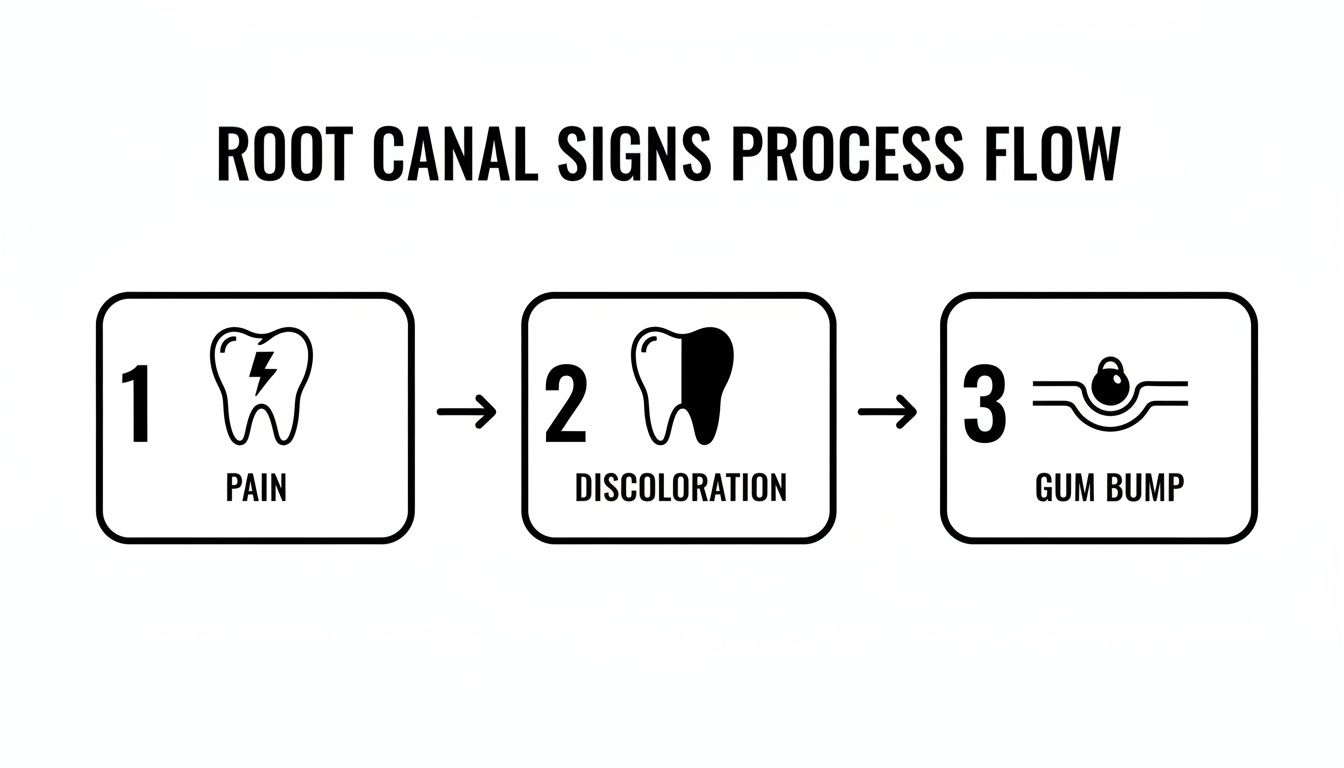
If you're noticing any of these, it’s your body's way of telling you the nerve inside the tooth is in trouble and it's time to get it checked out.
And you're not alone. Root canals are one of the most common dental procedures out there. The American Association of Endodontists reports that dentists perform over 15 million root canals every year in the U.S. That breaks down to more than 41,000 treatments a day, making it a true standard of care for saving teeth.
Numbing the Area for Total Comfort
The very first thing we do is make sure you won't feel a thing. We'll start with a topical numbing gel on your gums, followed by a local anesthetic to completely numb the tooth and all the tissue around it. We don't move forward until you are totally comfortable and at ease—your comfort is genuinely our first priority. For anyone feeling extra nervous, we have options to help you relax. You can learn more about sedation dentistry in our detailed guide.
Think of this step as creating a peaceful work environment. Once the area is completely numb, we can address the problem without causing you any discomfort, allowing the rest of the procedure to proceed smoothly and painlessly.
Cleaning the Tooth’s Interior
Once you're comfortable, we place a small, flexible sheet called a "dental dam" around the tooth. This simple but effective tool isolates the tooth, keeping it clean and dry while we work. From there, we make a tiny opening in the crown of the tooth to get to the infected tissue inside.
Using very fine, specialized instruments, we carefully remove the damaged pulp from within the tooth's chamber and root canals. This is the part of the procedure that actually eliminates the source of the pain. After that, we meticulously clean, shape, and disinfect the now-empty space to get it ready for a protective filling. It’s a bit like a sculptor carefully preparing a block of marble before starting their work; the prep is key to a beautiful, long-lasting result.
Sealing and Protecting Your Tooth
With the inside of the tooth spotlessly clean, we fill the canals with a biocompatible, rubber-like material called gutta-percha. This seals everything off, preventing any bacteria from getting back inside and causing problems down the road. We then place a temporary filling in the opening on top to protect the tooth between appointments.
At your follow-up visit, we'll remove that temporary filling. The final step is to place a custom-made dental crown over the tooth. This crown is what gives the tooth its strength back, allowing you to chew normally and protecting it for years to come. This last part is absolutely crucial for the long-term success of your root canal in San Diego, CA.
Root Canal Cost in San Diego
Let's talk about the bottom line. When you're in pain, the last thing you want to worry about is a surprise bill. Understanding the cost of a root canal in San Diego, CA, helps you see it for what it is: a smart investment in keeping your natural tooth and avoiding bigger problems down the road.
There’s no flat fee for a root canal because every tooth is different. The biggest factor influencing the price is which tooth needs work. A front tooth has just one root and is pretty straightforward. A molar in the back, however, can have three or more roots, each with its own tiny canal. The more complex the tooth, the more time and skill it takes to treat it properly.
What Determines the Final Price?
A tooth's location is just the starting point. The severity of the infection plays a big part, too. A deep or long-standing infection might mean we need an extra appointment to make sure everything is completely clean before sealing it up.
You also have to account for the final restoration. A root canal saves the inside of the tooth, but the tooth itself needs protection afterward. A dental crown is almost always necessary to give it strength and prevent it from fracturing.
- Tooth Location: Molars are more involved and therefore cost more than simpler front teeth.
- Complexity of the Case: A really stubborn or widespread infection can add to the treatment time and cost.
- The Final Crown: The crown is a separate but essential part of the total investment to ensure your tooth lasts for years to come.
Making Care Accessible: Insurance and Payment Options
We know that figuring out the financial side of things can be stressful. At Serena San Diego Dentist, we are committed to making quality care accessible. We accept most major PPO dental insurance plans, and our friendly team is fantastic at navigating the system to help you maximize your benefits for any covered services.
If you prefer to pay out-of-pocket or have a remaining balance, we offer flexible payment options, including financing plans. We firmly believe that financial concerns shouldn't stand in the way of getting you out of pain. Our promise is to provide a clear, easy-to-understand treatment plan and cost breakdown before we even start.
It's important to remember that a root canal is almost always cheaper than the alternative. Pulling a tooth might seem like a quick fix, but it kicks off a chain reaction. You'll need a dental implant or a bridge to fill the gap, which is a much more expensive and lengthy process.
Nationally, you might see root canal costs ranging from $600 to $1,600 without insurance. Here in the San Diego area—from Rancho Bernardo and Poway to Escondido—the typical range is between $700 and $1,500. This reflects the tooth's location, how bad the infection is, and whether you need X-rays or a crown. You can learn more about local root canal costs. Ultimately, investing in a root canal is about saving your natural tooth, and that's priceless.
Navigating Your Recovery and Aftercare
You've made it through the root canal—great job! Now, the focus shifts to a smooth and comfortable recovery. Taking care of your tooth properly in the days following the procedure is every bit as important as the treatment itself for ensuring a great long-term outcome.
For the first few hours, your mouth will be numb from the local anesthetic. It’s best to be careful with hot drinks and chewing, as it's easy to bite your cheek or tongue without realizing it.
As the numbness fades, you might notice some mild sensitivity or tenderness. This is completely normal. The tissues around the tooth have been through a healing process, and a little tenderness for a few days is to be expected.
Immediate Aftercare Tips
Getting back to normal doesn't take long, but a few simple steps can make the first couple of days much more comfortable.
- Managing Discomfort: For most people, over-the-counter pain relievers like ibuprofen are more than enough to handle any soreness. You'll likely only need them for a day or two.
- Go Easy on Chewing: Your tooth will have a temporary filling, so avoid chewing directly on it until your permanent crown is placed. Think of it as a protected construction zone for a little while.
- Stick to Softer Foods: Give the area a break by sticking to things like smoothies, soups, yogurt, and mashed potatoes for the first few days. This helps avoid putting unnecessary pressure on the healing tooth.
It's always helpful to have a few extra strategies to improve pain relief and recovery for any procedure, and these tips definitely apply here.
The Importance of the Final Crown
Following up for your permanent crown isn't just a suggestion—it's the most critical part of the entire process. The root canal cleans out the infection, but it's the crown that gives the tooth its strength back and protects it for the long haul.
Without that final restoration, the tooth remains brittle and at a high risk of fracturing. We have a complete breakdown on the crucial role of tooth crowns after a root canal in our guide.
A common mistake is thinking the job is done after the root canal itself. The dental crown is not an optional add-on; it's the protective helmet that ensures your tooth can withstand daily chewing forces for a lifetime.
With proper care, your tooth will feel completely normal again in no time. Keep up with your regular brushing and flossing, just be a bit gentle around the treated tooth initially. A well-restored tooth that has had a root canal in San Diego, CA, can last just as long as any of your other natural teeth.
Why Trust Serena San Diego Dentist with Your Care
Choosing the right dentist for a root canal in San Diego, CA, is a big deal. We get it. Here at Serena San Diego Dentist, we’ve built our Clairemont Mesa practice on a simple idea: combine the best dental technology with genuine, compassionate care. Our goal is to make sure you feel at ease and in good hands from the moment you walk in.
It all starts with getting a crystal-clear picture of what’s going on. We use state-of-the-art tools like precision digital imaging to see every tiny detail of your tooth’s root system. This means we can diagnose the problem with incredible accuracy and plan a treatment that’s just as effective.
Expertise That Cares
We know dental anxiety is a real thing for many people. That’s why our experienced team always leads with clear communication and a gentle touch. We’ll walk you through every single step of the procedure, answer all your questions—no matter how small—and make sure you’re completely comfortable before we even start.
This patient-first approach is the heart and soul of our practice. We see you as a partner in your own health, giving you the information and support you need to feel confident about your dental decisions.
We believe that exceptional care is built on trust. Our goal is to provide a root canal experience that not only relieves your pain but also alleviates your fears, setting a new standard for what you can expect from dental care.
A Proven Track Record of Success
Modern root canal therapy is one of the most reliable procedures in dentistry. Don't just take our word for it—studies consistently show an 86-98% effectiveness rate, making it the gold standard for saving natural teeth. You can learn more about the success rates of root canal treatments and see just how safe and dependable they are.
At Serena San Diego Dentist, we're proud to deliver these successful outcomes for our patients across the San Diego community. You can trust our team to provide the expert, compassionate care you deserve.
Common Questions About Root Canals
It’s perfectly normal to have a few lingering questions, even after you understand the basics. We get these all the time from our patients here in San Diego, so let's tackle the most common ones head-on.
Is a Root Canal Actually Painful?
Honestly, no. The whole point of a root canal is to get you out of the excruciating pain an infected tooth causes.
With modern anesthetics and the gentle, empathetic approach we use, most people say the procedure feels about the same as getting a standard filling. The real pain is what you're feeling now; the root canal is the relief you’ve been waiting for.
How Long Does the Entire Process Take?
Most root canals are wrapped up in just one or two appointments. You can plan on each visit lasting about 90 minutes.
The exact time really depends on your specific tooth. Some teeth have more complex root systems, or the infection might be more advanced, which requires a bit more time to treat thoroughly. We never rush the process, because a job done right is a job that lasts.
What Happens if I Avoid Getting a Root Canal?
Putting off treatment is a risky move. That infection doesn't just go away—it gets worse.
The bacteria can spread from the tooth into your jawbone, and in serious cases, can even enter your bloodstream. Eventually, the tooth will be too damaged to save and will need to be pulled. That leads to a much more involved and costly replacement process down the road. We break down the pros and cons in our guide on root canal vs. extraction.
Will My Tooth Look Fake After Treatment?
Not in the slightest. The final touch is a beautiful, custom-made dental crown that fits perfectly over your treated tooth.
We meticulously design this crown to match the precise color, shape, and size of your other teeth. When we’re done, it will blend in so seamlessly that no one will ever know you had work done. Your smile will look and feel completely natural.
Ready to put your tooth pain behind you? The experienced and compassionate team at Serena San Diego Dentist is here to help you save your smile comfortably. Schedule your consultation today by visiting us online or calling our office.
https://serenasandiegodentist.com