
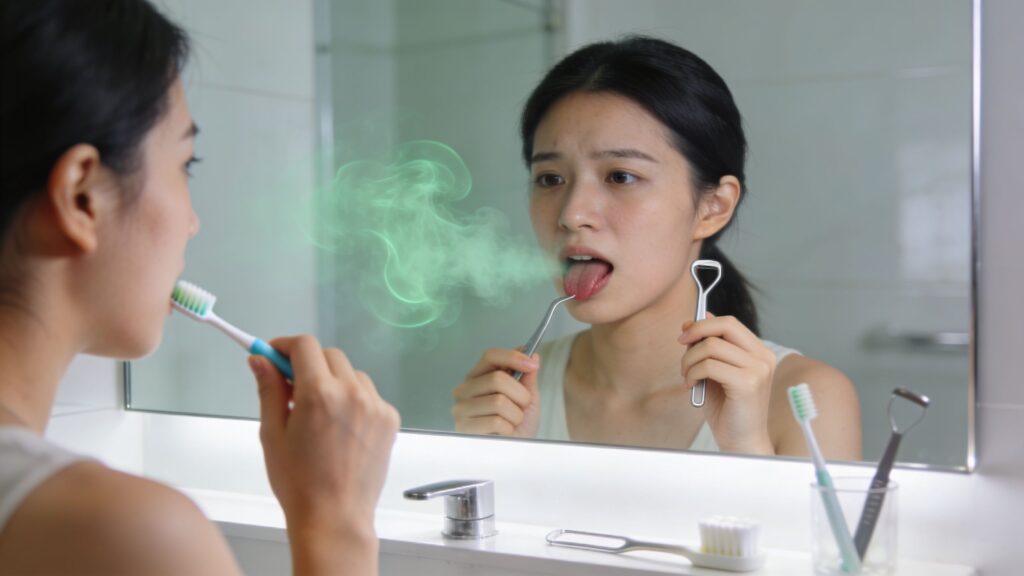
You brush carefully. You rinse. Maybe you floss too. Then an hour later, you notice that familiar taste or odor is back, and your first thought is usually, “What am I missing?”
If you’ve been searching why does my breath smell bad even after brushing, the answer usually isn’t that you’re lazy or doing something obviously wrong. Persistent bad breath is often a sign that the source sits somewhere your toothbrush doesn’t fully reach, or that something in your mouth or health is changing the environment bacteria live in.
That’s why this problem feels so confusing. Brushing matters, but fresh breath depends on more than clean-looking teeth. It depends on the tongue, the gums, saliva flow, old dental work, daily habits, and sometimes even medication side effects. Once you understand where the odor is really coming from, the next steps become much clearer.
The Frustration of Bad Breath That Won't Go Away
A lot of people have the same quiet routine. They get ready for work, brush thoroughly, use minty toothpaste, and head out assuming their breath is fine. Then they pause during a conversation, cup a hand over their mouth, and realize the smell is still there.
That moment can make people feel self-conscious fast. They start brushing harder, brushing longer, switching toothpaste, chewing gum constantly, or rinsing with stronger mouthwash. But the odor keeps returning because the problem often isn’t on the visible front surfaces of the teeth.
Bad breath that returns soon after brushing usually has a physical cause. It isn’t a personal failure.
Many readers assume bad breath must mean poor hygiene. That isn’t always true. Someone can brush twice a day and still have odor coming from the back of the tongue, from gum pockets, or from a dry mouth that lets bacteria build up faster than usual.
Why the problem feels so unfair
Brushing gives a clean feeling, so it’s reasonable to expect clean breath. But a toothbrush mainly scrubs exposed tooth surfaces. It doesn’t do much for deeper crevices, trapped biofilm, or areas where oxygen is low and odor-producing bacteria thrive.
That’s why the smell can come back quickly after a seemingly perfect routine.
A few common signs people notice are:
- A bad taste that returns fast after brushing or rinsing
- Morning breath that feels unusually strong even with regular home care
- Breath changes during the day when the mouth feels dry
- A white or coated tongue that keeps reappearing
- Bleeding gums or tenderness along with odor
The good news
This is a common, solvable problem. In many cases, the cause is local and identifiable. Once you stop treating bad breath like a mystery and start treating it like a clue, you can usually find the source.
The Hidden World of Bacteria in Your Mouth
Bad breath usually starts with bacteria. Not all mouth bacteria are harmful, and everyone has them. The issue begins when certain bacteria feed on leftover food particles and proteins, then release volatile sulfur compounds, often shortened to VSCs. Those sulfur compounds are what create the unpleasant smell.
According to this explanation of persistent bad breath and VSC production, bad breath persistence after brushing is driven by odor-producing bacteria that metabolize food particles and proteins into volatile sulfur compounds. The same source notes that these bacteria thrive in places a toothbrush can’t fully reach, especially below the gumline and on the top surface of the tongue.
Think of biofilm as a sticky film
Many people hear “plaque” and picture something loose that brushing should remove right away. Some of it does come off. But bacteria also organize themselves into biofilm, which acts like a sticky film attached to surfaces in the mouth.
That film matters because it protects the bacteria living inside it. In simple terms, it’s less like dust on a countertop and more like grime stuck in the texture of tile grout. You can wipe the top layer, but the deeper material stays put unless you clean the right area in the right way.

It’s not only about how many bacteria you have
People often get confused. They think, “If bacteria cause odor, I just need to remove more bacteria.” That’s only partly true.
Your mouth is an ecosystem. Different bacteria live on the tongue, teeth, gums, and cheeks. Sometimes persistent odor points to a microbial imbalance, sometimes called dysbiosis, where the mix of bacteria becomes less favorable. In that situation, the issue isn’t just quantity. It’s also which bacteria are dominating and where they’re settling.
Practical rule: If your breath improves for a few minutes after brushing but quickly worsens again, the source is often deeper than surface debris.
The tongue is a major hiding place
The top of the tongue isn’t smooth. It has tiny grooves and a textured surface that trap debris and bacteria, especially toward the back. If you’ve ever noticed a coated tongue, that’s a clue that material is collecting there.
If that sounds familiar, this guide on white tongue causes and treatment options may help you connect what you’re seeing with what you’re smelling.
There’s also a broader body connection worth understanding. While mouth odor often starts locally, digestion and oral ecology can influence each other. If you’re interested in that angle, Rawbiotics shares advice on improving gut health naturally, which can be a useful companion read for people looking at whole-body habits, not just brushing technique.
Top Oral Health Culprits Brushing Alone Can't Fix
Studies indicate that nearly all cases of bad breath are caused by factors within the mouth, such as bacteria left on the tongue, poor oral hygiene that misses key areas, or poorly kept dentures, according to this overview of what causes bad breath even after brushing. That same source explains that brushing teeth alone often fails to eliminate VSCs produced in deep gum pockets or dense tongue biofilm.
That tells us something important. If your breath smells off even after brushing, the best place to investigate first is usually inside the mouth itself.
The back of the tongue
The tongue is often the biggest missed area. People may brush the front quickly, gag when they reach farther back, and stop there. Unfortunately, the back portion is exactly where odor-producing buildup tends to collect.
A useful analogy is a shag rug. If crumbs fall on a hardwood floor, they’re easy to sweep away. If they sink deep into a thick rug, they stay trapped until you clean the fibers directly. The tongue works more like the rug.

Gum pockets and gum disease
Healthy gums fit snugly around the teeth. Inflamed gums can pull away and create deeper spaces where bacteria settle. These spaces are often called pockets, and they’re difficult to clean at home.
When bacteria sit in those low-oxygen zones, they can keep producing odor even if the visible parts of the teeth look clean. That’s one reason bleeding during brushing or flossing shouldn’t be ignored.
A few clues that gums may be involved:
- Bleeding when flossing even if you’re gentle
- Red or puffy gum tissue near the teeth
- A persistent bad taste that doesn’t match what you just ate
- Tenderness during chewing around certain teeth
If any of that sounds familiar, this article on how periodontitis can affect your oral health explains why deeper gum issues can change both breath and overall dental stability.
Dental work can trap odor too
Not every odor source is natural tissue. Existing dental work can contribute if there are small crevices, rough edges, or areas that trap debris. A crown margin, bridge area, or older restoration can create a pocket where food and bacteria linger.
That doesn’t always mean the dental work is failing. Sometimes it means the area needs a different cleaning technique. In other cases, a dentist may need to check the fit, margins, or surrounding gum tissue.
A simple self-check
Use this quick comparison:
| Area | What you might notice | Why brushing may miss it |
|---|---|---|
| Tongue | Coating, bad taste, odor returning fast | Bristles don’t clean deep tongue texture well |
| Gums | Bleeding, puffiness, tenderness | Bacteria can sit below the gumline |
| Dental work | Smell around one area, trapped food | Crevices can hold debris out of reach |
When people ask why does my breath smell bad even after brushing, the answer is often, “Because the odor source isn’t on the part you’re brushing best.”
Lifestyle and Medical Factors That Worsen Breath
Sometimes the mouth is the main source. Sometimes the mouth becomes the stage where another issue shows up.
A major example is dry mouth, also called xerostomia. Saliva plays a more extensive role than commonly understood. It helps wash away food debris, keeps tissues moist, and helps control bacterial buildup. According to Healthline’s explanation of bad breath after brushing, dry mouth is a major cause of halitosis, and many common medications and alcohol use can reduce saliva production, allowing odor-causing bacteria to multiply more easily.
Why saliva matters so much
Think of saliva as your mouth’s rinse cycle. When there isn’t enough of it, debris sits longer, bacteria stay in place, and odors intensify.
That’s why breath often worsens:
- Overnight, when saliva flow naturally drops
- During dehydration, when the body conserves fluid
- With mouth breathing, especially during sleep
- After alcohol, which can dry the mouth further

Medications can quietly change your breath
This is an area many people overlook. You may not connect your breath to a prescription you’ve taken for months or years. But medication-related dry mouth is a very real pattern.
The verified guidance available for this topic highlights common medication categories such as those used for blood pressure, depression, and allergies. If your breath problem seemed to worsen after a medication change, that’s worth discussing with a dentist and prescribing physician.
For a closer look at the dry mouth side of this issue, Serena’s page on why dry mouth can feel like the Sahara Desert explains how oral dryness affects comfort and hygiene.
A minty rinse can mask odor for a short time. It won’t replace the cleaning and protective role of saliva.
Diet and body conditions can add another layer
Some odors don’t come from plaque at all. Garlic and onions, for example, can affect breath even after brushing because their compounds don’t just sit on the teeth. They can continue to influence the air you exhale.
Reflux can also play a role. If stomach contents move upward, a sour smell or taste may linger and combine with oral bacteria. People dealing with that pattern may find it useful to review a naturopathic guide to treating GERD as part of a broader conversation with their healthcare providers.
Other non-dental contributors can include:
- Sinus issues or postnasal drip, which leave mucus in the throat
- Tonsil stones, which can hold debris and smell unpleasant
- Mouth breathing at night, which dries tissues quickly
- Low-carb eating patterns, which some people notice change the smell of their breath
Not every persistent odor comes from one cause. In many people, it’s a combination. A dry mouth plus tongue coating plus mild gum inflammation can create a cycle that keeps repeating.
Your Action Plan for Achieving Lasting Fresh Breath
You brush, rinse, and check your breath a few minutes later. The odor is still there. That usually means the problem is not “dirty teeth” alone. It is often a mix of sticky bacterial film, low saliva, trapped debris, or gum pockets that a toothbrush cannot fully reach.

A better plan starts with a different goal. Focus on changing the mouth environment that lets odor-producing bacteria thrive. Fresh breath tends to follow when the source is reduced and saliva can do its job again.
Upgrade your home routine
Brushing is one tool. Persistent bad breath usually needs a small system.
- Clean the tongue on purpose. The back of the tongue often holds a thick coating where odor-causing bacteria collect. A tongue scraper usually removes that sticky film better than bristles alone.
- Clean between the teeth every day. Floss, floss picks, or a water flosser help remove food and plaque from narrow spaces where bacteria feed.
- Choose your rinse based on the cause. Some mouthwashes mainly add scent, while others target bacteria or support a drier mouth. This guide to different types of mouthwash and how they work can help you choose a rinse that fits the problem instead of covering it up.
- Protect saliva flow. Water, sugar-free gum, and reducing mouth breathing can help if your mouth often feels tacky or dry.
Small changes matter here. If your mouth stays dry or your tongue coating comes back by noon, your routine may need to be adjusted, not intensified.
Know when home care has hit its limit
Certain odor sources are impossible to reach at home. Tartar bonds tightly to teeth. Plaque can extend under the gums. Older fillings, crowns, or bridges can create tiny ledges that trap food and bacteria.
Medications can complicate the picture too. A review of bad breath after brushing and flossing explains that drugs used for blood pressure, depression, and allergies may reduce saliva and worsen odor. That matters because saliva is the mouth’s natural rinse cycle. When it drops, bacteria and debris stay in place longer.
A short visual walkthrough may help if you want to see how dentists think about this problem:
What a dentist can do that you can’t do at home
The strategy becomes more precise at this stage. Instead of guessing, a dentist can map out where the odor is coming from and why it keeps returning.
A dentist may recommend:
- A professional cleaning to remove tartar and plaque that home tools cannot lift
- A periodontal evaluation to measure gum pockets and check for bleeding, inflammation, or early gum disease
- A review of crowns, bridges, fillings, and food traps if one area seems to smell worse or catches debris repeatedly
- A dry-mouth and medication review to see whether reduced saliva is contributing and what relief options make sense
That clinical step is often the turning point. Persistent bad breath becomes easier to solve once someone checks the tongue, gums, saliva flow, dental work, and medication history together.
When to See a Dentist in San Diego for Your Breath
Some breath issues improve once you clean the tongue better, hydrate more consistently, and adjust your rinse. Others keep returning because the source needs treatment, not guesswork.
It’s time to book an appointment if any of these apply:
- Bad breath keeps returning after you’ve improved home care
- Your gums bleed, swell, or feel sore
- You have a constant bad taste even when your mouth feels clean
- One tooth or one side of the mouth seems to smell worse
- Your mouth feels dry every day
- Chewing is uncomfortable or certain areas trap food repeatedly
If you’re wondering whether the problem may be related to buildup under the gums, this page on when you may need a deep dental cleaning is a practical next read.
The main thing to remember is simple. Persistent bad breath usually has a reason. The solution starts when someone looks beyond the toothbrush and checks the tongue, gums, saliva flow, dental work, and health history together.
If you’re tired of guessing why your breath still smells off after brushing, Serena San Diego Dentist can help you take the next step. Schedule a visit to evaluate the likely source, whether that’s tongue buildup, gum issues, dry mouth, or another oral factor, and get a treatment plan built around the cause instead of a temporary cover-up.