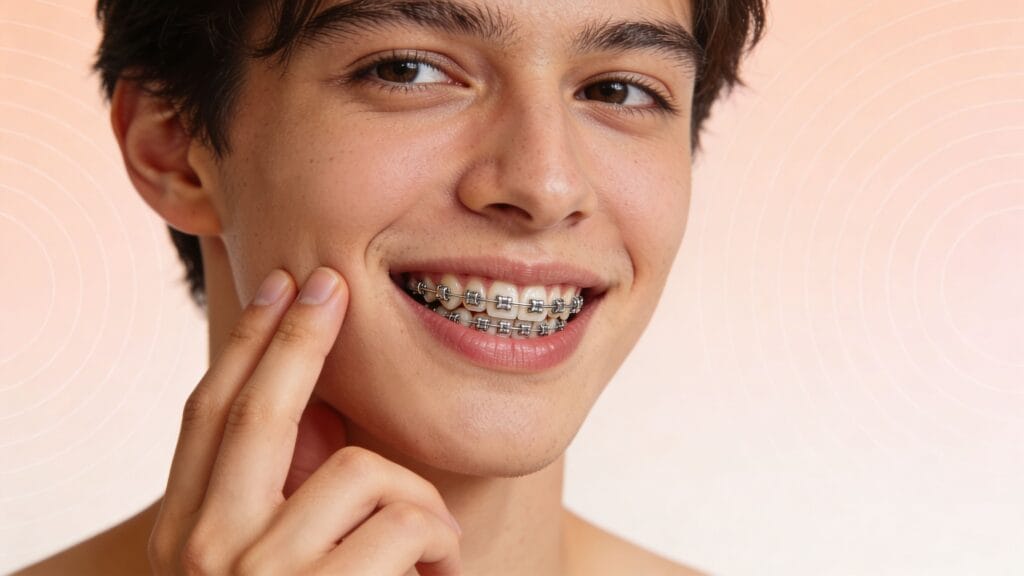
It’s the number one question on everyone's mind before getting braces: Is it going to hurt? Let's get right to it. The honest answer is yes, you'll likely feel some discomfort, but it's probably not the kind of sharp, intense pain you’re picturing.
Think of it this way: it's a lot like the feeling you get after a really good workout. That dull muscle ache is a sign that you're building strength and making progress. The soreness from braces is the exact same thing—it’s a productive ache that tells you your teeth are officially on the move toward their new, beautifully aligned positions.
The Honest Answer to What Braces Feel Like
Most of the anxiety around braces comes down to the fear of the unknown. The good news is that any discomfort is temporary and usually much milder than people expect. It's a sign that the treatment is working.
In fact, while studies show that 87% to 95% of patients report some soreness, it's rarely described as true "pain." It’s more of a general tenderness that starts a few hours after your braces are first put on or after an adjustment. This sensation typically peaks within the first 24 to 48 hours and then gradually fades away over the next 3 to 7 days. You can find more details on the factors that influence orthodontic comfort and what to expect during this initial period.

Your First Week with Braces: A Timeline of Sensations
Knowing what to expect day by day can make that first week feel much more manageable. The initial placement is when you'll feel the most new sensations as your mouth adapts to the brackets and wires.
Here’s a realistic breakdown of what that first week typically looks like.
| Timeframe | Typical Sensation | Recommended Action |
|---|---|---|
| Day 1-2 | A general, dull ache in your teeth and gums. You'll feel the constant, gentle pressure. | Stick to very soft foods like yogurt, soup, mashed potatoes, or smoothies. An over-the-counter pain reliever can help. |
| Day 3-4 | Soreness starts to lessen, but some specific teeth might feel tender when you bite down. | Continue with a soft-food diet. This is a good time to use orthodontic wax on any brackets that are rubbing your cheeks or lips. |
| Day 5-7 | The initial achiness has mostly disappeared. You're starting to get used to the feeling of the braces in your mouth. | You can start reintroducing firmer foods. Just remember to avoid anything too hard, crunchy, or sticky for now. |
By the end of that first week, most people are surprised at how quickly they've adapted. The initial discomfort is just a short-term hurdle on the way to a lifetime of confident smiles.
The Science of Creating Your New Smile
It’s easy to think of braces as just pushing teeth into place, but there’s a remarkable biological process happening just beneath the gums. The gentle, steady pressure from your braces is actually a signal to your body to begin a process called bone remodeling. This is the secret behind how your teeth safely and permanently move into their new, ideal positions.
Imagine you want to move a fence post that's set in the ground. You wouldn't just rip it out. You’d have to slowly wiggle it back and forth, allowing the dirt to give way on one side while you fill in the space left behind. Your jawbone does something surprisingly similar, just on a microscopic level.
How Your Body Safely Moves Your Teeth
This whole process is managed by two amazing types of cells that work as a team:
- Osteoclasts: Think of these as the "demolition crew." On the side of the tooth where there’s pressure, osteoclasts get the signal to clear a path. They dissolve tiny bits of bone, making just enough room for the tooth to move.
- Osteoblasts: Following right behind are the "construction crew." As a tooth shifts, it leaves a tiny gap. Osteoblasts jump into action, building new bone tissue to fill that space and lock the tooth securely in its new home.
This constant, balanced cycle of breaking down and rebuilding is what makes orthodontic treatment so effective. It’s also why it’s a marathon, not a sprint. The soreness you feel is a direct sign that your body is hard at work, making these incredible changes.
Why Your Cheeks and Lips Feel Irritated at First
It's not just your teeth that are adjusting. When you first get your braces, it’s completely normal for your cheeks, lips, and tongue to feel a bit sore. Your mouth is a very sensitive place, and it simply isn't used to sharing space with brackets and wires. As you talk, chew, and go about your day, that new hardware can rub against the soft tissues.
The good news is that your mouth is incredibly adaptable. Within a week or two, the tissues will "toughen up," and you’ll likely forget the braces are even there. This initial irritation is a normal part of the journey.
For a deeper dive into the specific treatments available in our area, you can learn more about our approach to orthodontics in San Diego. To truly optimize the health and appearance of your teeth after orthodontic treatment, it's beneficial to explore solutions that address issues like sensitivity or white spots, further enhancing your smile with a professional dental care product. Understanding this science helps you appreciate that every sensation is a sign of positive change.
Mapping Your Orthodontic Comfort Journey
Think of your time in braces not as a constant state of discomfort, but as a journey with a few predictable bumps along the road. Knowing what’s coming—and when—can make all the difference. The soreness you might feel isn't one long, drawn-out experience; it’s actually a series of short, manageable phases that tell you everything is working just as it should.
Most of the soreness happens at three key moments: getting the braces on, having them adjusted, and adding new pieces like rubber bands. Each phase feels a little different and has its own timeline.
Your Discomfort Timeline
The most noticeable ache almost always comes right at the beginning. This is when your teeth, gums, and cheeks are all getting acquainted with the new hardware in your mouth.
- Initial Braces Placement: Expect the most significant soreness during the first week. Your teeth are starting their big move, and your mouth is adapting to the feel of the brackets and wires. For most people, this is the peak of any discomfort they'll feel.
- Routine Adjustments (Tightenings): Every 4-8 weeks, you’ll pop in for an adjustment. It’s normal to feel some tenderness for a day or two afterward, but this is almost always a much milder and shorter experience than what you felt at the start.
- Adding New Appliances: Sometimes, treatment calls for extras like elastics (rubber bands) to help with specific tooth movements. This can create a bit of temporary, targeted soreness, but your mouth adapts quickly.
This infographic lays out these milestones on your path to a brand-new smile.

As you can see, once you’re past that initial adjustment, any soreness becomes a brief, predictable part of your routine appointments—a clear sign of progress.
Understanding the Duration of Soreness
One of the biggest worries we hear is, "How long will this hurt?" The good news is that the soreness is predictably brief. Most patients find the ache peaks in the first one to three days after their braces are put on or tightened. From there, it eases up pretty quickly, usually within a week or two.
In fact, the American Association of Orthodontists notes that for over 95% of cases, this discomfort is temporary and only pops up during these specific, expected phases of treatment. It's a short-term feeling for a long-term reward.
Every time you feel that gentle ache, remember it’s a positive sign. It means your braces are doing their job, and you're another step closer to the smile you’ve been waiting for. As you move along, keeping your teeth and gums healthy is crucial. For tips on navigating your new oral hygiene routine, take a look at our guide on how to floss with braces.
How Different Types of Braces Affect Comfort
When people ask if braces hurt, the real answer is… it depends! A big part of the experience comes down to the specific type of braces you choose. Thankfully, orthodontic treatment has come a long way, and today's options are worlds apart from the "metal mouth" of the past.
Your choice of appliance really does shape everything from the initial adjustment period to your day-to-day comfort. Let's walk through the options so you can have a better chat with your orthodontist about what's right for you.
Comparing Comfort Levels Across Different Brace Types
Each orthodontic system works by applying steady, gentle pressure to guide your teeth into place. However, the materials they use and the way they apply that pressure can make a big difference in how they feel.
To make things clearer, we've put together a quick comparison of the most common orthodontic options available today, focusing on what you can expect in terms of comfort.
| Brace Type | Primary Source of Discomfort | Typical Comfort Level | Best For |
|---|---|---|---|
| Traditional Metal Braces | Rubbing from metal brackets and wires on cheeks and lips. | Moderate | Durability and effectiveness for complex cases. |
| Ceramic Braces | Similar rubbing to metal, but often smoother brackets. | Moderate to High | Patients wanting a less noticeable look with the power of traditional braces. |
| Lingual Braces | Irritation to the tongue from brackets on the back of teeth. | Low to Moderate | Those seeking a completely invisible treatment for moderate to complex issues. |
| Clear Aligners (like Invisalign) | Pressure on teeth during tray changes; minimal soft tissue irritation. | High | Patients prioritizing comfort, convenience, and aesthetics for mild to moderate cases. |
While no orthodontic treatment is completely free of discomfort, modern systems are designed to be as gentle as possible. Your orthodontist can help you weigh the pros and cons of each.

Here's a closer look at what to expect from each type:
- Traditional Metal Braces: These are the trusty workhorses of orthodontics. While incredibly effective, the metal brackets can sometimes rub against the inside of your cheeks and lips, especially at first.
- Ceramic Braces: These work just like metal braces but use tooth-colored or clear brackets. Many patients report that the smoother ceramic material feels a bit gentler on their mouth.
- Lingual Braces: Since they’re attached to the back of your teeth, these are the ultimate hidden option. The trade-off is that they can irritate your tongue and might take some getting used to when you speak.
- Clear Aligners (like Invisalign): Made from smooth, custom-molded plastic, these removable trays have no brackets or wires to cause irritation. This makes them a top contender for comfort. If you're interested in this route, you can learn more about Invisalign in San Diego.
Why Modern Braces Are More Comfortable
One of the biggest game-changers in orthodontic comfort has been the development of self-ligating brackets. This technology is now used in many modern metal and ceramic brace systems.
Instead of using small elastic bands to hold the archwire in place, these advanced brackets have a tiny "gate" or clip that closes over the wire. This dramatically reduces friction, allowing your teeth to move more freely with less force. For patients, this often means quicker, more comfortable adjustment appointments.
Ultimately, choosing the right braces is a personal decision that involves balancing your orthodontic needs with your lifestyle and comfort priorities. Here at Serena San Diego Dentist, we're committed to walking you through every option to find the perfect fit for your smile journey.
Practical Tips for Managing Braces Discomfort
So, after asking "do braces hurt?" the next logical question is, "What can I do about it?" The good news is that managing the temporary soreness is pretty straightforward. Think of these tips as your personal guide to keeping things comfortable while your new smile takes shape.
Most of the time, what you'll feel is a dull, generalized ache, not a sharp pain. And while studies show that 87% to 95% of patients feel some discomfort right at the start, it's a temporary phase you can easily get through.
Your Go-To Relief Methods
When your teeth feel tender, especially right after an adjustment, having a game plan makes all the difference. Here are a few tried-and-true methods to ease that soreness:
- Over-the-Counter Pain Relievers: A dose of acetaminophen or ibuprofen can work wonders. If you're unsure which to choose, some of the same logic applies as when comparing Advil and Tylenol for back pain. Just be sure to follow the dosage instructions on the bottle and check with your orthodontist if you have any questions.
- Orthodontic Wax: Is a new bracket or wire rubbing against the inside of your cheek? A small piece of orthodontic wax will be your best friend. It creates a smooth little buffer that prevents sores and irritation. For a step-by-step tutorial, check out our guide on how to properly use dental wax.
- Saltwater Rinses: This one is as simple as it gets. Mix a teaspoon of salt into a glass of warm water and swish it around your mouth for about 30 seconds. The salt helps soothe irritated gums and can even help small sores heal faster.

Soothing Foods and Cold Therapy
Sometimes, the best relief comes from what you eat—and the temperature you eat it at.
Stick to soft foods. Think smoothies, yogurt, mashed potatoes, soup, and scrambled eggs. This gives your teeth a break from chewing while they're feeling tender.
Cold is a fantastic natural numbing agent. Sipping on a cold drink, eating a sugar-free popsicle, or enjoying some frozen yogurt can help reduce inflammation and dull the ache in your jaw. You can also press a cold pack against the outside of your cheeks for 10-15 minutes at a time for targeted relief.
It’s reassuring to know that on a scale of 1 to 10, most patients rate their braces pain somewhere between a 1 and a 4. The discomfort isn't constant—it's usually just a dull ache from your teeth moving or some minor irritation, both of which are easily managed with these simple tips.
When to Call Your Orthodontist About Pain
Alright, let's be honest. While a bit of soreness is totally normal with braces, there's a big difference between the usual ache and a real problem. So, when does "this is uncomfortable" cross the line into "I should call my orthodontist"?
Knowing what's a red flag will not only save you from unnecessary discomfort but also keeps your treatment moving along smoothly. Think of us as your partners in this process—we're here to help, but we need you to let us know when something feels off.
A Checklist for When to Call
Most of the initial soreness after an adjustment should fade within a few days. If it doesn't, or if you experience something sharp and specific, it's time to pick up the phone.
Here’s a simple guide for when you should give our San Diego office a call:
- A Poking or Broken Wire: This is a classic one. If a wire has come loose and is jabbing you in the cheek or tongue, it's more than just an annoyance—it can cause some nasty sores. We can fix this in a matter of minutes, so don't wait.
- A Loose or Broken Bracket: A bracket popping off a tooth isn't usually a four-alarm emergency, but it does need to be fixed. That bracket has a job to do, and if it's not on the tooth, your treatment can get delayed. Let us know so we can get you in.
- Severe or Persistent Pain: Your teeth will be tender, but you shouldn't be in severe pain. If the ache is so bad that over-the-counter pain relievers don't help, or if it lasts for more than a week, that's not normal. It could signal an underlying issue we need to look at.
- Trauma to the Mouth: If you take a hit to the face during a sports game or from an accident, call us. Even if everything looks and feels okay, we need to check your braces and teeth for hidden damage.
Your comfort and safety are our highest priorities. We mean it. You are never, ever bothering us by calling with a question or concern. It’s always better to check than to sit at home in pain.
For a wider perspective on pain management and different types of discomfort, you can learn about various treatable conditions for pain to understand how professionals approach these issues.
Remember, the whole point of this is to guide your teeth to a healthier, more beautiful position—safely and as comfortably as possible. Open communication is the key to making that happen.
Answering Your Top Questions About Braces and Pain
You've probably heard a lot of stories about braces, and it's easy to have lingering questions. Let's tackle a few of the most common ones we hear from patients just like you.
Does It Hurt to Get Your Braces Taken Off?
Honestly? Not at all. Getting your braces removed is a completely painless process.
You might feel a little bit of light pressure as your orthodontist carefully removes each bracket, but there’s no pain involved. Afterward, we'll polish away any leftover adhesive. The most common reaction we see is sheer joy and surprise at how incredibly smooth your teeth feel. While you might notice some mild sensitivity for a day or so, the overwhelming feeling is pure relief.
Is Getting Braces More Painful Than a Filling?
That’s like comparing apples and oranges—the sensations are completely different. When you get a filling, we use a local anesthetic to numb the area so you don't feel the sharp, procedural work being done.
Getting braces doesn't involve any needles or drilling. The discomfort you feel is a dull, generalized ache that usually sets in a few hours after your appointment. This ache, which comes from your teeth starting their journey to a new position, is something most patients find far less intimidating than the work involved in a filling.
Why Do Bottom Braces Seem to Hurt More?
This is a very common perception, but it’s not because the bottom teeth are somehow more sensitive. The real culprit is real estate. Your lower lip, tongue, and the insides of your cheeks are in constant contact with those new bottom brackets.
This constant interaction can cause more initial irritation and rubbing as you talk, eat, and go about your day. The good news is that your mouth is incredibly adaptable. This feeling of annoyance usually disappears within the first couple of weeks as the tissues "toughen up" and get used to the braces.
Once your treatment is complete, the focus shifts to keeping that beautiful new alignment. If you're curious about what comes next, you might want to read about whether your teeth can move back.
Ready to take the next step toward a confident, beautiful smile? The team at Serena San Diego Dentist is here to guide you through every phase of your orthodontic journey, ensuring your comfort and safety. Schedule your consultation in San Diego today!