
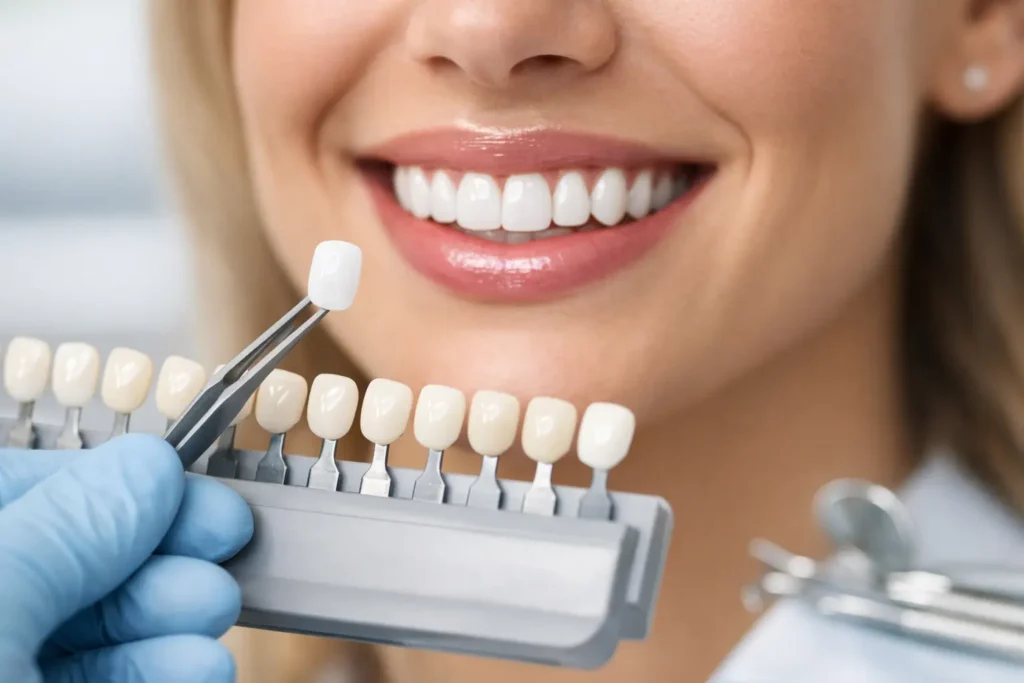
A beautifully designed veneer can make a smile look brighter, more balanced, and unmistakably natural. But before choosing treatment, patients deserve a clear answer to a question that affects every decision that follows: are porcelain veneers permanent?
Porcelain veneers themselves are not permanent in the sense that they last forever. They are highly durable restorations, and with excellent care, many can look and function beautifully for 10 to 15 years or longer. The permanent part is usually the preparation of the natural tooth. In most traditional veneer cases, a small amount of enamel is reshaped to create room for the porcelain. Once that enamel is removed, the tooth will need to remain protected by a veneer or another restoration in the future.
That distinction matters. Veneers can be a remarkable long-term cosmetic investment, but they should be chosen with the same care you would bring to any lasting change in your smile.
Are Porcelain Veneers Permanent on Your Teeth?
Traditional porcelain veneers are considered an irreversible treatment because they typically require enamel reduction. The amount removed is conservative and carefully planned, often less than many people expect, but enamel does not grow back. If a veneer is ever replaced, the prepared tooth will still require coverage.
This does not mean veneers damage healthy teeth when they are properly planned and placed. In the right hands, they are designed to preserve as much healthy tooth structure as possible while correcting concerns such as discoloration, minor chips, uneven edges, small gaps, or teeth that appear short or misshapen.
However, veneers are not the right answer for every cosmetic concern. A patient with healthy enamel and mild color concerns may be better served by professional whitening. Someone with more significant tooth damage, large fillings, or weakened structure may need a crown rather than a veneer. Patients who clench or grind their teeth need additional protection and careful bite planning before moving forward.
At Serena Family and Cosmetic Dentistry, veneer planning begins with a personalized evaluation of your teeth, gums, bite, facial features, and goals. Digital imaging and 3D intraoral scanning allow the treatment plan to be designed with precision before a final restoration is created.
How Long Do Porcelain Veneers Last?
Porcelain is chosen for its strength, stain resistance, and lifelike translucency. It does not respond to whitening products, but it also resists the everyday staining that can affect natural enamel from coffee, tea, red wine, and tobacco. With attentive home care and regular dental visits, porcelain veneers commonly last a decade or more.
Their lifespan depends less on luck than on a few practical factors. The quality of the porcelain, the bond to the tooth, the design of the veneer, and the way your teeth meet when you bite all matter. So do habits outside the dental office.
A veneer can chip, crack, loosen, or wear over time, particularly if it is exposed to repeated heavy force. Biting fingernails, opening packages with teeth, chewing ice, or using teeth as tools can place unnecessary stress on porcelain. Nighttime clenching and grinding can be equally damaging, even when the habit is not obvious during the day.
When veneers eventually need attention, replacement is often straightforward when the underlying tooth and gums have been kept healthy. The original veneer is carefully removed, the tooth is evaluated, and a new restoration is designed to fit the tooth and surrounding smile. If decay, gum recession, or fracture has developed, treatment may be more involved. That is why maintenance is central to protecting your result.
What Happens If a Veneer Needs Replacement?
A porcelain veneer is bonded securely to the front surface of a tooth. It cannot simply be taken off and left that way because the prepared tooth may look smaller, feel sensitive, and lack the appearance and protection intended by the treatment plan.
Replacement does not always mean a problem. Porcelain is long-lasting, not indestructible. A veneer may be replaced after years of normal use because of a small chip, changes at the edge of the gumline, a shift in color match with neighboring teeth, or a desire to refresh an older cosmetic result.
The important question is not whether a veneer can last forever. It is whether the treatment is designed to serve your smile well for the long term. Thoughtful cosmetic dentistry considers the health of the supporting teeth and gums, how your bite functions, and how the restorations will age with your face and natural teeth.
Can You Get Veneers Without Shaving Teeth?
Some patients may be candidates for minimal-prep or no-prep veneers. These are ultra-thin porcelain restorations that may require little to no enamel reduction. They can be an appealing option, but they are not automatically better or appropriate for every smile.
No-prep veneers add material to the front of the tooth. If teeth are already prominent, crowded, or positioned forward, adding porcelain without preparation can create a bulky appearance or interfere with the bite. In those cases, a conservative amount of enamel shaping may produce a more refined, natural result.
The right approach depends on the starting point. A skilled cosmetic dentist will not treat “no-prep” as a marketing promise. The goal is to create a smile that looks elegant, feels comfortable, supports healthy gums, and fits naturally within your facial proportions.
How to Protect Your Veneers for Years
Caring for veneers is very similar to caring for natural teeth. Brush twice daily with a soft-bristled toothbrush and a nonabrasive toothpaste. Floss daily, including around the veneer margins, because the tooth beneath and the gums around it still need protection from plaque and decay.
Routine cleanings and examinations are equally valuable. Your dental team can check the porcelain, polish it safely when needed, monitor the gumline, and identify small concerns before they become more complex. If you grind or clench your teeth, a custom night guard can protect both veneers and natural enamel from excessive force while you sleep.
It is also wise to be mindful of hard foods. You do not need to avoid enjoying a normal diet, but biting directly into very hard items with the front teeth is not ideal. Cut firm foods into smaller pieces when appropriate, and never use your teeth to tear packaging or hold objects.
When Veneers Are Worth the Commitment
Porcelain veneers can be an excellent choice for adults who want a lasting improvement in smile color, shape, symmetry, or proportion and understand the long-term responsibility involved. They are especially compelling when several cosmetic concerns can be addressed with one cohesive treatment plan.
The best candidates have healthy gums, a stable bite, and realistic expectations. Veneers are not a shortcut around untreated decay, gum disease, or significant grinding. Those issues should be addressed first so the cosmetic result is built on a healthy foundation.
A premium veneer result should never look generic. The porcelain should complement your skin tone, facial features, lip line, and the character you want your smile to have. Some patients prefer a bright, polished transformation; others want subtle refinement that still looks entirely like them. Both outcomes require careful communication and precise planning.
Choosing veneers is less about chasing permanence and more about choosing a treatment that is appropriate for your goals, oral health, and future. A thoughtful consultation can show you what is possible, what is required, and whether porcelain veneers are the right way to create a smile you will feel confident sharing for years to come.