A professional Philips Zoom whitening review should start with the result patients actually want: a noticeably brighter smile without the uncertainty, uneven color, or prolonged discomfort that can come with over-the-counter kits. Philips Zoom is a dentist-supervised whitening system designed to lift many common stains in a single visit, making it a compelling option for San Diego patients preparing for a wedding, career milestone, photos, or simply a more polished everyday smile.
The right question is not whether teeth whitening works. It does, when discoloration is the concern and the treatment is matched to your oral health, tooth color, and sensitivity history. The more useful question is whether Zoom is the right level of treatment for your goals.
Philips Zoom Whitening Review: What the Appointment Is Like
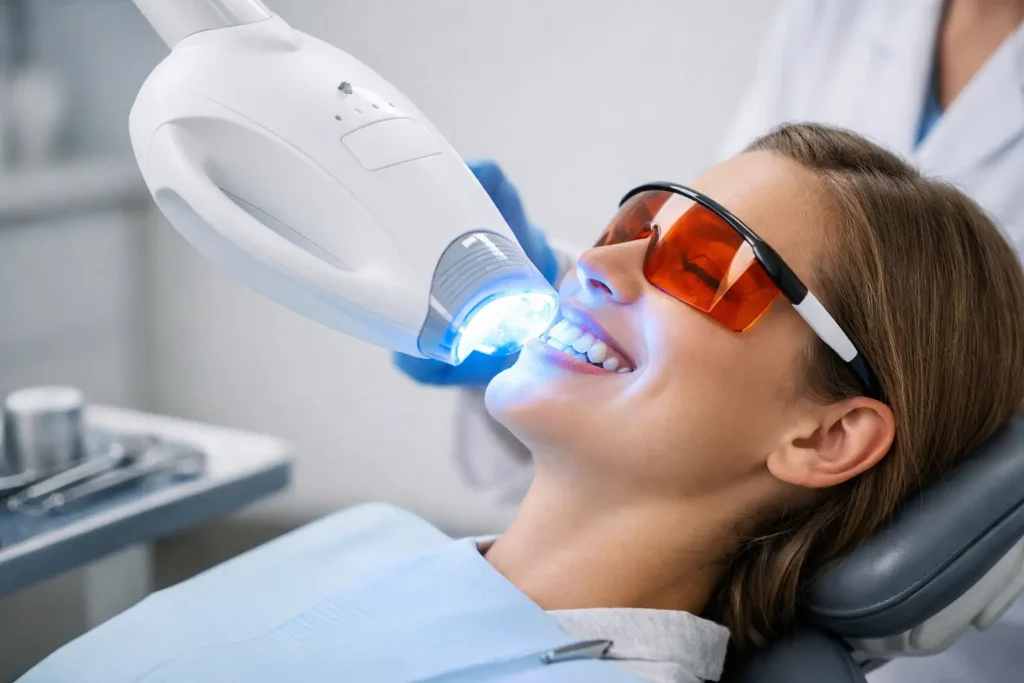
Philips Zoom is an in-office whitening treatment performed under dental supervision. After an exam and shade assessment, the dental team protects the lips and gums before applying professional-strength whitening gel to the teeth. A specialized light is used in timed cycles to activate the gel and support the whitening process.
Most appointments take roughly an hour to 90 minutes, depending on the protocol and the starting shade of your teeth. The appointment is efficient, but it is still individualized. A patient with mild surface staining from coffee may have very different goals and sensitivity concerns than someone with deeper yellowing from years of tobacco use, dark beverages, or natural aging.
One of the clearest advantages is control. The dentist can evaluate whether whitening is appropriate before treatment begins, monitor your comfort throughout the appointment, and adjust the approach if sensitivity develops. This matters because whitening gel should not be placed over untreated decay, exposed roots, leaking restorations, or irritated gum tissue.
At Serena Family and Cosmetic Dentistry, professional whitening is approached as part of an overall smile plan, not as a one-size-fits-all cosmetic service. A healthy, balanced result always comes before simply pursuing the brightest possible shade.
How White Can Philips Zoom Make Teeth?
Many patients see a visible improvement after one appointment, often several shades brighter. The exact change varies. Teeth with yellow or orange-toned staining usually respond more predictably than teeth with gray discoloration. Surface stains from coffee, tea, red wine, and smoking can respond well, while discoloration caused by trauma, certain medications, or developmental changes may require a different cosmetic solution.
This is where a professional consultation adds real value. A dentist can distinguish between stain that is likely to lighten and color that may be better addressed with veneers, bonding, or crowns. Whitening is highly effective for natural enamel, but it cannot change the color of porcelain veneers, crowns, fillings, or dental implants.
That distinction is especially important for patients with visible front-tooth restorations. Whitening natural teeth first may be part of a larger cosmetic plan, but existing restorations may need to be replaced afterward if their color no longer matches the newly brightened smile.
Is Philips Zoom Whitening Comfortable?
Sensitivity is the most common trade-off with professional whitening. Some patients feel brief, sharp sensations during or shortly after treatment, often described as “zingers.” Others experience little to no sensitivity. The likelihood depends on your baseline sensitivity, enamel condition, gum recession, previous whitening history, and the strength and duration of treatment.
The good news is that sensitivity is usually temporary. A dental team can take practical steps to improve comfort, such as using desensitizing products, shortening or modifying treatment cycles, and recommending a sensitivity toothpaste before and after the appointment. Patients with significant recession, cracked teeth, active cavities, or persistent sensitivity should address those issues first rather than pushing through whitening.
For many people, the convenience of a single professional visit outweighs a day or two of mild sensitivity. For others, a slower take-home system with custom trays may be the better choice. It depends on how quickly you need results and how reactive your teeth tend to be.
Safety: Why a Dental Exam Comes First
Philips Zoom is considered safe when it is prescribed and monitored by a dental professional for an appropriate candidate. Whitening does not remove healthy enamel when used as directed, but that does not mean every smile should be treated immediately.
A thorough exam helps identify issues that could make whitening uncomfortable or ineffective. Cavities may allow whitening gel to reach sensitive inner tooth structures. Gum disease can leave gums inflamed. Worn enamel and exposed root surfaces can increase sensitivity. A dentist can also assess whether a dark tooth is responding to external staining or has an internal issue that needs diagnostic attention.
Professional supervision also protects the gums and soft tissue from unnecessary contact with whitening gel. That is a meaningful advantage over poorly fitted generic trays or strips that can slide onto the gumline.
How Long Do Philips Zoom Results Last?
Results are not permanent, but they can last well with sensible maintenance. Most patients can preserve a bright smile for many months to a few years, depending on diet, oral hygiene, tobacco use, and the natural porosity of their enamel. Coffee, tea, red wine, berries, tomato-based sauces, and smoking can gradually reintroduce stains.
The first 24 to 48 hours after whitening deserve extra care. Teeth can be more receptive to staining immediately after treatment, so patients are commonly advised to avoid deeply colored foods and beverages during that window. Afterward, everyday habits make the biggest difference: brushing thoroughly, maintaining regular professional cleanings, drinking staining beverages through a straw when practical, and rinsing with water after coffee or wine.
Many patients choose occasional touch-ups rather than repeating a full in-office whitening appointment. Your dentist can recommend an approach based on how your teeth responded initially and how quickly new staining appears.
Philips Zoom vs. Store-Bought Whitening
Whitening strips and LED kits can be useful for mild staining and patients who prefer a lower upfront cost. They are also convenient. Their limitations are fit, consistency, and strength. Generic products cannot account for uneven tooth shape, recession, existing dental work, or individual sensitivity.
In-office Philips Zoom offers a more immediate and closely supervised experience. It is typically the better fit for someone seeking a significant improvement on a deadline, someone who has not been satisfied with store-bought products, or someone who wants an expert assessment before making a cosmetic investment.
The cost is higher than a box of strips, and that is a real consideration. The fee reflects the professional exam, protective measures, clinical-grade materials, chair time, and personalized recommendations. For patients who value predictable treatment and a refined cosmetic result, that difference is often worthwhile.
Who Is a Good Candidate for Zoom Whitening?
The strongest candidates have healthy teeth and gums, natural tooth discoloration, and realistic expectations. Whitening can be an excellent finishing touch after a cleaning, before a special event, or as part of a broader smile makeover.
It may not be the ideal first step if you are pregnant or nursing, have untreated dental problems, have extensive visible restorations, or are seeking to correct severe gray or internally darkened teeth. In those cases, a dentist can recommend treatment that addresses the underlying cause rather than promising a result whitening cannot deliver.
A bright smile should still look like your smile – just cleaner, fresher, and more confident. The most satisfying Philips Zoom results come from a thoughtful consultation, healthy foundations, and a shade that complements your features rather than looking artificially white.