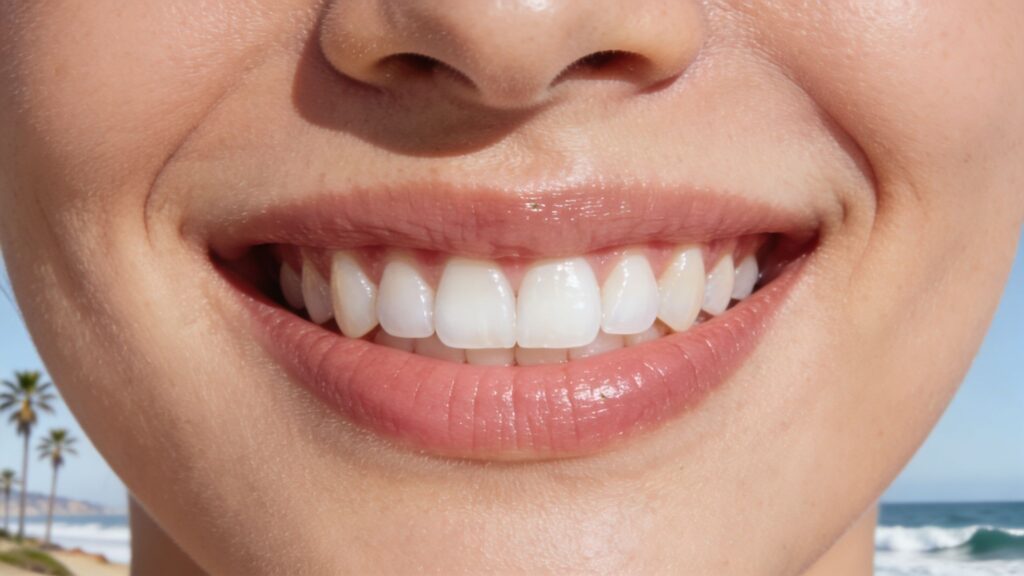
If you’re searching best porcelain veneers near me, you’re probably not starting from pure curiosity. You may be looking at photos from a Coronado beach weekend, getting ready for work events in downtown San Diego, or noticing that you smile with your lips closed more often than you used to. Small flaws can feel much bigger when they’re in the center of your face.
Porcelain veneers are one of the most effective ways to change that. They can reshape a smile, brighten teeth that don’t respond well to whitening, and smooth over chips, uneven edges, or spaces that make people feel self-conscious. For many patients, the biggest benefit isn’t cosmetic perfection. It’s relief. They stop thinking about their teeth every time someone pulls out a camera.
In San Diego, that matters. This is a city where people spend time outdoors, meet face-to-face often, and tend to value polished but natural-looking results. Veneers have become much more common for that reason. The demand for veneers has surged by 250% in recent years, adults ages 40 to 51 are the most common group seeking them, and 90% of patients report significant improvements to their smiles, according to veneer statistics summarized by Impressions Dental.
Your Confident San Diego Smile Awaits
A typical veneer patient doesn’t always walk in asking for a “smile makeover.” Many say something simpler.
They’ll tell me one front tooth has always looked darker than the others. Or that an old chip catches the light in every photo. Or that after years of coffee, red wine, grinding, or just normal wear, their smile no longer matches how vibrant they feel.
That’s often where porcelain veneers enter the conversation. They aren’t just for celebrities or dramatic transformations. They’re a highly refined option for people who want their teeth to look balanced, bright, and natural in everyday life.
Why so many San Diego patients start looking locally
When someone searches best porcelain veneers near me, they’re usually trying to answer several questions at once:
- Who does natural-looking work
- Who takes time with planning
- Who explains candidly whether veneers are the right choice
- Who understands the look you want, whether that means subtle refinement or a bigger change
Local context matters. A patient in La Jolla may want a polished, camera-ready smile that still looks understated. Someone in Clairemont Mesa may be focused on repairing worn edges and making their teeth look fresher without appearing “done.” The right veneer plan should fit the person, not force everyone into the same template.
Practical rule: The best veneers don’t announce themselves. People should notice that your smile looks healthier, brighter, and more harmonious, not that you had dental work.
What patients often worry about
Individuals considering veneers share a few concerns:
- Will they look fake
- Will too much tooth structure be removed
- How long will they last
- How do I know which dentist to trust
Those are smart questions.
Porcelain veneers can be life-changing when they’re planned carefully, made from quality materials, and placed on the right candidate. They can also be disappointing when someone chooses based only on price or marketing photos. That’s why the smartest way to approach veneers is step by step, with a clear understanding of the material, the process, candidacy, upkeep, and provider selection.
What Exactly Are Porcelain Veneers
Porcelain veneers are thin, custom-made ceramic shells designed to bond to the front surface of teeth. Their job is to change what you see when you smile: color, shape, length, proportion, and overall symmetry.

For many San Diego patients, veneers come up after they have already tried simpler fixes in their mind. Whitening may brighten the smile but leave a chipped edge untouched. Orthodontics may straighten teeth but not correct staining or worn corners. Veneers are different because they let a dentist redesign the visible front of a tooth with a high level of control.
Why porcelain can look natural
Patients often hear the word "shell" and worry that veneers will look bulky or fake. In practice, quality veneers are made to be very thin and carefully shaped. A skilled dentist and lab use ceramics such as lithium disilicate or feldspathic porcelain because these materials can reflect light in a way that resembles natural enamel.
That optical quality makes a real difference.
Natural teeth are not one flat block of white. They have depth, brightness, and a little translucency near the edge. Well-made porcelain can copy those details, which is one reason patients in image-conscious areas like La Jolla often ask for porcelain instead of a quicker cosmetic patch.
If you want a clearer overview of how materials and design choices affect the final result, this porcelain veneers patient guide explains the process in patient-friendly terms.
What veneers can actually change
A veneer covers the front-facing portion of a tooth, so it can improve concerns that are visible when you talk or smile, including:
- Chips and worn edges
- Permanent discoloration
- Small gaps
- Minor shape differences
- Teeth that look too short, uneven, or slightly rotated
A helpful way to think about veneers is as facial design for teeth, not full structural rebuilding. They improve the outward appearance of selected teeth. They do not treat untreated decay, gum disease, or significant bite problems. Those issues need attention first.
A short visual explainer can help make that distinction clearer.
Porcelain veneers versus composite bonding
This comparison causes a lot of confusion, especially when patients search for veneers in San Diego and see both services advertised side by side.
Porcelain veneers are created outside the mouth, usually by a dental lab, then bonded to the teeth after planning and preparation. They are known for color stability, refined surface texture, and a polished appearance that can hold up well over time.
Composite bonding is sculpted directly on the tooth with tooth-colored resin. It can be a smart option for smaller corrections, lower upfront cost, or patients who want a more conservative first step.
In plain language, porcelain is usually chosen for a more precise smile redesign. Bonding is often chosen for modest touch-ups.
That difference matters in local neighborhoods too. A patient in Clairemont Mesa may want to repair a few worn edges with a conservative approach, while someone planning a broader cosmetic upgrade in La Jolla may prefer porcelain for its long-term color stability and detailed esthetic control.
Porcelain veneers are not generic covers. They are carefully designed ceramic restorations that reshape how a smile looks while preserving as much healthy tooth structure as the case allows.
Benefits of Veneers vs Other Cosmetic Options
A common San Diego scenario goes like this. You look in the mirror and notice several small things at once. One tooth is darker than the rest, another has a chipped edge, and your front teeth do not look as even as you want in photos. In that situation, whitening may help one part of the problem, but it will not change shape or repair wear. Veneers are often considered because they can address several cosmetic concerns together in a more coordinated way.
That is one of the biggest differences between veneers and simpler treatments. Veneers are often chosen for smile design, not just color change.
Where veneers tend to stand out
Porcelain veneers give the dentist and ceramist a high level of control over the final result. Color is only one piece of the puzzle. Shape, length, symmetry, surface texture, and light reflection all affect whether a smile looks natural or looks dental. Veneers allow those details to be planned together, which is helpful when several front teeth need improvement.
Patients in neighborhoods like La Jolla often ask for a polished, camera-ready smile that still fits their face. Patients in Clairemont Mesa may be looking for a practical upgrade that fixes wear, chips, and uneven edges without making the teeth look bulky or artificial. In both cases, veneers can work well because they are customized rather than one-size-fits-all.
Their advantages often include:
- A more unified smile design when several front teeth need changes
- Better stain resistance than composite resin in many cases
- Precise control over shape and proportion
- A longer-lasting cosmetic change than whitening by itself
Still, veneers are one option, not the automatic answer. Whitening works well for teeth with good shape and healthy enamel. Bonding can be a smart first step for a small chip or minor contour issue. Crowns are usually the better choice when a tooth needs more full coverage and support.
Cosmetic dentistry options at a glance
| Treatment | Best For | Average Lifespan | San Diego Cost (Per Tooth) | Stain Resistance |
|---|---|---|---|---|
| Porcelain veneers | Chips, discoloration, shape changes, small gaps, smile redesign | Often lasts many years with good care | Often about $950 to $2500 per tooth in San Diego | High |
| Composite bonding | Small chips, minor reshaping, conservative touch-ups | Shorter than porcelain in many cases | Usually lower than veneers, but varies by case and office | Lower than porcelain |
| Teeth whitening | General brightening when tooth shape is already pleasing | Depends on habits and maintenance | Usually the lowest upfront cost of these options | Does not change shape or surface defects |
| Dental crowns | Teeth needing fuller structural coverage | Varies by material, tooth condition, and bite | Usually higher than bonding, and varies by material and office | Good, depending on material |
Those local price ranges can vary across San Diego based on the dentist’s experience, the ceramic lab used, and the complexity of the case. Offices in higher-demand cosmetic areas may quote more, especially if the treatment includes digital smile design, provisional veneers, or a master ceramist. Many San Diego practices also offer monthly payment plans through third-party financing, which can make a larger veneer case easier to budget.
How to decide between them
A useful way to look at this is to match the treatment to the problem.
If you mainly want brighter teeth, whitening may be enough.
If one tooth has a small chip or slight shape issue, bonding may give you the change you want while preserving more of the natural tooth.
If the tooth is heavily filled, cracked, or structurally weak, a crown may protect it better than a veneer.
If the front teeth have multiple cosmetic concerns at the same time, porcelain veneers often provide the most refined and balanced result.
For a clearer side-by-side explanation, this dental bonding vs veneers comparison can help you compare what each option is designed to do.
A sound cosmetic plan starts by asking how little treatment is needed to reach your goal, then choosing the option that gives a result you can maintain comfortably.
Why the "best porcelain veneers near me" search can be misleading
The best cosmetic choice is not the one with the flashiest before-and-after gallery. It is the one that fits your teeth, your bite, your habits, and your budget in San Diego.
For example, someone who clenches at night may still be a veneer candidate, but the planning needs to account for that. Someone else may walk in asking for veneers and leave with a better answer, such as whitening first or bonding on one tooth. Good cosmetic dentistry works the way custom-made clothing works. The final result should fit the person wearing it, not just look good on display.
Are You a Good Candidate for Veneers in San Diego
Not everyone who wants veneers should get veneers. I know that may sound less exciting than a makeover promise, but it’s one of the most important truths in cosmetic dentistry.
The strongest veneer cases begin with healthy teeth and a stable foundation. If the foundation isn’t there, the beautiful part doesn’t last the way it should.

Signs you may be a strong candidate
Veneers tend to work well for people who have:
- Healthy gums
- Enough remaining enamel for bonding
- Teeth that are generally healthy underneath
- Cosmetic concerns involving the front surfaces of teeth
- Realistic expectations about maintenance and longevity
Ideal concerns often include visible chips, worn edges, stubborn discoloration, small spaces, or teeth that feel uneven in size or shape.
When veneers may not be the right first step
A literature review on veneers notes that treatment selection matters because veneers are not suitable for patients with severe tooth decay, significant bite misalignment, or insufficient remaining tooth structure, and that a thorough assessment is necessary to avoid complications.
That means a careful dentist should pause before recommending veneers if you have:
- Active decay
- Uncontrolled gum disease
- A bite problem that places too much stress on front teeth
- Heavy grinding or clenching
- Very limited enamel or compromised tooth structure
Sometimes veneers are still possible later. They just aren’t the first move.
If your teeth need health treatment before cosmetic treatment, that isn’t a setback. It’s the right sequence.
A simple San Diego example
Consider two patients.
One has healthy gums, a few chipped front edges, and staining that hasn’t improved enough with whitening. That person may be a classic veneer candidate.
The other has teeth that look worn but also has significant grinding and a bite that’s putting heavy pressure on the front teeth. In that case, moving straight to veneers could create avoidable problems. The bite and protective plan need attention first.
This is especially relevant in image-conscious neighborhoods where patients may feel pressure to move quickly. A responsible cosmetic dentist won’t rush past the diagnosis just to get to the “after” photo.
Questions worth asking yourself before a consultation
- Do I want a subtle upgrade or a major transformation
- Am I looking to fix color, shape, spacing, or several concerns at once
- Do I grind my teeth or wake up with jaw tension
- Have I had ongoing gum or decay issues
- Do I want the most durable aesthetic option, or the most conservative one
Those answers help guide the conversation and often reveal whether veneers, bonding, whitening, orthodontics, or crowns are the better fit.
The Veneer Process Timeline Cost and Longevity
You come in for a consultation in San Diego because you are tired of hiding your teeth in photos. A few weeks later, you could be looking at a mirror and seeing a smile that fits your face, your coloring, and your personality. That change does not happen in one rushed visit. It happens through a careful sequence, much like building a custom home from a blueprint instead of buying something off the shelf.

What the timeline usually looks like
The full process often takes two to four visits, depending on your starting point, the number of teeth involved, and whether any health or bite adjustments are needed first.
Here is the usual flow:
Consultation and records
Your dentist examines your teeth, gums, bite, and smile line. You also talk through what you want to change, whether that is color, shape, spacing, symmetry, or several concerns at once.Smile design and planning
Photos, digital scans, and shade selection guide the design. This stage works like the blueprint phase of a renovation. Small decisions here shape whether the final result looks natural in La Jolla sunlight, in office lighting downtown, and in close-up phone photos.Tooth preparation
A thin layer of enamel is often adjusted so the veneers sit correctly. The goal is a result that looks like part of your tooth, not something added on top of it.Temporary veneers, if needed
Some patients wear temporaries while the lab makes the final restorations. These can preview length and contour and give you a chance to feel how the new smile will function.Lab fabrication
Your veneers are created from porcelain chosen for strength, translucency, and shade. The laboratory matters here. A strong cosmetic result depends as much on craftsmanship as on the material itself.Final try-in and bonding
Your dentist checks fit, bite, shape, and color before bonding each veneer in place. Small adjustments at this visit can make a big difference in comfort and appearance.
If you want a patient-friendly walkthrough of each phase, this guide to the steps of getting porcelain veneers explains the sequence in more detail.
What veneers cost in San Diego
Cost deserves a direct answer.
In the San Diego market, porcelain veneers are often priced per tooth, and fees can vary widely based on the dentist's planning process, the ceramist or lab, the materials used, and how customized the case is. Offices in higher-fee areas such as La Jolla may price differently than offices in neighborhoods like Clairemont Mesa, but location alone does not tell you whether the work is more precise or more appropriate for you.
A small case on two teeth is different from designing eight or ten teeth across the visible smile. One is a targeted correction. The other is a full cosmetic composition where color, width, edge shape, and facial balance all need to work together.
Ask for a written estimate that spells out:
- Cost per tooth
- Whether temporaries are included
- What records or design wax-ups are included
- Whether follow-up adjustments are part of the quoted fee
- What replacement or repair costs may look like later
That level of detail helps you compare offices fairly.
Financing and payment options locally
Many veneer cases are paid partly or fully out of pocket because they are cosmetic. If part of your treatment overlaps with a health need, such as replacing damaged restorations, your insurance may contribute to that portion. The office should explain that clearly before treatment starts.
San Diego practices often offer third-party financing, phased treatment, or payment plans for qualified patients. If you are comparing offices in neighborhoods from Del Mar to Clairemont, ask the same financial questions at each consultation so you are not comparing a bundled quote from one office to a limited quote from another.
How long veneers last
Porcelain veneers are durable, but they are not permanent in the sense of lasting forever. They should be viewed the way you would view a high-quality roof or a set of custom tires. They can last many years, but only if the underlying conditions and daily habits support them.
Their lifespan depends on several factors:
- Your bite
- Whether you grind or clench
- How much enamel supports the bond
- Your home care
- Your routine cleanings and exams
- Whether you use your front teeth to bite hard objects
Patients are sometimes surprised by this part. The porcelain itself is strong. The weak points are usually force and habits. Chewing ice, opening packaging with your teeth, or skipping a night guard when you grind can shorten the life of the work.
Veneers need the same kind of respect you would give any precision dental treatment.
Use a non-abrasive toothpaste, keep up with cleanings, and call early if something feels off. A small chip or bite change is easier to address early than after it creates stress on the veneer or the tooth underneath.
How to Choose the Best Veneer Provider in San Diego
Searching best porcelain veneers near me can quickly turn into information overload. Every office says it offers beautiful smiles. Many websites use the same phrases. What helps is having a practical filter.
You’re not just choosing a dentist. You’re choosing a person and a process that will shape how your smile looks every day.

What to look for first
Start with evidence, not adjectives.
Training in cosmetic dentistry
Ask about advanced cosmetic education and whether the dentist regularly performs veneer cases.A real before-and-after portfolio
Look for multiple examples, not one or two highly edited transformations.Digital tools
Intraoral scanners, detailed photography, and thoughtful planning tools usually improve communication and precision.A consultation that includes candidacy discussion
If the office skips over gum health, bite, enamel, or grinding habits, that’s a concern.Clear explanations of maintenance
A strong provider clearly explains care, limitations, and replacement over time.
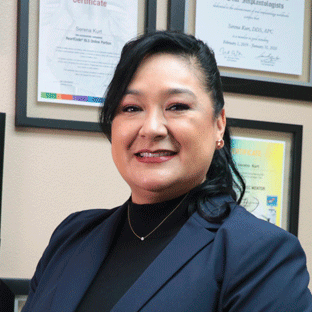
One local option patients may review is Serena San Diego Dentist’s office page, which outlines the clinic setting and service categories. Whether you choose that office or another, the same checklist applies.
Questions worth asking at your consultation
Some questions reveal more than reviews do.
| Question to ask | Why it matters |
|---|---|
| How do you decide whether veneers are appropriate for me | Shows whether the dentist starts with diagnosis |
| Can I see cases similar to mine | Helps you judge relevant aesthetic experience |
| What material do you recommend and why | Reveals whether choices are customized |
| How do you plan shape, color, and smile balance | Shows attention to detail, not just placement |
| What happens if I grind my teeth | Tests whether long-term protection is addressed |
| How will I maintain them over time | Confirms the office is thinking beyond delivery day |
Red flags patients should notice
A few warning signs come up again and again:
- Pressure to commit immediately
- No meaningful discussion of alternatives
- No explanation of risks or limitations
- Promises that sound too perfect
- Little proof of work quality beyond marketing language
A good cosmetic consultation should feel calm, specific, and individualized. You should leave with more clarity, not more pressure.
The right provider doesn’t sell veneers first. They diagnose first, design second, and recommend treatment last.
Why neighborhood convenience isn’t enough
Choosing someone nearby in La Jolla, Clairemont Mesa, or central San Diego is helpful. It makes consultations and follow-up easier. But convenience alone shouldn’t decide the case.
With veneers, planning philosophy matters. Material selection matters. Bite evaluation matters. The lab relationship matters. Those details often separate attractive short-term results from smiles that still look and function well years later.
Your Journey to a Perfect Smile Starts Here
Porcelain veneers can be a remarkable option when you want more than a small touch-up. They can refine color, shape, and balance in a way that feels polished without looking artificial, provided the treatment is planned carefully and matched to the right candidate.
If you’ve been searching best porcelain veneers near me, the smartest next step isn’t choosing the flashiest website or the quickest promise. It’s choosing a consultation where your goals, oral health, bite, and long-term expectations are taken seriously.
The patients who feel happiest with veneers usually do three things well. They make sure they’re good candidates. They understand the process before they begin. And they choose a provider based on planning quality, not just advertising.
A thoughtful veneer case should leave you feeling like yourself, only more at ease when you smile. That’s the standard worth looking for in San Diego.
If you’re ready to explore whether veneers fit your smile, habits, and goals, booking a consultation is the clearest way to get answers. You can review options, ask direct questions, and find out whether veneers, bonding, whitening, or another treatment makes the most sense for you.
For an easy next step, you can request a visit through online booking for a veneer consultation.
Ready to take the next step with Serena San Diego Dentist? Schedule a complimentary, no-obligation veneer consultation to talk through your goals, review your candidacy, and get a personalized plan for a natural-looking San Diego smile.