
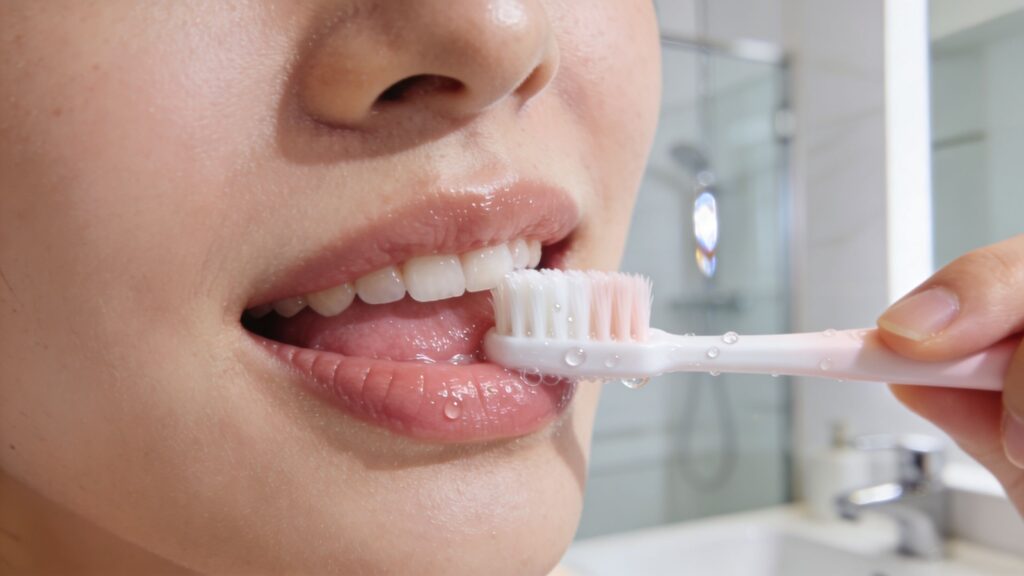
A cold drink hits one side of your mouth, and the reaction is instant. Not a dull ache. A quick, sharp sting that makes you pause and wonder whether something is wrong with your gums, your teeth, or both.
That kind of sensitivity is common, and it’s frustrating because it can seem to come out of nowhere. One week your mouth feels normal. The next, brushing, flossing, or even breathing in cool air feels irritating. If that sounds familiar, you’re not overreacting. Sensitive gums often signal inflammation, exposed root surfaces, or habits that are irritating tissue day after day.
Your Guide to Soothing Sensitive Gums
Many people assume gum sensitivity is unusual until it happens to them. It isn’t. According to the CDC, 47.2% of adults aged 30 and older have some form of periodontal disease, and that rises to 70.1% in adults 65 and older according to this periodontal disease research summary. Gum disease is one of the main reasons gums become tender, swollen, or reactive.
Sensitive gums can also overlap with tooth sensitivity. If the gum pulls away from the tooth, the root surface becomes exposed. That root area doesn’t have the same protective enamel layer as the crown of the tooth. An exposed root is similar to skin revealed when a sleeve rides up. It’s not necessarily damaged beyond repair, but it is less protected and more likely to react.
A patient usually describes it in simple terms. “Cold water hurts.” “My gums burn when I floss.” “One area feels raw.” Those details matter because they help separate a short-term irritation from a deeper periodontal problem.
Sensitive gums are common, but they shouldn’t be ignored just because they’re common.
If you’re trying to sort out whether this is mainly a gum issue, a tooth issue, or both, this guide on sensitive teeth and how to get rid of it at home can help connect the dots.
Relief usually comes from doing two things well. First, calm the irritated tissue. Second, identify what’s causing the irritation so it doesn’t keep returning.
Uncovering the Causes of Gum Sensitivity
Gum sensitivity has patterns. Once you know what those patterns look like, the problem becomes easier to manage.

Inflammation from plaque buildup
The most common cause is early gum inflammation. Plaque sits along the gumline, the body reacts, and the tissue becomes puffy, sore, and more likely to bleed. Patients often notice this when floss suddenly brings up blood or when brushing the front teeth feels tender.
At this stage, the gums are reacting to irritation. The tissue is telling you it needs cleaner conditions, not harsher scrubbing.
Gum recession and exposed roots
Another major cause is recession. When the gum pulls back, the root surface becomes exposed. That’s where sensitivity often changes from “my gums feel sore” to “cold air and cold drinks sting.”
This can happen with gum disease, but it can also happen with brushing too hard. A lot of well-meaning people try to clean more aggressively when their gums feel irritated, and that often makes the problem worse.
Acid, dryness, and product irritation
Some mouths are more reactive because the environment stays irritating. Acidic drinks, frequent snacking, dry mouth, and certain whitening products can all make tissues feel raw. If your mouth feels fine in the morning but burns after coffee, citrus, or a whitening strip, that pattern matters.
For a broader patient-friendly overview of the causes of sensitive teeth, including root exposure and enamel wear, that resource is a useful companion read.
A cracked tooth or cavity can mimic gum pain
Not every “gum problem” starts in the gums. A cracked tooth, a cavity near the gumline, or food packed between teeth can create pain that patients point to as gum sensitivity. That’s one reason self-diagnosis can be tricky.
If tenderness comes with bleeding, puffiness, or a bad taste, it’s smart to consider whether gum disease is involved. This overview of how periodontitis can be ruining your oral health explains what happens when inflammation moves deeper below the gumline.
Immediate Relief Strategies for Sore Gums
When your gums are already irritated, the first goal is comfort. Not a perfect diagnosis in the moment. Just calming things down so eating, drinking, and brushing don’t feel miserable.
What to do right away
Rinse with warm salt water
Use warm, not hot, water. Swish gently for a short rinse, then spit. This can soothe tissue and help clear debris around a sore area.Apply a cold compress outside the mouth
If one spot feels inflamed or throbbing, hold a cold compress against the cheek for short intervals. It won’t solve the cause, but it can quiet the area.Switch to a desensitizing toothpaste now
Don’t wait until your current tube runs out. User experience surveys show 70% of users of desensitizing toothpaste report immediate relief, while 86% of people using specialized sensitivity mouthwash report long-term alleviation, based on this sensitivity product research summary. In practice, that means toothpaste can help fast, while a targeted mouthwash may support longer control.
Practical rule: If the area hurts, avoid “scrubbing it clean.” Gentle care helps irritated gums settle. Aggressive cleaning usually prolongs the flare.
What to avoid for the next day or two
A few things commonly make soreness linger:
- Very hot or very cold foods can trigger exposed areas.
- Alcohol-heavy rinses may sting already inflamed tissue.
- Whitening products can add another layer of irritation.
- Hard bristles can turn a sore spot into a receding one.
If you’ve been told to use a medicated rinse or want to understand combination rinses better, this explanation of what is magic mouthwash gives useful context.
Building a Gentle Long-Term Oral Care Routine
Quick relief matters, but long-term comfort comes from a routine that protects the gums every day. With this routine, individuals often either solve the problem or keep accidentally feeding it.

Start with the right toothpaste and the right brush
For ongoing management, ingredient choice matters. A desensitizing toothpaste with 5% potassium nitrate, used twice daily with a soft-bristled brush, can achieve a 70-85% reduction in sensitivity within 4-8 weeks according to this desensitizing toothpaste protocol. That works by helping block the tiny pathways that carry sensations toward the nerve.
The brush matters just as much. A soft-bristled brush is the safer choice for irritated tissue and exposed roots. If your brush head looks frayed quickly, that usually means your hand pressure is too high.
Use a brushing technique that doesn’t scrape the gumline
Most brushing errors come from speed and force. People often scrub side to side at the exact line where gum meets tooth. That’s the area most likely to become irritated.
Try this instead:
- Angle gently at the gumline so the bristles sweep plaque away rather than jam into the tissue.
- Use small circular motions instead of long back-and-forth strokes.
- Spend the full brushing time evenly rather than overworking the one area that feels dirty.
- Pause over sensitive spots softly. More pressure doesn’t clean better.
If your gums feel worse after brushing, the product may not be the problem. The pressure often is.
Floss in a way that cleans without snapping
Floss should slide, curve, and hug the tooth. It shouldn’t pop straight down into the papilla, which is the small triangle of gum between teeth. That snapping motion is one of the easiest ways to make healthy gums feel injured.
A good daily rhythm is simple. Brush gently, floss with control, then rinse if your dentist has recommended a therapeutic mouthwash. This guide on how to use dental floss, types, colors, materials, and flavors can help if flossing has always felt awkward or uncomfortable.
Build a routine your gums can tolerate
A perfect routine that feels harsh won’t last. A good routine is one you can repeat comfortably.
Here’s a practical daily framework:
| Time | What to do | Why it helps |
|---|---|---|
| Morning | Brush with desensitizing toothpaste | Reduces sensitivity triggers while cleaning plaque |
| Midday | Rinse with water after acidic foods or drinks | Helps clear acid and residue |
| Evening | Brush again with a soft brush | Protects the gumline overnight |
| Before bed | Floss gently between all teeth | Removes trapped plaque where gums get inflamed |
If you’re comparing rinse options, this roundup of top mouthwashes for gum health can be helpful for understanding categories and ingredients.
When At-Home Care Is Not Enough
Some gum sensitivity improves with gentler home care. Some doesn’t. The difference matters.
If sensitivity is tied to a temporary irritation, you’ll usually notice things settling when you switch to softer brushing, a desensitizing toothpaste, and less irritating food or drink. If symptoms stay the same or get worse, that’s when I stop treating it like a home-care problem and start treating it like a diagnosis problem.
Call a dentist if you notice these signs
- Bleeding that keeps happening even after you’ve switched to gentle brushing and careful flossing
- Visible gum recession, especially if one tooth suddenly looks longer
- Persistent bad breath that doesn’t improve with cleaning
- Pus, swelling, or a bad taste near the gumline
- A loose tooth or shifting bite
- Pain focused to one spot that makes you suspect a crack, cavity, or infection
These are not “watch it and see” signs. They can point to periodontitis, deeper infection, or structural tooth problems that don’t improve with salt water and better toothpaste.
What a professional exam changes
A clinical exam separates simple sensitivity from disease. It tells you whether the issue is inflammation, root exposure, tartar below the gumline, a bite problem, or a damaged tooth. That distinction is important because the treatments are completely different.
Ongoing gum tenderness is a reason to get evaluated, not a reason to brush harder.
If you’re wondering whether the next step may be more than a routine cleaning, this guide on how to know when I need a deep dental cleaning lays out the signs clearly.
Professional Treatments at Serena San Diego Dentist
At Serena San Diego Dentist, gum sensitivity is triaged first, treated second. That matters because a sore spot after aggressive flossing is handled very differently from a tender area caused by recession, infection, or grinding.

How the practice triages gum sensitivity
For San Diego patients, the first question is simple. Is this a short-term irritation that can be watched closely, or does it need hands-on care in the office?
A remote check-in can help when symptoms are mild, recent, and diffuse. Examples include tenderness after brushing too hard, a brief flare after spicy or acidic foods, or generalized soreness that is already improving with gentler home care. In those cases, photos and a symptom history may help confirm that the next step is a routine visit rather than urgent treatment.
An in-person exam is the better choice when the problem is localized, keeps returning, or comes with signs that suggest disease or tooth damage. A single painful spot, visible recession, swelling, recurring bleeding, a bad taste near one area, or sensitivity around a tooth that may be cracked usually needs direct examination. Gums are a little like skin. A mild irritation can settle down on its own, but a cut, infection, or area pulling away from the surface needs someone to inspect it closely.
What treatment may look like after that evaluation
Once the cause is clear, treatment is selected to match it.
- Professional fluoride application can calm exposed, sensitive root surfaces
- Scaling and root planing helps when bacteria and hardened buildup are sitting below the gumline
- Dental bonding may protect small areas of root exposure in selected cases
- Gum grafting is considered when recession is advanced enough that the root needs more lasting coverage
- Occlusal adjustment or nightguard planning can reduce repeated stress from clenching and grinding
The trade-off is straightforward. Conservative care is easier and less invasive, but it only works when the tissue can recover without structural repair. If the gum has receded, the root is exposed, or buildup extends below the surface, home care alone will not solve the problem.
Between-visit follow-up and practical planning
For some patients, photo follow-up between visits is useful for tracking whether a mildly irritated area is settling down or whether it is becoming a pattern that deserves a faster return appointment. That kind of monitoring works best for minor changes in color or tenderness. It does not replace probing, X-rays, or checking a tooth directly when symptoms point to deeper disease.
For many patients, the next practical question is cost. Insurance may help with diagnostic visits, periodontal treatment, or fluoride, depending on the plan. Some patients use PPO benefits for covered services. Others choose out-of-pocket care for more flexibility in scheduling or treatment timing. Ask for a benefits check and a written treatment plan before treatment starts.
For a quick visual overview of why gum care can escalate from home care to clinical care, this video is a helpful primer.
Common Questions About Gum Sensitivity
Can sensitive gums be permanently cured
Sometimes yes, sometimes no. If the trigger is temporary inflammation or technique-related irritation, sensitivity can resolve once the tissue heals and your routine changes. If the issue is recession, chronic periodontal disease, or an exposed root, the condition can often be controlled very well, but it may need ongoing maintenance or in-office treatment.
Will teeth whitening make gum sensitivity worse
It can. Whitening products can irritate soft tissue and make already sensitive areas feel sharper. If your gums are sore now, treat the inflammation first. Whitening works better and feels better once the mouth is stable.
Is an electric toothbrush safe for sensitive gums
Usually yes, if you use a soft head and light pressure. The brush should do the work. If you press hard enough to flatten the bristles against the gumline, even a good electric brush can irritate tissue.
What’s the fastest way to learn how to treat sensitive gums correctly
Get the cause identified. Salt water, desensitizing toothpaste, and gentler brushing can help, but they won’t fix every problem. The fastest route is knowing whether you’re dealing with irritation, recession, gum disease, or a tooth issue that only feels like gum pain.
If your gums have been stinging, bleeding, or feeling tender for more than a brief flare-up, schedule an evaluation with Serena San Diego Dentist. A careful exam can show whether you need a gentler home-care plan, a deep cleaning, root protection, or another targeted treatment so you can eat, drink, and brush comfortably again.